

Ballots and battles: Lebanon’s unprecedented electoral showdown



 Messenger
 Whatsapp
 Threads
 Email
Email
 Print
Print
 X
X
 Facebook
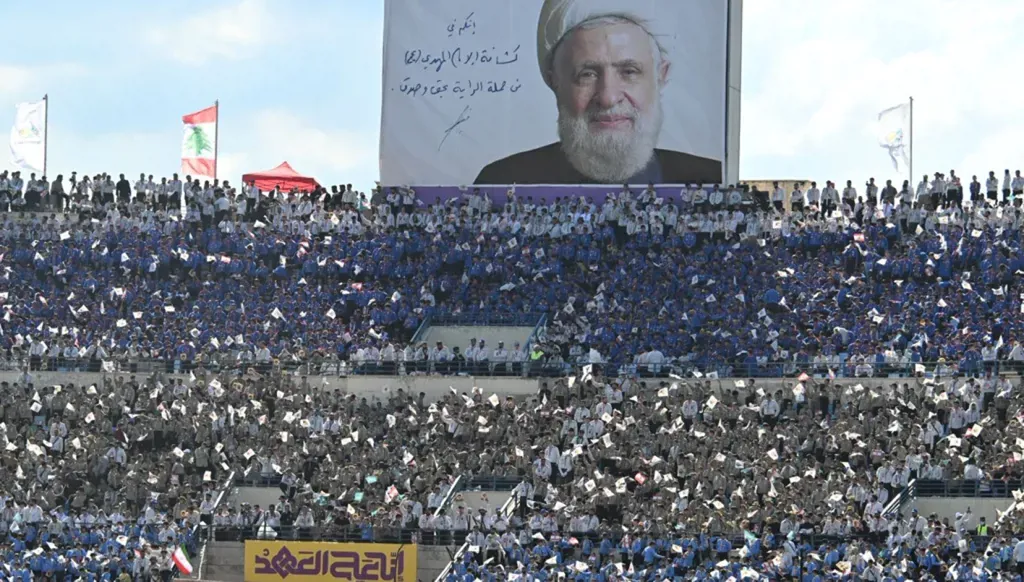


In Lebanon—where the specter of a renewed Israeli war looms constantly—political forces are converging in anticipation of an unprecedented conflict. The approaching electoral deadline has become more than a routine contest; it is poised to mark a decisive turning point. For the first time, the outcome carries implications that extend beyond the arithmetic of parliamentary seats or the prospect of challenging the dominance of the Shiite duo. At stake is the very definition of Lebanon’s political identity, and whether the state can chart a course that breaks with entrenched sectarian molds to embrace a new vision of governance.
The parliamentary elections in May stand as the culmination of Lebanon’s accumulated crises—internal and external—born of unprecedented political turmoil in the country’s long history of war and fragile peace. Many observers believe these elections could open the door to a new founding phase, reshaping Lebanon’s political trajectory. It is no exaggeration to suggest that this moment, regardless of how the parliamentary battle unfolds, will mark a turning point comparable to the radical transformations ushered in by the Taif Agreement. Yet the circumstances today are entirely different, framed by new regional upheavals and exceptional developments that will inevitably shape Lebanon’s outlook on the next phase.
Although Lebanon’s political structure continues to rest on a deeply entrenched sectarian foundation, three principal communities will stand at the forefront of shaping the decisive outcome of the upcoming elections. Without diminishing the role of other sects—whose influence remains more limited—the Christian, Sunni, and Shiite components carry the weight of both internal challenges and broader national stakes. Each enters the contest with its own fractures, ambitions, and anxieties, yet together, they will determine not only the balance of parliamentary power but also the trajectory of Lebanon’s political identity in the years ahead.
The Christian bloc, which enjoyed significant gains in parliamentary representation during the previous session, now finds itself at the center of an intense political battle. On one side stand forces opposed to the entire framework of the “Axis of Resistance,” led by Hezbollah and its alliance with the Aounist movement—a partnership facing its most serious decline since its inception. On the other side, the Lebanese Forces have emerged as a rising driving force, positioning themselves for what could be an unprecedented victory. The contest thus places Lebanon’s Christian components at the heart of a struggle that may redefine both their role and the broader balance of power in the country.
The significance of the elections extends far beyond a contest among Christian forces. For the first time in 34 years, Lebanon faces a genuine power struggle that threatens to unseat Speaker of Parliament Nabih Berri from his long-held “throne” in the second presidency. This possibility would arise if the Lebanese Forces move forward with nominating Shiite candidates in mixed constituencies—a maneuver that could fracture traditional alignments and challenge one of the most enduring pillars of Lebanon’s political order.
For the Sunnis, the upcoming moment is nothing short of fateful. Their trajectory hinges on a single dividing line to be drawn by one man—Saad Hariri—whose presence is felt even in absence. Harirism continues to beat as the strongest pulse within the Sunni community, yet attempts to inherit its mantle remain scattered, pulling in different directions. The result is political chaos which may yield only fragmented alliances and limited gains, leaving the Sunni bloc divided. Overlaying this uncertainty is the growing talk of Saudi influence, with the embassy’s role in endorsing candidates and shaping alliances adding another layer to the contest.
The gravest challenge lies within the Shiite bloc, where Amal and Hezbollah have maintained an unbroken hold on all 27 seats since the first elections following the Taif Agreement. The upcoming vote will be decisive: it will determine whether genuine change can emerge from within the Shiite community itself, or whether such hopes will be dashed. The consequences of stagnation would be severe, as the bloc would then face a multi-sectarian Lebanese majority firmly opposed to Hezbollah’s past and present policies and affiliations.
What follows, however—the question of forging a new political identity in the wake of the elections—is another story altogether, one that remains uncertain and still unfolding.