

The architecture of the soul: A voyage through Iran’s inner worlds with Firouz Farmanfarmaian



 Messenger
 Whatsapp
 Threads
 Email
Email
 Print
Print
 X
X
 Facebook


In the quiet and contemplative world of Firouz Farmanfarmaian, the map is not reality, and borders are merely a translucent suggestion. Born in Iran, his identity was shaped in the transitional spaces between Paris, Marrakesh, and Marbella. A traveler, he treats memory as his artistic medium, and the fabric of diaspora as the material of his creativity.
Yet the tectonic plates of Iranian geopolitics, which shifted after the American and Israeli strikes and the killing of the Supreme Leader, suddenly placed that imagined nowhere where the artist had lived for decades face to face with a very real and intensely tangible space.
Speaking to Annahar, Farmanfarmaian moves through these historical turning points with the sensitivity and fluidity of a cultural creator rather than with the sharp rhetoric of politicians. His perspective sketches a rare bridge between the architectural grandeur that adorned pre revolutionary Iran and a post tribal future that, for the first time in generations, seems within reach.
The Weaver of Post Tribal Unity
For Firouz Farmanfarmaian, the current power vacuum in Tehran appears less like a political puzzle and more like a spiritual crossroads. His artistic work has long celebrated the concept of post tribalism, a transformation from narrow national inwardness toward a planetary identity shaped by multiple cultures. Yet even as the shadows of nationalism appear on the horizon, he remains rooted in a deep connection to the land and to its ancient patterns.
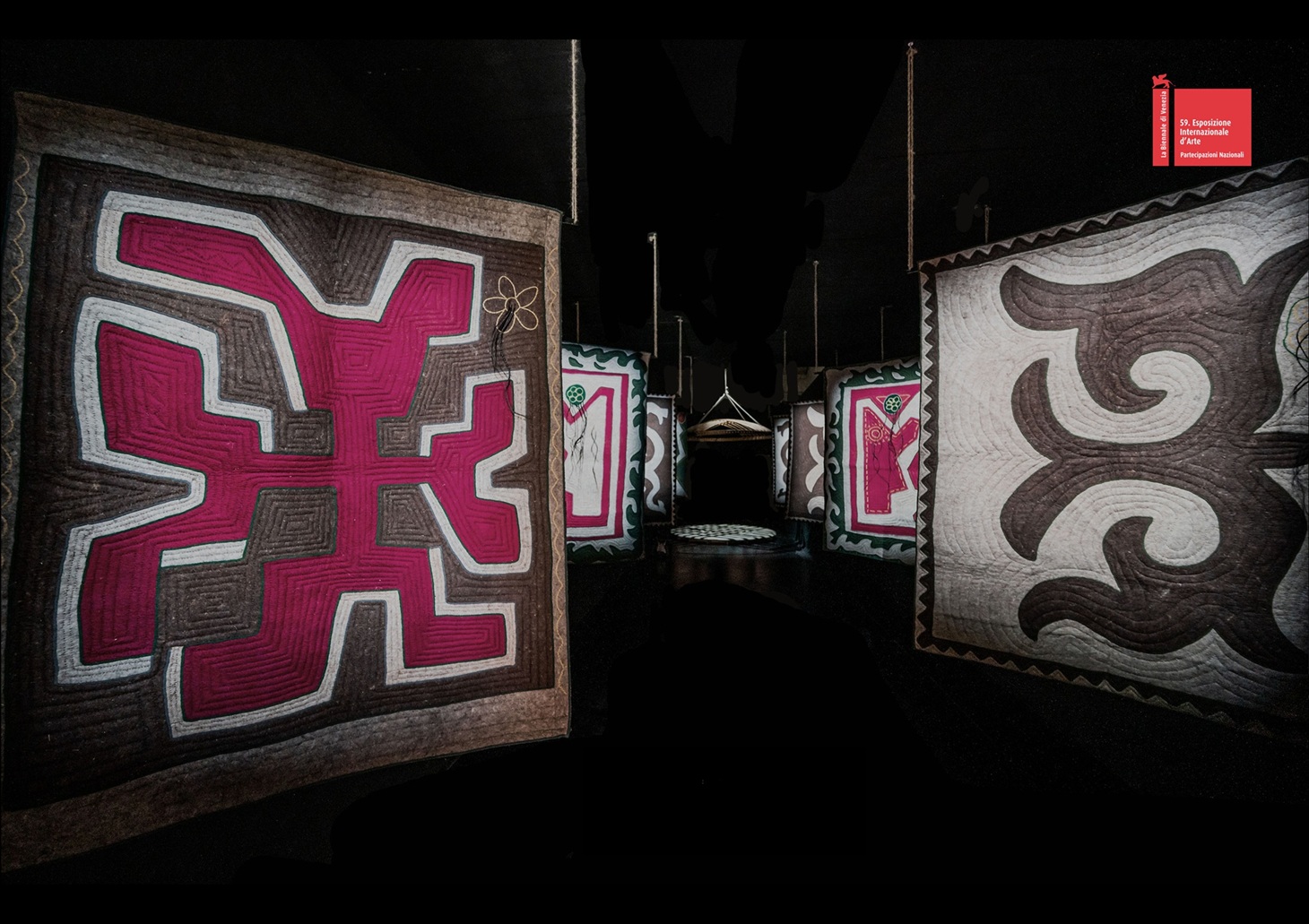
He reflects: “As a contemporary artist, my works do not reflect a political ideology or activist struggle. Rather, they engage with themes of memory, displacement and estrangement, and layered identity, calling for deeper ideas of dialogue and unity.”
For Firouz Farmanfarmaian, Iran’s diverse mosaic, from the Bakhtiari and the Baloch to the Azerbaijanis and the Kurds, is a single collective movement rather than scattered fragments that must be reassembled. His concept of post tribalism does not mean erasing the past, but discovering a sense of belonging within the diversity of our identities. It is a call for movement toward unity rather than fragmentation, and a rejection of culture closing in on itself in the face of change.
Foundations and Collapse
There is a structural weight in Farmanfarmaian’s thinking, perhaps inherited from his grandfather Abdolaziz Farmanfarmaian, the architect who shaped the horizon of pre revolutionary Iran. The current system, in his view, is a different kind of architecture, a hybrid structure echoing Plato’s The Republic, where ruler judges play the role of both spiritual and political guides.
He explains to Annahar that “the current system bears distant similarities to the authority of the priestly class in pre Islamic Iran.” He notes that this model, after hardening through a centralized military oligarchy following the Iran–Iraq War, has become “rigid, but also more dangerous.”
With the possibility of this structure collapsing, Farmanfarmaian warns of the chaos of a power vacuum. He looks back to the missed opportunities of the Persian Constitutional Revolution of 1905 as foundational blueprints for a new generation. “I tend to translate my thinking through two lenses, structural and historical,” he says. In his view, the future must be rebuilt “on strong and stable constitutional foundations,” combining grounded realism with a conceptual vision.
Return to the Desert of the Soul
In his 2025 work Voyage in Inexistant Land, Firouz Farmanfarmaian explored the concept of the “blank page,” or Tabula Rasa, that confronts the exile. But if the doors were to open tomorrow, if political barriers were to collapse like worn out curtains, where would this border crossing traveler turn?
The answer is not found in the noisy corridors of power, but in the silence of the sands. He says, “Personally, if I were able to return, I would wish to travel to the ancient desert city of Yazd and stay there for a time, reflecting on the future.”
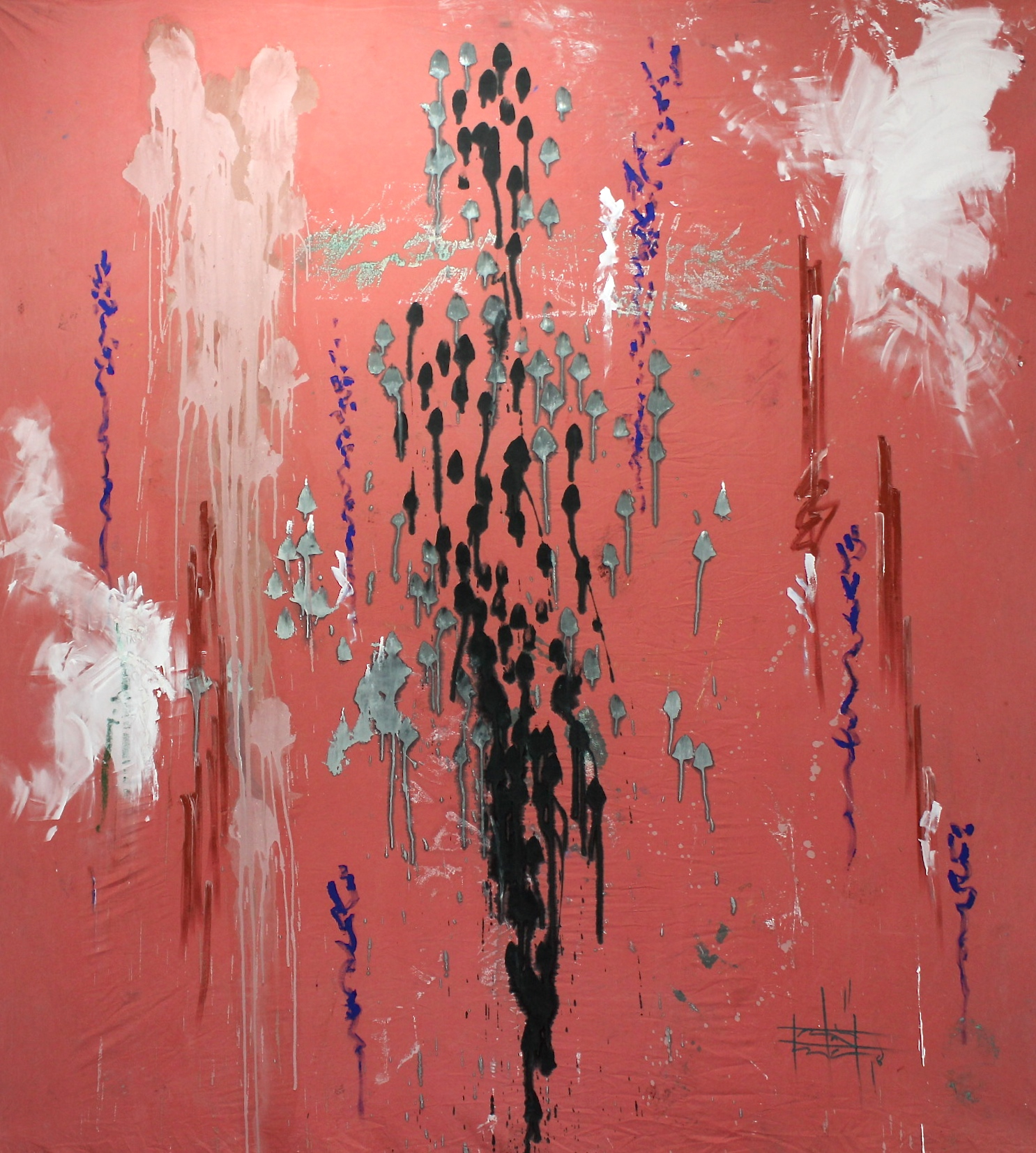
This longing for Yazd reveals the essence of his philosophy of the “ecology of the soul,” a concept he borrows from the Iranian philosopher Dariush Shayegan. In an age of rising “robotization,” Firouz Farmanfarmaian believes that the first step to saving a planet—or a nation—begins with nurturing the inner landscape of culture and imagination.
Evoking Arthur Rimbaud’s call to his friend Verlain to remain “absolutely modern,” Farmanfarmaian embraces the future without fear of technology, provided it remains rooted in this spiritual ecology. As Iran stands on the threshold of a new era, his voice continues to be a guiding force, reminding us that the most enduring structures are not built of brick or bone, but of the stories we choose to tell together.
He concludes: “Let the ongoing revolution pave the way.” It is a blessing of hope, offered by a man who has finally found a path back to a land that is no longer “inexistent.”