

Lebanon
11-12-2025 | 13:32
Gibran’s Procession: An ode to eternity through poetry, music, and philosophy
Gibran’s words, reborn through the Rahbanis and Fairuz, reveal how art can carry a nation’s spirit across generations.


 Messenger
 Whatsapp
 Threads
 Email
Email
 Print
Print
 X
X
 Facebook
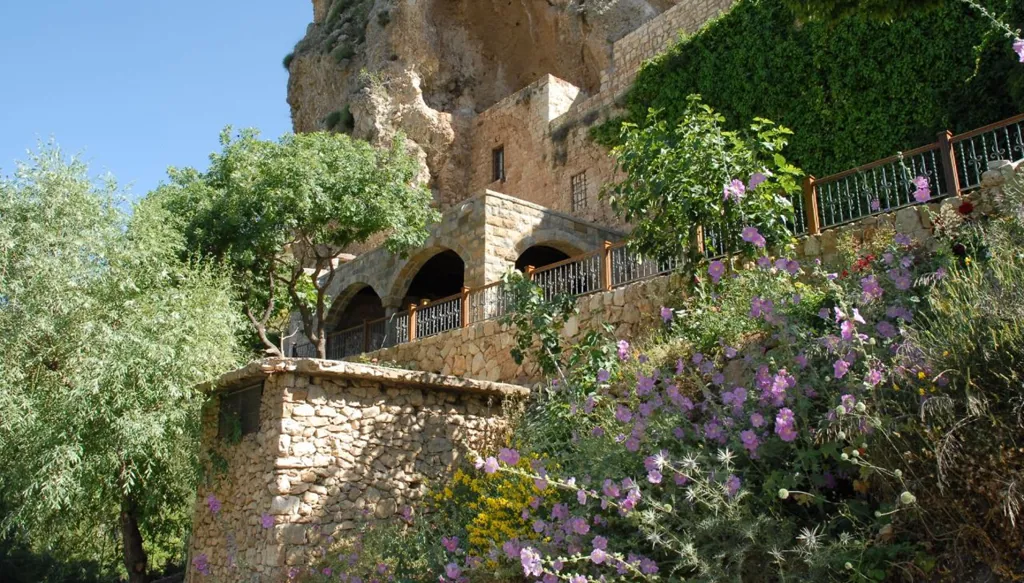
The Gibran Khalil Gibran Museum in the town of Bsharri (Annahar).


Farouk Ghanem Khaddaj
In every generation, certain literary and artistic works manage to transcend the boundaries of their time and thus become embedded in the collective memory. Among these works stands Gibran Khalil Gibran's “The Procession” — a text imbued with philosophy and humanistic visions, long before the Rahbani brothers set it to music and Fairuz's voice gave it color, transforming it into a song for the soul and a mirror for humanity.
The Procession: A Philosophical and Poetic Project
Published in Beirut in 1919 by Al Assrya Publishing House, Gibran’s long poem, spanning more than 150 verses, represents the pinnacle of Gibran's Arabic poetry. It is not a mere set of letters joined together, but a philosophical journey where Gibran delves into the contradictions of humanity — between the heaviness of matter and the purity of the soul, and between the simplicity of human nature and the artificial constructs of modern civilization.
Gibran wove together images of good and evil, joy and sorrow, the individual and the collective. He also called for a return to nature and our original uncorrupted instincts. It is more than a poetic text; it is a complete existential experience that reflects his vision of humanity and the world, combining philosophical depth with poetic sensibility.
The Rahbani Brothers and Fairuz: Music of the Soul
When the text fell into the hands of the Rahbani brothers, they realized that the work was not just words to be recited, but a philosophy that needed music to carry its symbolism with sincerity and warmth. They chose specific passages and clothed them in timeless melodies, transforming Gibran's song into a voice that echoes in the soul.
Fairuz's voice gave color to the words, and its clarity and warmth enabled the poem to transcend the boundaries of time and place and reflect the Lebanese and Arab conscience.
A Lebanese and Arab cultural icon
The Procession did not remain merely a literary work but became an Arab cultural icon. In Lebanon, it became a symbol of national identity searching for itself between East and West. In the Arab world it is furthermore a model of art's ability to merge intellectual reflection with aesthetic expression in a single composition.
This work has also received widespread attention in international literary circles, as it has been translated into several languages and is considered a testament to Gibran's ability to blend Eastern spirituality with universal human sensitivity.
A message that transcends time
The genius of “The Procession” lies in its fusion of philosophical loftiness with peoples’ warmth and of intellectual depth with melodic beauty. It reflects a homeland that encapsulates the contradictions of East and West and an open dialogue between the individual and the community.
Anyone who looks closely at this masterpiece will realize that it is not merely a meeting of a poet, a musician, and an exceptional voice, but the birth of a living experience that transcends time and makes art a bridge between the past and the present, between homeland and humanity.
Conclusion
Thanks to this artistic alliance, The Procession remains an inspiring work that embodies the union of word, melody, and idea. It is a record of a living history that lives on in the conscience, a beacon in the sky of Arabic literature and music, and a testament to art’s ability to transform pain into beauty and identity into eternal belonging.