

Mansour Rahbani’s centenary: The oratorio that traveled alone as a king



 Messenger
 Whatsapp
 Threads
 Email
Email
 Print
Print
 X
X
 Facebook
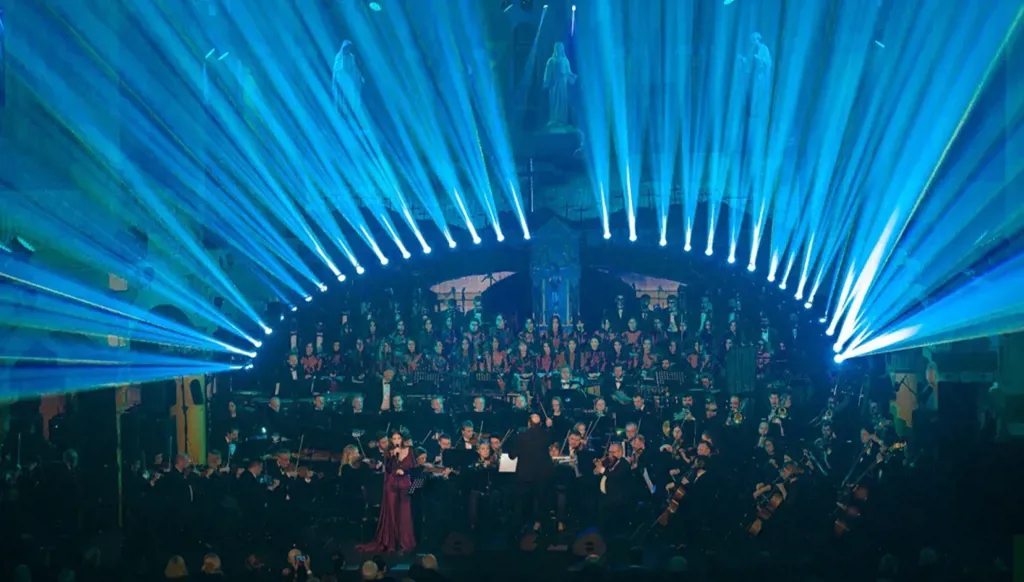


Last night and the night before, the Church of the Sacred Heart in Gemmayzeh (Beirut), a space of spiritual elevation, turned into something like a vast confessional open to the philosophy of the great Mansour Rahbani, where poetry and music gathered with human memory and its questions. In Beirut, which is regaining its sweet noise, the oratorio “Ousafirou Wahdi Malikan” (I Travel Alone, As a King) was performed under the patronage of President Joseph Aoun (Explanation: the President of Lebanon). Conceived from thirty-four selected poems that trace the emotional, philosophical, and national breadth of Rahbani’s legacy, the work came to reorder silence and movement, and to give heavy words wings to travel with us.
The largest work in the events marking the Mansour Rahbani centenary came as a deep inner call. A text written on the edge of existence, carried to music by a hand aware of the weight and trust of the mission. Oussama Rahbani, by composing parts from his father’s book, entered a long dialogue with the spirit of Mansour, and with his open questions on departure, absence, estrangement, and meaning. The oratorio emerged cohesive, layered, never compromising the depth of the text nor sacrificing the rigor of the musical structure.
An oratorio is a large musical–vocal work performed by an orchestra, a choir, and solo singers, built on a narrative or poetic text that is told through music and singing. In this work, Mansour Rahbani advances not only as a poet, but as an intellectual and emotional being who confronted his fate with rare courage. His words were born from a pure existential anxiety and were written to be spoken on a stage and chanted in a space higher than the everyday. “Ousafirou Wahdi Malikan” (I Travel Alone, As a King) is a philosophical and existential stance: the solitude of the poet, the elevation of the journey, and the dignity of the question when it reaches its limit.
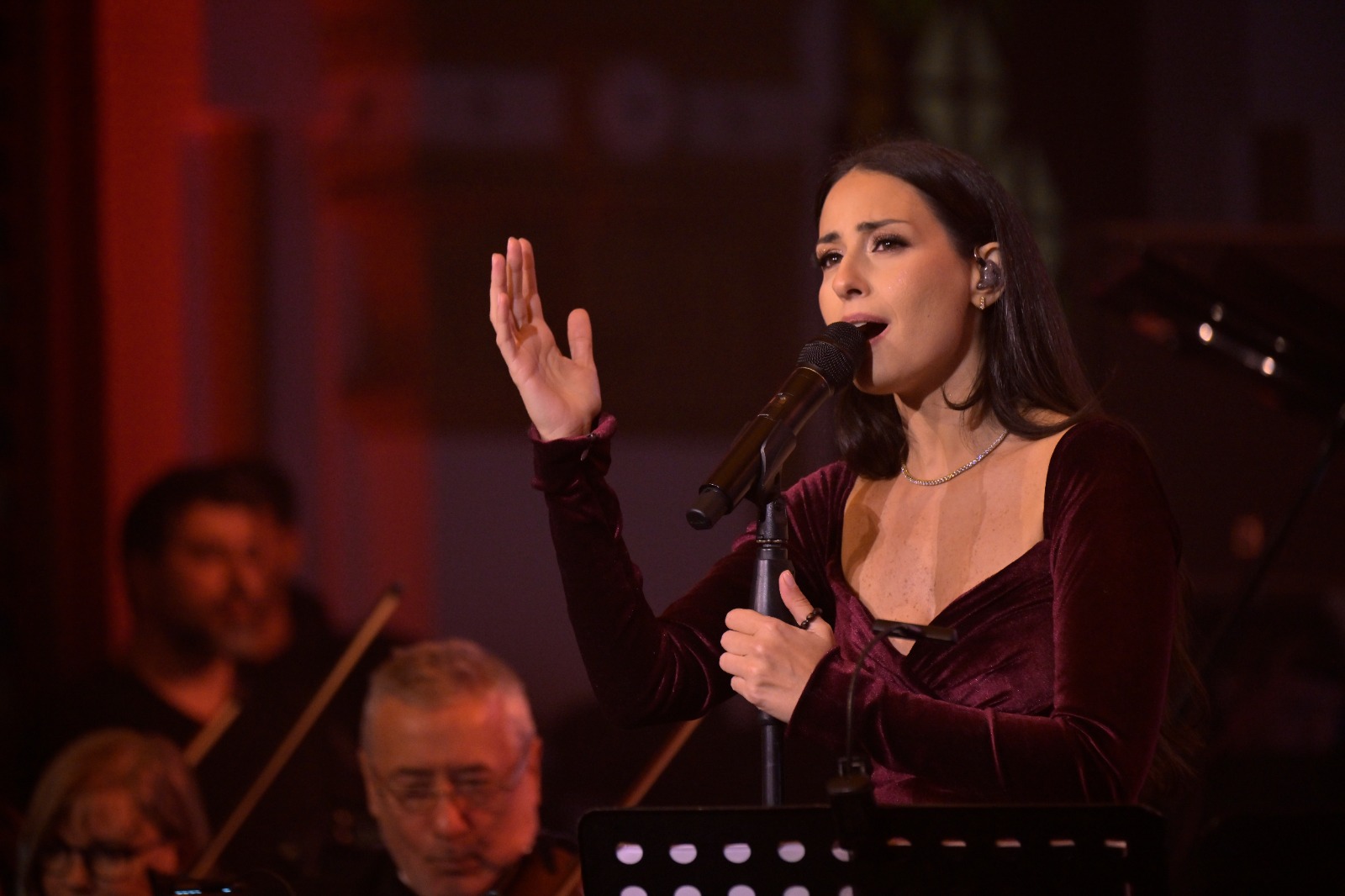
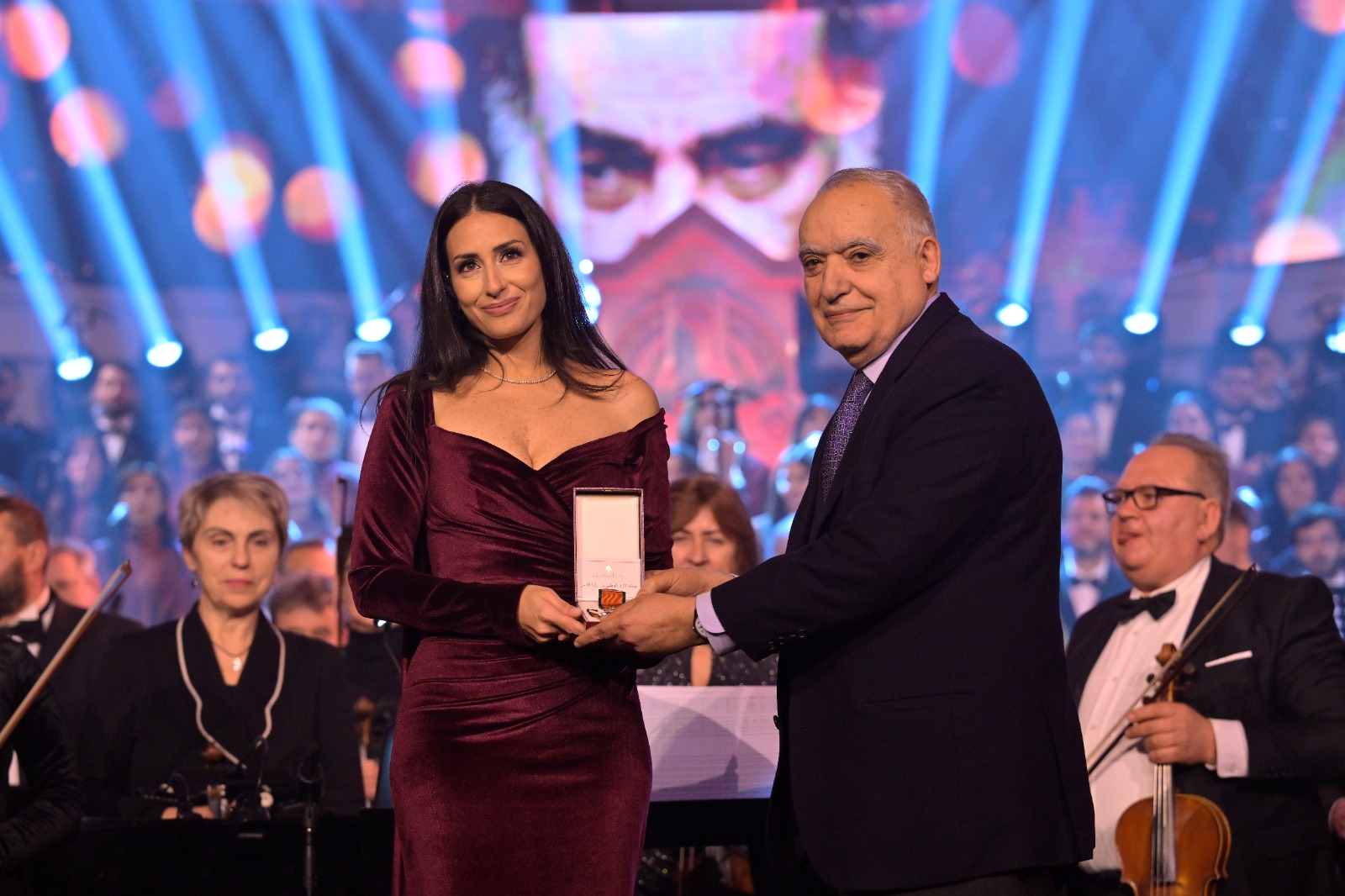
Amid this poetic weight, Hiba Tawaji did something more difficult than singing: she carried the oratorio alone, without alternating voices and without room to lean. It is a rare task in this musical form, where roles are usually divided among several performers. But Tawaji possessed the text as if it were written for her voice alone. She inhabited the words and then sang them; she moved between them with a fine internal thread, controlling the dramatic tension without showmanship and without fracture. She earned the National Order of the Cedar (a Lebanese state decoration of honor), which was presented to her by the Minister of Culture Ghassan Salamé, representing the President of the Republic.
Her voice, in its layers, power, and control, was the only possible bridge between poetry and hearing, the poetry of Mansour recited by Jad Elias Rahbani with the might and tenderness of his voice. Alongside her, the National Symphony Orchestra of Ukraine was present with its professional weight and high discipline, carrying the musical structure with clear sensitivity, while the Choir of Notre Dame University–Louaize, conducted by Father Khalil Rahme, added a rich polyphonic dimension that opened the text onto a collective space and balanced between the individual voice and the mass, between contemplation and shared revelation.
Yet this encounter would not have been complete without the cultural dimension that went beyond the limits of the performance itself. The participation of the Abu Dhabi Music & Arts Foundation and its founder Huda Ibrahim Alkhamis Kanoo did not come as a symbolic sponsorship, but from a long-standing conviction in culture as a human act that transcends borders. Through the “Abu Dhabi Festival Abroad” program, the United Arab Emirates advances onto the Arab cultural scene as a partner in memory, a guardian of a vast Arab heritage, and with the belief that investing in art is not a luxury, but a civilizational necessity.
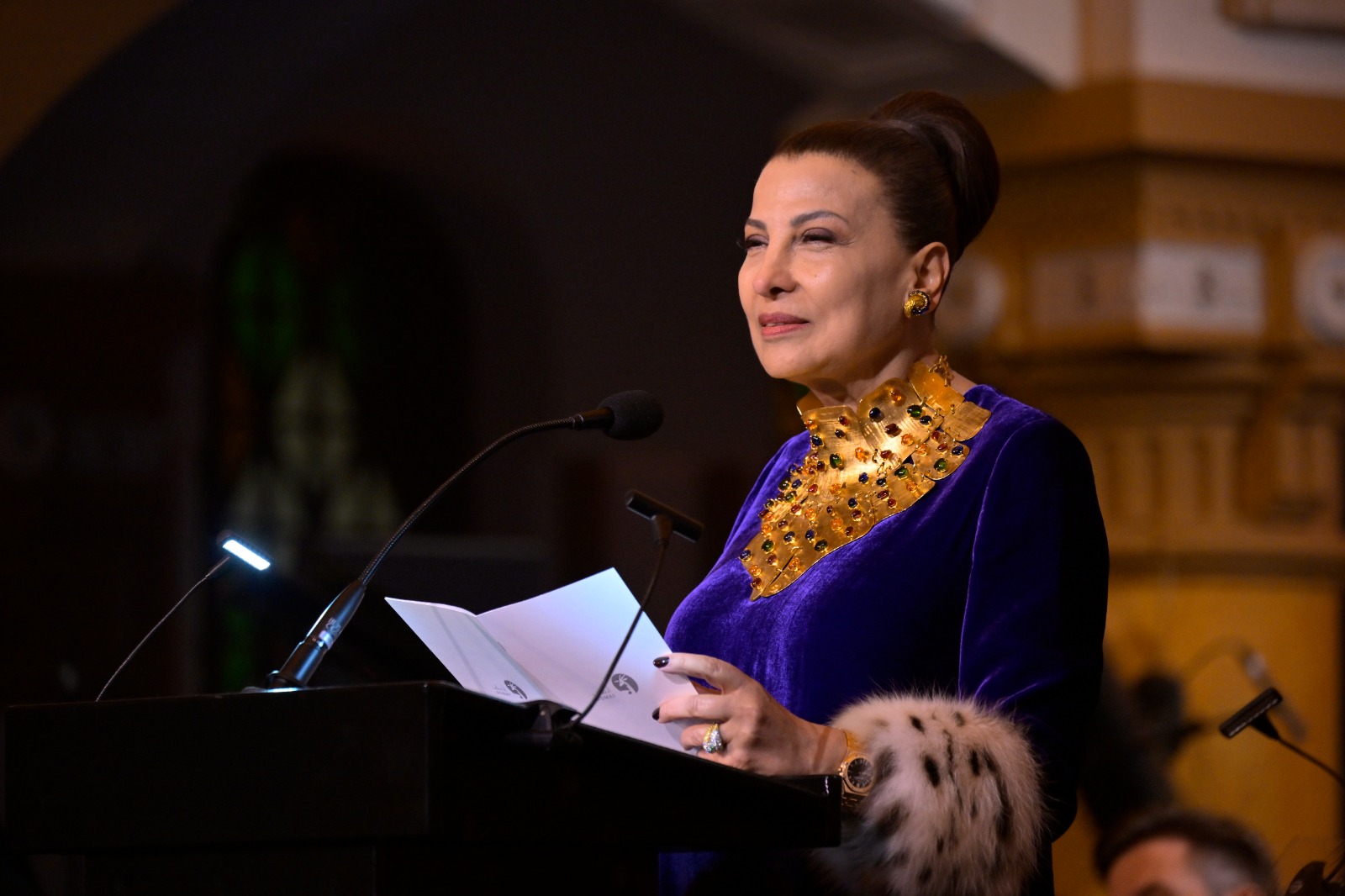
Huda Ibrahim Alkhamis, who has devoted her life to cultural, intellectual, and humanitarian work, was present in this production recalling her days in Beirut, when she would visit the church to sing in the choir. In this integrated work, she embodied the idea of continuity, the wisdom required to manage major projects, and the belief that Arab creativity deserves to be presented at its highest standards, wherever it may be.
The audience that left the church on that rainy and dreamy night carried with them the glow of the word and the delicacy of the melody, wearing a feeling both heavy and beautiful. A feeling that Mansour Rahbani was there, in the words, in the moments of silence, in the slight trembling that signals an outburst of applause. A feeling that the journey he began alone, as a king, has not ended, and will not, so long as there are those who carry it with fidelity and present it as it should be, with all honesty, all solemnity, and all love.