

Lifestyle
12-12-2025 | 14:34
March 11, 2020: COVID-19, the virus that changed the world
The COVID-19 pandemic exposed the fragility of modern life and became a
defining marker of a third global upheaval shaped by populism, geopolitical
rivalry, and the unraveling of the post-Cold War order.


 Messenger
 Whatsapp
 Threads
 Email
Email
 Print
Print
 X
X
 Facebook
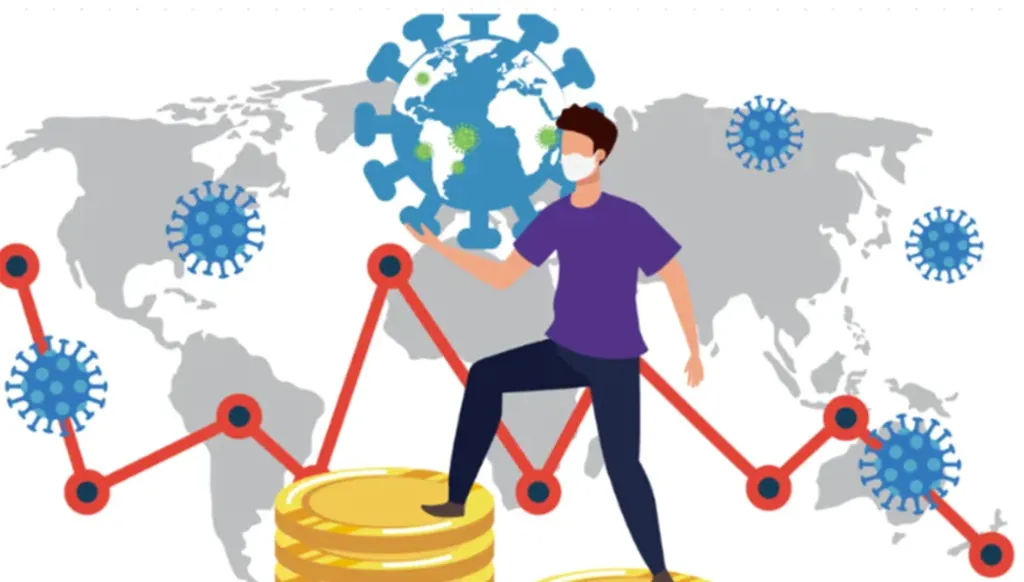
“The COVID-19 pandemic was accompanied by various complications (YouTube)”


The COVID-19 pandemic was the most profound health event of the past 25 years, one that is hopefully never to be repeated.
Today’s global moment can be understood as the product of three major, overlapping waves of change.
The first wave emerged with World War I and the collapse of the old empires, including the Islamic Ottoman Empire. This was followed by World War II and the establishment of a nation-state–based order shaped through the United Nations. The second wave unfolded with the collapse of the Soviet Union, the rise of the unipolar U.S.-led global system, and the turning point marked by the 9/11 terrorist attacks. This was followed by the intensifying U.S.-China conflict and the unraveling of the global system that had adapted to globalization.
The COVID-19 pandemic appeared as a defining feature of a third global upheaval, one symbolized in many ways by President Donald Trump. This wave is driven by forces such as the rise of populism in Western countries, mounting backlash against globalization, the weakening of international institutions, and a renewed pattern of geopolitical competition among major powers, particularly under strong U.S. influence. Few events in the past 25 years reflect this third upheaval—and its links to earlier global shifts—as powerfully as the pandemic.
The first in a century, yet shrouded in dense darkness
The hope that the pandemic will never happen again is, perhaps, a fragile one. COVID-19 has shown how vulnerable modern life is to such crises, whether caused by natural or engineered viruses, unless major powers take decisive leaps in preventing future pandemics. The pandemic brought sudden paralysis to life across the globe. Shouldn’t that be enough to make protecting our ever-evolving civilization from an even worse health crisis a top priority? So far, there is little reason for optimism.
When it emerged in late 2019, the COVID-19 pandemic appeared unique, being the first of its scale since the 1918 Spanish flu, which accompanied the end of World War I. Its distinctiveness, however, lies not only in the century of modern, pandemic-free life that preceded it, but also in the many unresolved questions it continues to raise.Accordingly, it is worth recalling the interrelated factors that shaped this event, alongside the broader historical contexts outlined above.
01 – The pandemic began when a virus jumped from animals to humans. But why and how did this “jump” occur? COVID-19 belongs to the coronavirus family, which causes various types of flu, including seasonal strains. But COVID-19 had the distinct ability to jump not only between animals but also to humans who had never been exposed to it. Therefore, their bodies were without any pre-existing immunity.
02 – During the first quarter of this century, humanity came close more than once to a pandemic caused by a virus jumping from the animal world to humans, yet these outbreaks never escalated into a full pandemic. This applies, for example, to SARS, avian and swine flu, MERS, Zika, Ebola (the hemorrhagic fever), and others. So, did the jump occur by chance—perhaps from a dog that ate a bat and then wandered through a fish market in Wuhan, China, before spreading locally and globally? Or did it result from a leak at the advanced Wuhan virology lab, which operates in coordination with similar American laboratories? Was the leak accidental, or deliberate, as former President Trump at the time suggested, only to later retract under pressure from the American scientific community, particularly the world-renowned specialist Anthony Fauci?
03 – During the pandemic, certain patterns in its spread remained unexplained, and answers have yet to emerge. Why did it spread so rapidly and intensely in wealthy industrialized nations, rather than in poorer countries, where one might “naturally” expect weaker resistance to diseases and epidemics? What is the connection between the Western lifestyle and the spread of COVID-19? And precisely which features of life in the West enabled COVID to propagate so effectively there?
04 – During the pandemic, various studies, with differing results, examined the role of dogs and cats in the epidemiological spread of COVID-19. Even before the official declaration of the pandemic’s end in 2023, all of that discussion had faded into obscurity. Why is that?
05 – The pandemic caused economic impacts that surpassed even the most severe global market crashes since their emergence after the two world wars. It marked, in economic terms, an end to the neoliberalism that had risen with President Ronald Reagan. In advanced Western countries, the state returned to broad economic intervention. Populism, which gained momentum alongside the pandemic, calls for expanding identity-based intervention—framed as national security—by the state in economic affairs. Trump exemplifies this approach, particularly in his stance toward China, advocating extensive state involvement in economic details while completely rejecting liberal and neoliberal notions such as the “invisible hand of the market.” More broadly, a significant pro-Trump current criticizes the liberal system itself, promoting an anti-liberal narrative within the Trumpist movement.
06 – The pandemic disrupted the relationship between goods, labor force, and services on the one hand, and money on the other. This disruption triggered ongoing effects, most notably economic inflation, as well as phenomena related to stocks, bonds, and various forms of the non-financial economy. These entanglements could extend even further as Trump, in his second term, seeks to promote Bitcoin as the first international reference currency unbacked by productive economic sectors such as industry, agriculture, or even services.
Today’s global moment can be understood as the product of three major, overlapping waves of change.
The first wave emerged with World War I and the collapse of the old empires, including the Islamic Ottoman Empire. This was followed by World War II and the establishment of a nation-state–based order shaped through the United Nations. The second wave unfolded with the collapse of the Soviet Union, the rise of the unipolar U.S.-led global system, and the turning point marked by the 9/11 terrorist attacks. This was followed by the intensifying U.S.-China conflict and the unraveling of the global system that had adapted to globalization.
The COVID-19 pandemic appeared as a defining feature of a third global upheaval, one symbolized in many ways by President Donald Trump. This wave is driven by forces such as the rise of populism in Western countries, mounting backlash against globalization, the weakening of international institutions, and a renewed pattern of geopolitical competition among major powers, particularly under strong U.S. influence. Few events in the past 25 years reflect this third upheaval—and its links to earlier global shifts—as powerfully as the pandemic.
The first in a century, yet shrouded in dense darkness
The hope that the pandemic will never happen again is, perhaps, a fragile one. COVID-19 has shown how vulnerable modern life is to such crises, whether caused by natural or engineered viruses, unless major powers take decisive leaps in preventing future pandemics. The pandemic brought sudden paralysis to life across the globe. Shouldn’t that be enough to make protecting our ever-evolving civilization from an even worse health crisis a top priority? So far, there is little reason for optimism.
When it emerged in late 2019, the COVID-19 pandemic appeared unique, being the first of its scale since the 1918 Spanish flu, which accompanied the end of World War I. Its distinctiveness, however, lies not only in the century of modern, pandemic-free life that preceded it, but also in the many unresolved questions it continues to raise.Accordingly, it is worth recalling the interrelated factors that shaped this event, alongside the broader historical contexts outlined above.
01 – The pandemic began when a virus jumped from animals to humans. But why and how did this “jump” occur? COVID-19 belongs to the coronavirus family, which causes various types of flu, including seasonal strains. But COVID-19 had the distinct ability to jump not only between animals but also to humans who had never been exposed to it. Therefore, their bodies were without any pre-existing immunity.
02 – During the first quarter of this century, humanity came close more than once to a pandemic caused by a virus jumping from the animal world to humans, yet these outbreaks never escalated into a full pandemic. This applies, for example, to SARS, avian and swine flu, MERS, Zika, Ebola (the hemorrhagic fever), and others. So, did the jump occur by chance—perhaps from a dog that ate a bat and then wandered through a fish market in Wuhan, China, before spreading locally and globally? Or did it result from a leak at the advanced Wuhan virology lab, which operates in coordination with similar American laboratories? Was the leak accidental, or deliberate, as former President Trump at the time suggested, only to later retract under pressure from the American scientific community, particularly the world-renowned specialist Anthony Fauci?
03 – During the pandemic, certain patterns in its spread remained unexplained, and answers have yet to emerge. Why did it spread so rapidly and intensely in wealthy industrialized nations, rather than in poorer countries, where one might “naturally” expect weaker resistance to diseases and epidemics? What is the connection between the Western lifestyle and the spread of COVID-19? And precisely which features of life in the West enabled COVID to propagate so effectively there?
04 – During the pandemic, various studies, with differing results, examined the role of dogs and cats in the epidemiological spread of COVID-19. Even before the official declaration of the pandemic’s end in 2023, all of that discussion had faded into obscurity. Why is that?
05 – The pandemic caused economic impacts that surpassed even the most severe global market crashes since their emergence after the two world wars. It marked, in economic terms, an end to the neoliberalism that had risen with President Ronald Reagan. In advanced Western countries, the state returned to broad economic intervention. Populism, which gained momentum alongside the pandemic, calls for expanding identity-based intervention—framed as national security—by the state in economic affairs. Trump exemplifies this approach, particularly in his stance toward China, advocating extensive state involvement in economic details while completely rejecting liberal and neoliberal notions such as the “invisible hand of the market.” More broadly, a significant pro-Trump current criticizes the liberal system itself, promoting an anti-liberal narrative within the Trumpist movement.
06 – The pandemic disrupted the relationship between goods, labor force, and services on the one hand, and money on the other. This disruption triggered ongoing effects, most notably economic inflation, as well as phenomena related to stocks, bonds, and various forms of the non-financial economy. These entanglements could extend even further as Trump, in his second term, seeks to promote Bitcoin as the first international reference currency unbacked by productive economic sectors such as industry, agriculture, or even services.