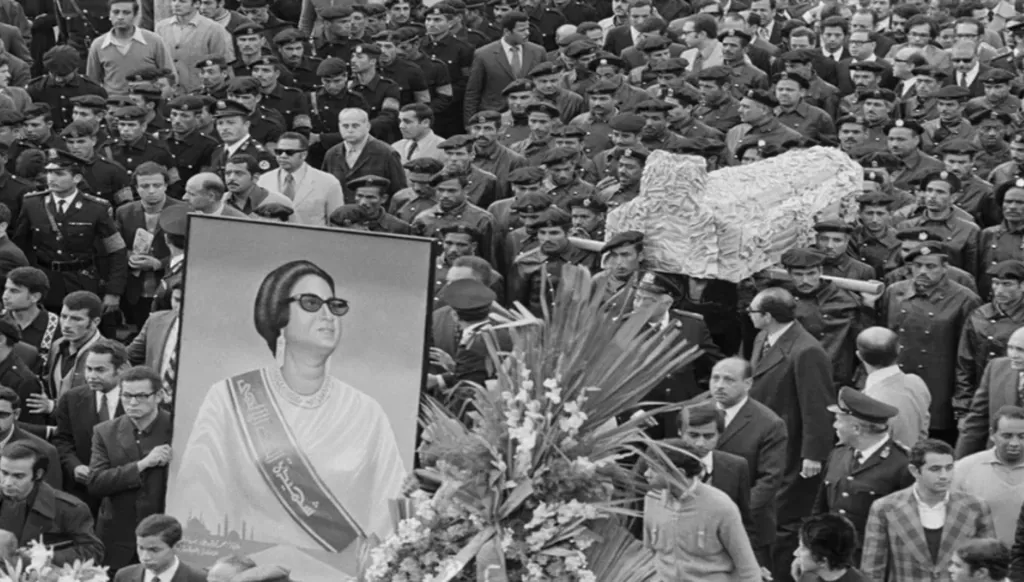
In February 1975, a human flood swept through the streets of Cairo, when an estimated four million people gathered to bid farewell to Umm Kalthoum.. As for Abdel Halim Hafez’s funeral, it was marked by collective wailing, fainting spells, and even suicides among his admirers. The most notable case was that of a young woman named Omaima (21), who threw herself from the “Nightingale’s” residence during the funeral. The grief over him was anything but ordinary; it was a profound manifestation of obsession.
In September 1997, London was draped in black as half a million people gathered to bid farewell to Princess Diana, while around 2.5 billion mourners around the world followed her funeral.. In Beirut in 2014, Sabah’s funeral shifted from a traditional procession to a celebration of her legacy, with her songs echoing through the streets and mourners ululating. It resembled a wedding parade more than a burial. Most recently, Ziad Rahbani received a massive and deeply moving farewell, with grief stretching from Beirut to Arab capitals across the region, especially Cairo.
The Funeral: A Space for Popular Veneration These funerals are not merely farewell ceremonies, they are scenes overflowing with emotion, revealing the place the departed holds in the public consciousness. Crowds of mourners surge forward until the space can no longer contain them: balconies and windows fill with onlookers and popular rituals blend with wailing. All these funeral moments serve as evidence of the “status” a public figure has achieved in the collective imagination, and as an indicator of the depth of fascination surrounding them. Such adoration can grant celebrities a symbolic authority that politicians or religious leaders may never attain. The funeral thus ceases to be an ending and instead becomes a moment of coronation, transforming them into an “icon.”
Journalist and critic Sayed Mahmoud views the phenomenon of celebrity obsession as natural. He told Annahar: “These scenes express the public’s emotional attachment to the artist, and are not a measure of their artistic value. Abdel Halim Hafez, Umm Kalthoum, and Ziad Rahbani are exceptional cases. They are artists of immense popularity who enjoyed the admiration and consensus of diverse social classes and groups.”
He added that Ziad Rahbani is “an exception in Lebanon, because he became a rare point of consensus around which all the country’s conflicting political forces converged. He had a revolutionary discourse, was a leftist supporter of Hezbollah, and did not belong to the religious right. This earned him broad consensus and an exceptional stature, as he expressed “principles” rather than “interests”. People may disagree or agree with his positions, but they remain firmly convinced that he never adopts a stance for personal gain, but solely out of conviction.”
He added that this also applies to other artists such as Umm Kalthoum, Abdel Halim Hafez, Ahmed Zaki, and Soad Hosny. They are important and often polarizing figures, yet the public believes that every stance they took sprang from an inner calling. Thus, at the moment of their death, people move beyond disagreement and stand in solidarity with the departed, because these figures embody cherished memories. People attend their funerals to bid farewell to their own memories and to the moments of connection they experienced with the star. Mahmoud noted that celebrities remain immortalized and can always be accessed through their works; their absence is therefore only temporary, unlike most people, who leave less visible legacies.
What Do We Seek in an Icon? Fame alone is not enough to create an icon.. Celebrity can arise by chance, through talent, or by riding a current trend. Reaching iconic status, however, involves other factors: it is a stage where a public figure becomes a symbolic presence that transcends their work, embodying an era, a cause, or a collective sense of belonging. They transform into a conscience or a hero for the masses. Or their work may help shape consciousness or influence generations. For example, Umm Kalthoum represented a voice that accompanied her audience through moments of hope and despair, love and heartbreak, victory and defeat. She became a symbol of dignity and pride, especially after the June 1967 defeat. She did not sing merely to entertain, but to heal the wounds of the setback, dedicating the proceeds from her concerts worldwide to the war effort and the rebuilding of the army. She was a voice for the nation, awakening a spirit of resilience in a time of despair. Similarly, Ziad Rahbani became a symbol of rebellion and satire in a country exhausted by wars, conflicts, and sectarianism, rising above them through principles and positions that could neither be compromised nor bought.
Thus, celebrity obsession can sometimes serve as a substitute for the absence of strong symbols in society, whether in politics, religion, or even private life, or as a longing for a lost glory for a bygone era and memories that shaped the audience’s identity. It can also reflect admiration for bold stances we did not dare to take, or opinions we could not express, intertwined with our connection to their art or achievements, becoming part of our daily lives. Consequently, when they die, a piece of ourselves that clung to them dies too, and their death becomes a personal tragedy. This phenomenon reflects a deep yearning for a model of the “popular hero” or “saint,” someone who embodies hope.
The Icon in the Era of Social Media In the modern era, social media plays a role in amplifying the “aura” around certain public figures. Sayed Mahmoud recalls covering the funerals of Soad Hosny and Ahmed Zaki as a journalist, noting that the grief at the time was genuine, not staged. With the rise of social media, however, this iconic image has taken on a negative form. People with no real connection to the star now appear visibly affected, often seeking the camera’s attention for fame or trending status.
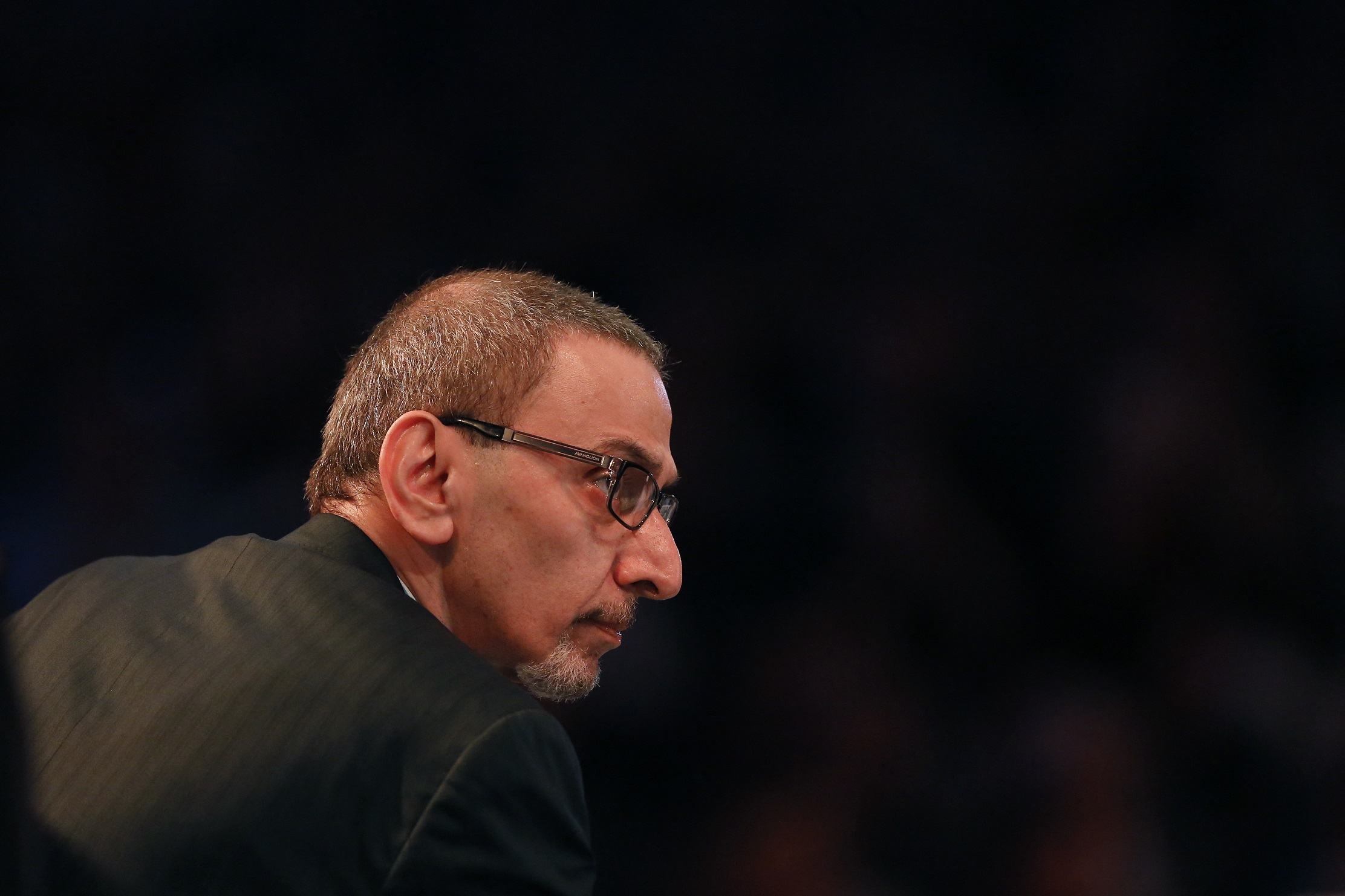
Ziad Rahbani. (AFP)
Despite the recent performative nature of Ziad Rahbani’s funeral, it carried the authenticity of the past and represented a distinct case for several reasons.His deep-rooted ties to the Rahbani family andFairuz’s presence helped create this iconic moment, with audiences attending primarily to offer their condolences. Moreover, Ziad’s fans outside Lebanon regarded him as a personal friend, someone with whom they shared memories through his works and a companion in their daily lives through his beliefs and songs.



 Messenger
 Whatsapp
 Threads
 Email
Email
 Print
Print
 X
X
 Facebook