Among the voices of the Arabian Peninsula, Talal Maddah remains a singular icon, not just for his presence, but for the profound impact that stretched from the magic of his songs to the depths of cultural identity. “The Earth’s Voice” was more than a singer, he was the founder of a musical school that redefined Saudi and Arab singing. His voice became intertwined with collective memory, coming to symbolize honesty and wonder.
Talal was born in a time when his art had no clear regional models, thereby carving his own path through his musical intuition. He moved from emulating Hijazi classical singing to developing a style that blended Khaleeji melodies with the classical Arabic maqam. His songs were more than just melody and voice, they were an emotional project that expressed the human experience in its confusion, longing, and heartbreak.
Twenty-five years after his passing, his voice remains alive. It slips unexpectedly into a traditional music session, a hip-hop track, or the stage, never feeling out of place. This presence is not merely a nostalgic echo, it is the continuation of an art that never ages.
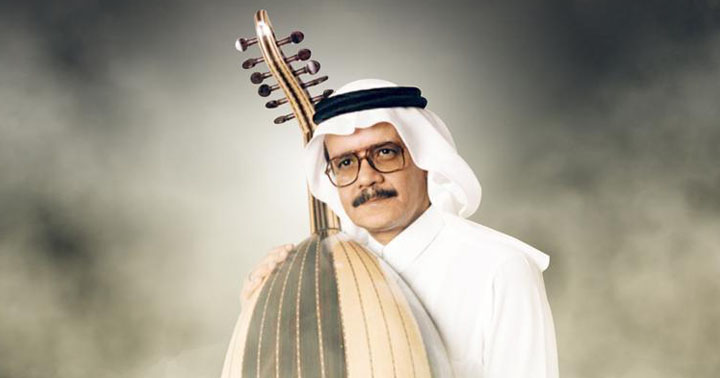
The late artist Talal Maddah (photo from the internet).
And if an icon never truly fades but is continually reinterpreted and repurposed, a recent development in the music world confirmed that Talal Maddah’s voice still finds its way into the present in unexpected forms.
In a song titled “So Be It”, the American hip-hop duo “Clipse” sampled a segment from Talal Maddah’s 1977 song “Maza Akoulou,” with lyrics by Fata El Shatea and music composed by Mohamed Abdel Wahab.
The music producer Pharrell Williams, known for his passion for classical Arabic music, used Maddah’s voice in a clever way: the phrase “Maza Akoulou” is rhythmically chopped and repeated, while the song’s iconic violin interlude is reclaimed as a central sonic element.
Talal Maddah therefore enters the auditory memory of a new generation, through a different musical language, without losing any of his essence.
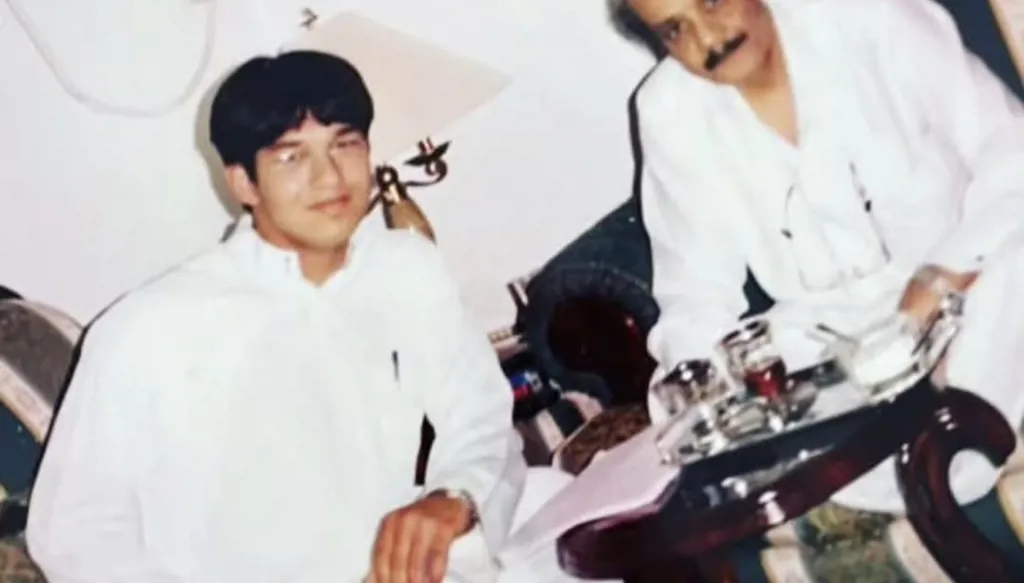
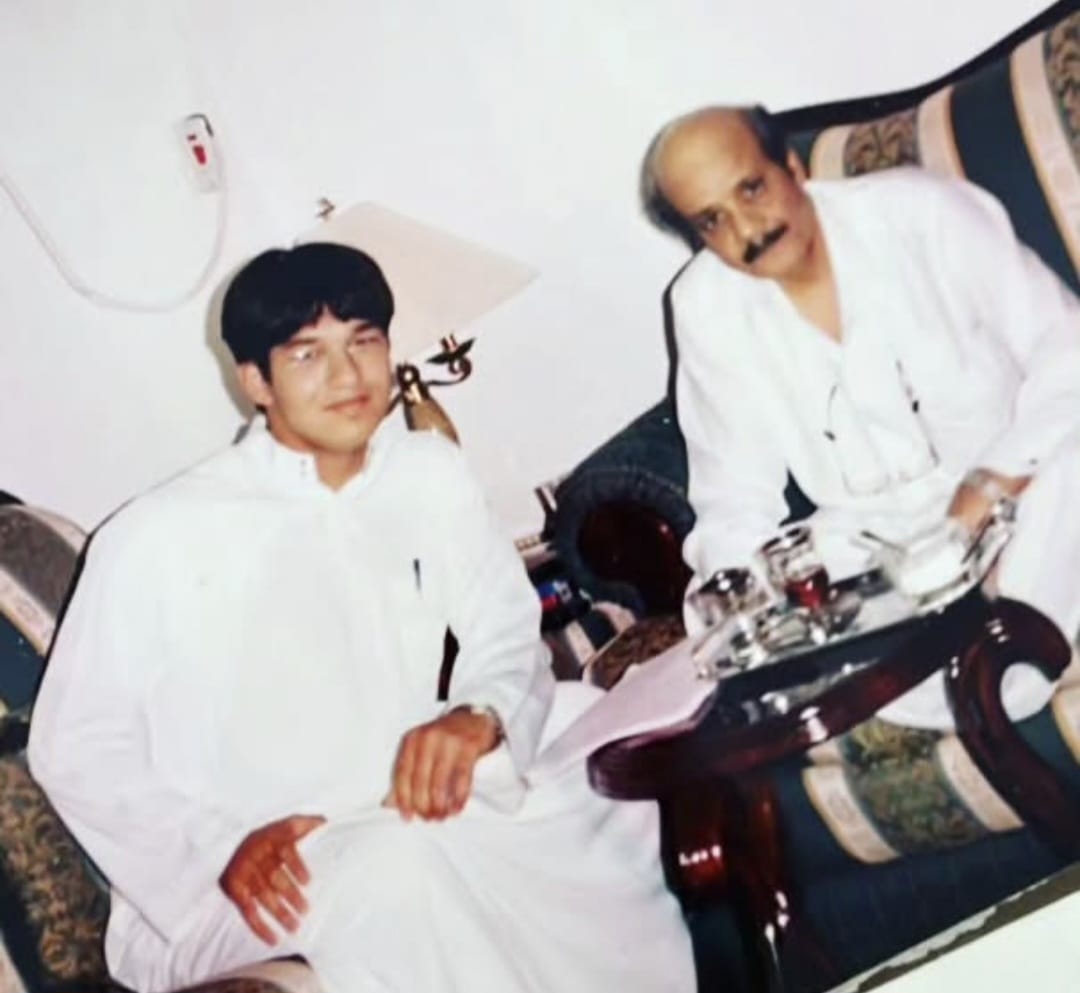
Saudi journalist and writer Ahmed Adnan in a photo with the late Talal Maddah in 1998.
The Saudi writer and journalist Ahmed Adnan comments on Talal Maddah’s iconic status, saying: “His transformation into a cultural icon was not a mere coincidence, but the result of an extraordinary combination of human and artistic factors. He possessed a simple, humble, and generous character that fame and the spotlight never changed, achieving continuous success over many decades while preserving his authentic artistic spirit.”
He adds: “He offered a unique and distinctive experience, blending experimentation and adventure, art for art, with an awareness of the market. Moreover, the recognition he received from major figures in Arabic music such as Mohamed Abdel Wahab, Mohamed El Mougi, and Baligh Hamdi, who composed for him, further cemented his artistic stature.”
Adnan continues: “In the realm of Khaleeji music, his collaborations with major figures such as Badr bin Abdul Mohsen, Lutfy Zainy, and Mohammad El Abdallah El Faisal—whether on compositions by Serag Omar or his own—represented pioneering milestones ahead of their time. Then came his dramatic passing on the “Al Muftaha” theatre, which gave his life story a legendary dimension, prompting new generations to rediscover him as a timeless artist.”
Talal crafted his musical color without confining himself to it. He sang with the oud and with a full orchestra, exploring both Hijazi lyrical texts and classical Arabic poetry.
The brilliance of “Maqadir” was not a mere stroke of luck, but a meticulously crafted work that transcended borders. The melody is lyrical, interspersed with musical interludes that carry the listener from one emotional shore to another. The voice is charged with emotion and longing, while the lyrics lean on expressive simplicity that reflects the depth of Khaleeji emotional experience. The words were written by Prince Mohammed bin Abdallah Al Faisal and composed by Serag Omar. In “Allah Yirudd Khoutak,” a tender tone emerges; in “Zaman Al-Samt,” we are touched by the contemplative wisdom; and in “Arfod Al Masafa,” it is almost a man’s cry confronting absence.
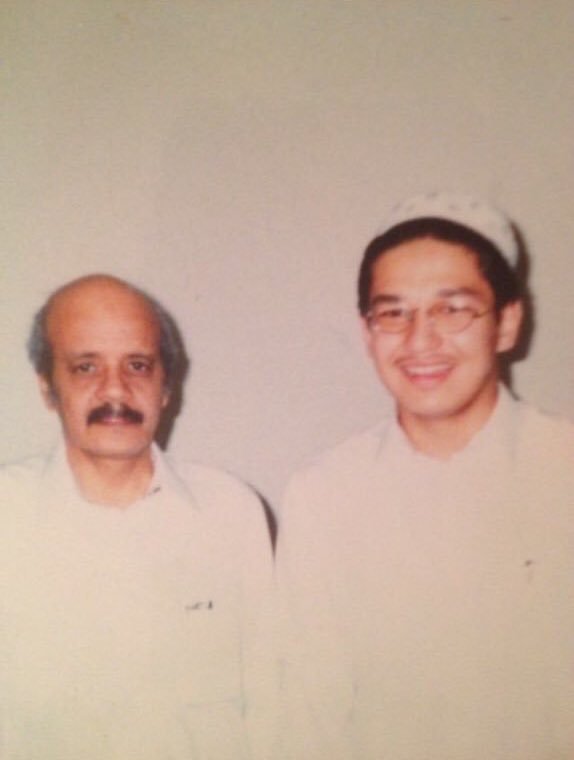
Saudi journalist and writer Ahmed Adnan in a photo with the late Talal Maddah in 1999.
Talal Maddah’s iconic status was not built on charisma or stage presence, but on the depth of his content and the beauty of his voice. He was the “people’s artist,” without pretense, and the only one who bridged the gaps between poetry and melody, the intellectual and the common listener, the traditional and the modern.
Talal was not just “The Earth’s Voice,” but the voice between the earth and the soul, a lover forged in pain and honesty. He died on stage (August 11), just as he was born on it, standing, as if he were singing to the heavens. His passing felt like the final note of a melodic phrase that began sixty years ago, yet has not truly ended.



 Messenger
 Whatsapp
 Threads
 Email
Email
 Print
Print
 X
X
 Facebook