

Lifestyle
12-12-2025 | 12:58
Ibn Khaldun’s cave in Algeria: A sanctuary that protected the author of The Muqaddimah
This secluded refuge became a historic cradle of sociological thought and remains a significant cultural and intellectual landmark today.


 Messenger
 Whatsapp
 Threads
 Email
Email
 Print
Print
 X
X
 Facebook
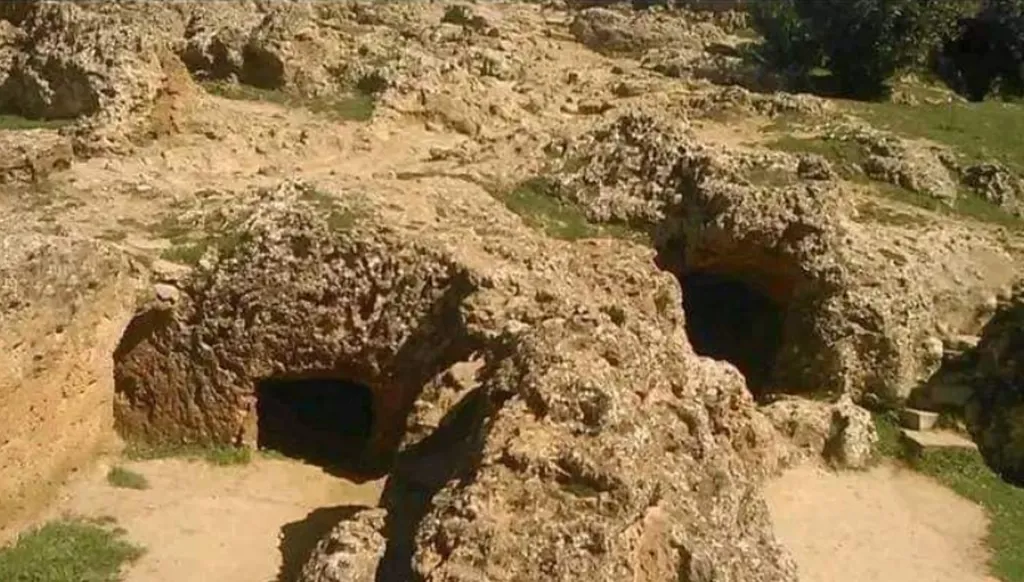
Ibn Khaldun Cave.


The founder of sociology, Abd al-Rahman Ibn Khaldun, states in his book The Muqaddimah that “states have lifespans…,” and the lifespan of the cave in which he sought refuge for nearly four years has exceeded six centuries.
In the heights of the Tell Atlas Mountains, at an elevation of nearly 1,300 meters above sea level, stands the Beni Salama Fortress, 400 kilometers west of the Algerian capital. Inside this fortress are three caves, now collectively known as the retreat of Abd al-Rahman Ibn Khaldun’s retreat, the famous sociologist and author of The Muqaddimah
In three years and ten months, between 1375 and 1379, Ibn Khaldun produced one of the most important books in human history.
He withdrew to the caves after a rich life filled among ruling courts and scholarly circles, where he mingled among people with the insight of a learned man.
The caves themselves were inspiring; indeed, they witnessed the birth of a major reference in global social studies and marked the articulation of foundational principles for one of the most important human sciences: sociology.
Historians say that Ibn Khaldun “offered human thought a philosophy of history considered the greatest work ever accomplished by the human mind, at any time or place,” and that his book The Muqaddimah left no field untouched: religion, history, geography, economics, urban development, sociology, politics, and medicine.
The Cave and the City…
Journalist and researcher Mohamed Bin Zayan explains that the Frenda region, where the caves are located, has not yet revealed all of its historical wealth “The city is deeply rooted and held importance throughout different historical periods, from the Romans and Phoenicians to the Vandals.”
He adds that the region is also in need of further archaeological research, as nearby are heritage sites of great value, such as the pyramids locally called “Lajdar.” In its surroundings also arose the Rustamid dynasty, which later moved to Ouargla in southeastern Algeria following conflicts with the Fatimids, Bin Zayan told Annahar Al-Arabi.
He further notes that Frenda is the birthplace of the great French thinker Jacques Berque, the translator of the Holy Quran and the pre-Islamic Mu‘allaqat poetry, and that his library, donated by him, is located there.
As for Ibn Khaldun’s Cave, Bin Zayan says: “It is part of a series of caves scattered across Algeria, from the Cervantes Cave in the capital to the Beni Add Cave in Tlemcen. Most of these caves were linked to military fortifications or Sufi or literary retreats, each with its own unique features.”
A Shelter and a Refuge
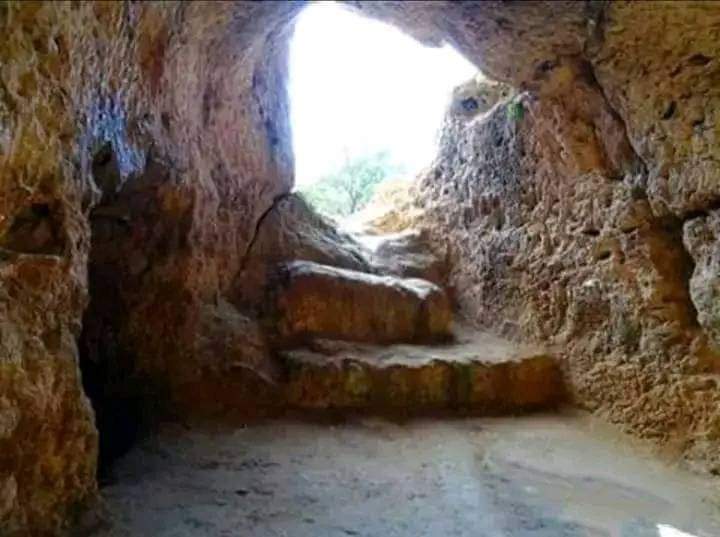
Upon entering the cave, you notice that the main cave is directly connected to small rooms, which Ibn Khaldun used as a shelter and refuge. It offered him protection from the rulers of Tlemcen, the city where he spent part of his life before tensions with its rulers caused him to flee to this very cave.
Historians recount that the rulers of Tlemcen (600 kilometers west of Algiers) had sent Ibn Khaldun on a so-called mission to southeastern Algeria with the intent of killing him and silencing his voice. However, Ibn Khaldun realized the plot and, disguised as a shepherd, took refuge on his way in the cave of Frenda.
The cave overlooks one of the main routes once used by many commercial caravans, which enabled him to follow the news of people in all their diversity and ways of life. From this, Ibn Khaldun drew inspiration for his writings on human nature, especially that of the people of the Maghreb and North Africa in general.
“One of the Most Spacious and Lively Dwellings”
After years of neglect, heritage specialists in Algeria became aware of the importance of the historic, cultural, and even touristic symbolism of its site.. The cave has since become a destination for many visitors who are eager to explore the place that inspired Ibn Khaldun and contributed to an intellectual production that has benefited all humanity..
The renovations overseen by the Directorate of Culture in Tiaret Province, along with the Algerian Office for the Management of Protected Cultural Properties, have helped preserve the cave and highlight what researcher Abd al-Rahman Khalifa calls its “Khaldunian charms.”
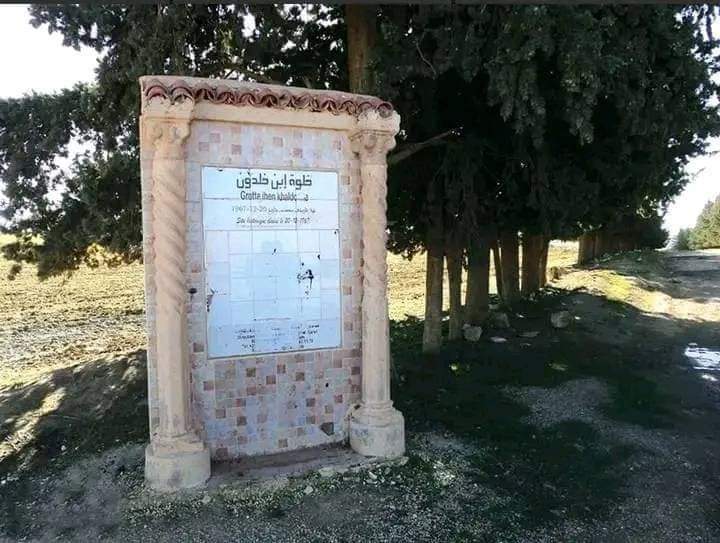
Today, the cave is guarded and marked with informational signs that introduce visitors to the site and its famous inhabitant.
The fascination with Ibn Khaldun’s Cave defies description. Visits are constant, both in groups and individually. Scholars of Ibn Khaldun’s thought and admirers of his work continually visit this symbolic place, spending hours wandering through its spaces, imagining Ibn Khaldun as he penned his ideas in The Muqaddimah, especially since the cave itself is described by Ibn Khaldun as “one of the most spacious and lively dwellings.”
Professor of Anthropology and Linguistics at Tiaret University, Ammar Mahmoudi, confirms that European universities show great interest in this cave, and that their students frequently visit it, particularly those studying social and human sciences. Students from Arab universities in Lebanon, Syria, Egypt, and even the Gulf also come.
This has transformed the cave into more than just a heritage landmark, it has become a center of social, historical, and touristic influence. This, in turn, has prompted local authorities in Tiaret Province to prioritize it within regional tourism and heritage plans.
Despite his deep attachment to Algeria’s cities and the inspiration it gave him to produce some of the finest works of sociology in history, Ibn Khaldun did not die in Algeria. After living, traveling, writing, and even marrying a woman from Constantine, he eventually settled in Egypt in 1384, where he remained until his death in March 1406.
In the heights of the Tell Atlas Mountains, at an elevation of nearly 1,300 meters above sea level, stands the Beni Salama Fortress, 400 kilometers west of the Algerian capital. Inside this fortress are three caves, now collectively known as the retreat of Abd al-Rahman Ibn Khaldun’s retreat, the famous sociologist and author of The Muqaddimah
In three years and ten months, between 1375 and 1379, Ibn Khaldun produced one of the most important books in human history.
He withdrew to the caves after a rich life filled among ruling courts and scholarly circles, where he mingled among people with the insight of a learned man.
The caves themselves were inspiring; indeed, they witnessed the birth of a major reference in global social studies and marked the articulation of foundational principles for one of the most important human sciences: sociology.
Historians say that Ibn Khaldun “offered human thought a philosophy of history considered the greatest work ever accomplished by the human mind, at any time or place,” and that his book The Muqaddimah left no field untouched: religion, history, geography, economics, urban development, sociology, politics, and medicine.
The Cave and the City…
Journalist and researcher Mohamed Bin Zayan explains that the Frenda region, where the caves are located, has not yet revealed all of its historical wealth “The city is deeply rooted and held importance throughout different historical periods, from the Romans and Phoenicians to the Vandals.”
He adds that the region is also in need of further archaeological research, as nearby are heritage sites of great value, such as the pyramids locally called “Lajdar.” In its surroundings also arose the Rustamid dynasty, which later moved to Ouargla in southeastern Algeria following conflicts with the Fatimids, Bin Zayan told Annahar Al-Arabi.
He further notes that Frenda is the birthplace of the great French thinker Jacques Berque, the translator of the Holy Quran and the pre-Islamic Mu‘allaqat poetry, and that his library, donated by him, is located there.
As for Ibn Khaldun’s Cave, Bin Zayan says: “It is part of a series of caves scattered across Algeria, from the Cervantes Cave in the capital to the Beni Add Cave in Tlemcen. Most of these caves were linked to military fortifications or Sufi or literary retreats, each with its own unique features.”
A Shelter and a Refuge
Upon entering the cave, you notice that the main cave is directly connected to small rooms, which Ibn Khaldun used as a shelter and refuge. It offered him protection from the rulers of Tlemcen, the city where he spent part of his life before tensions with its rulers caused him to flee to this very cave.
Historians recount that the rulers of Tlemcen (600 kilometers west of Algiers) had sent Ibn Khaldun on a so-called mission to southeastern Algeria with the intent of killing him and silencing his voice. However, Ibn Khaldun realized the plot and, disguised as a shepherd, took refuge on his way in the cave of Frenda.
The cave overlooks one of the main routes once used by many commercial caravans, which enabled him to follow the news of people in all their diversity and ways of life. From this, Ibn Khaldun drew inspiration for his writings on human nature, especially that of the people of the Maghreb and North Africa in general.
“One of the Most Spacious and Lively Dwellings”
After years of neglect, heritage specialists in Algeria became aware of the importance of the historic, cultural, and even touristic symbolism of its site.. The cave has since become a destination for many visitors who are eager to explore the place that inspired Ibn Khaldun and contributed to an intellectual production that has benefited all humanity..
The renovations overseen by the Directorate of Culture in Tiaret Province, along with the Algerian Office for the Management of Protected Cultural Properties, have helped preserve the cave and highlight what researcher Abd al-Rahman Khalifa calls its “Khaldunian charms.”
Today, the cave is guarded and marked with informational signs that introduce visitors to the site and its famous inhabitant.
The fascination with Ibn Khaldun’s Cave defies description. Visits are constant, both in groups and individually. Scholars of Ibn Khaldun’s thought and admirers of his work continually visit this symbolic place, spending hours wandering through its spaces, imagining Ibn Khaldun as he penned his ideas in The Muqaddimah, especially since the cave itself is described by Ibn Khaldun as “one of the most spacious and lively dwellings.”
Professor of Anthropology and Linguistics at Tiaret University, Ammar Mahmoudi, confirms that European universities show great interest in this cave, and that their students frequently visit it, particularly those studying social and human sciences. Students from Arab universities in Lebanon, Syria, Egypt, and even the Gulf also come.
This has transformed the cave into more than just a heritage landmark, it has become a center of social, historical, and touristic influence. This, in turn, has prompted local authorities in Tiaret Province to prioritize it within regional tourism and heritage plans.
Despite his deep attachment to Algeria’s cities and the inspiration it gave him to produce some of the finest works of sociology in history, Ibn Khaldun did not die in Algeria. After living, traveling, writing, and even marrying a woman from Constantine, he eventually settled in Egypt in 1384, where he remained until his death in March 1406.