Fatima Tartousi: Guardian of Tripoli’s copper legacy
In Tripoli’s old market, master coppersmith Fatima Tartousi preserves her family’s century-old craft with unwavering dedication, carving stories into copper as she keeps a fading art alive.
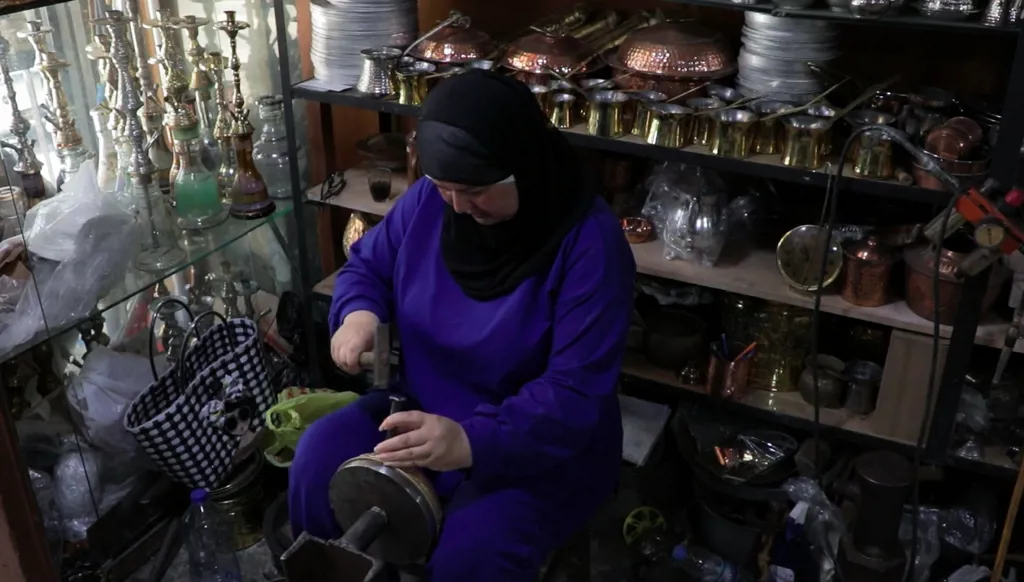
Fatima Tartoussi in the copper shop in Tripoli (An-Nahar).
In the heart of Tripoli's ancient market, where craftsmanship mingles with the remnants of history, Fatima Tartousi sits outside her small shop. She is surrounded by copper pots engraved with incredible precision.
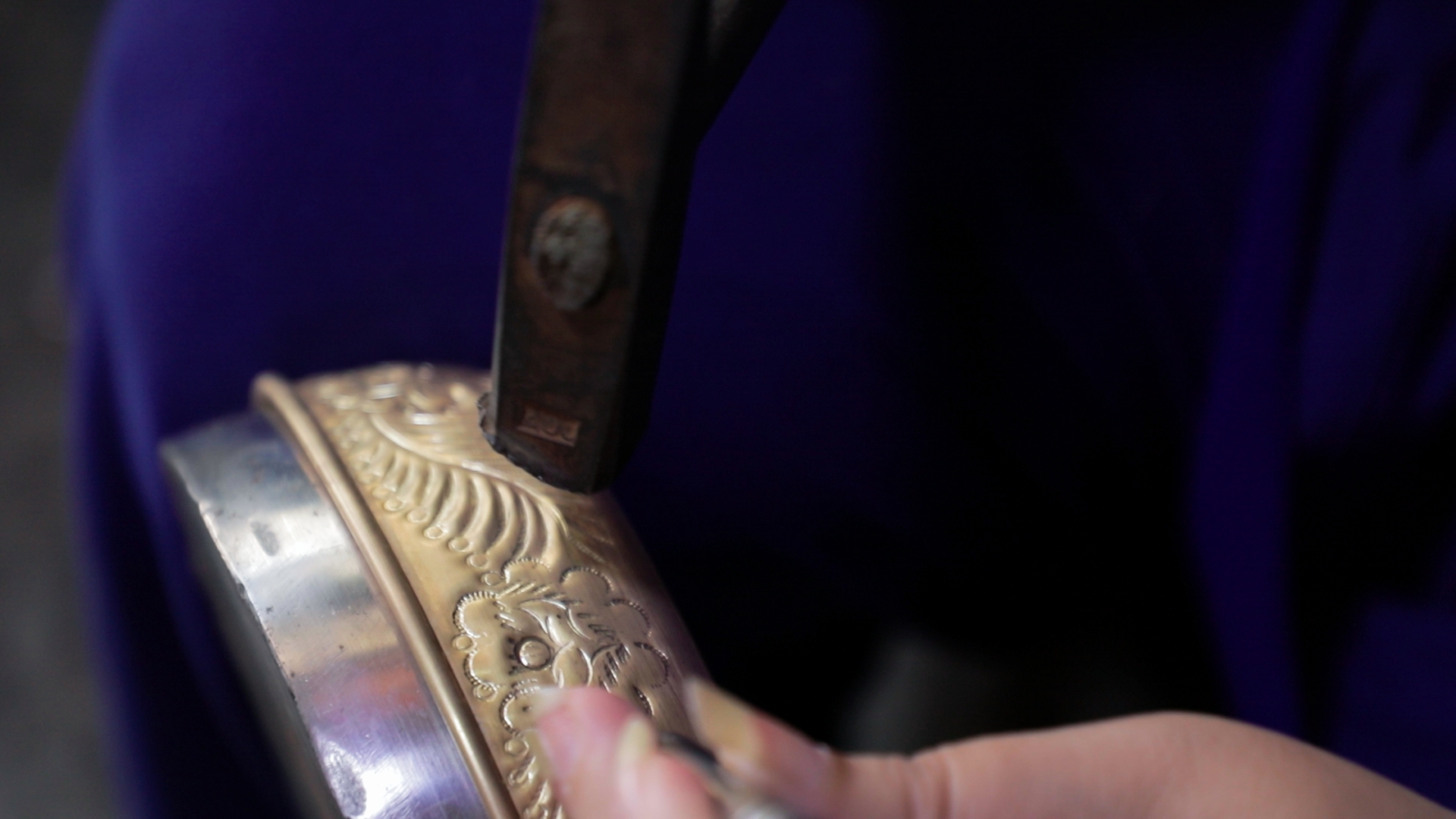
The hammer that she uses to engrave the designs is not just a tool; it is an extension of a memory spanning more than a century. Tartousi is not only a coppersmith, but also the guardian of a profession passed down through her family for generations.
in the copper shop in Tripoli (An-Nahar).
"At the age of nine, I decided to stay at this factory with my family," she says, wiping sweat from her forehead, as she continues to engrave with great care. Tartousi inherited the profession from her father, who inherited it from his father. In her family, copperwork was not just a male craft; it was a legacy passed down by women and men who believed in its importance.
In a world that is gradually abandoning handicrafts and local industries, Tartousi refuses to let the profession become a mere memory. She engraves stories on trays, cups, incense burners, and hookah plates with her fingers. These items have been the best-selling products in recent times.
The road was not easy. In an environment where women rarely engaged in heavy crafts, Tartousi was criticized, but persisted. Today, visitors from Lebanon and abroad come to her to buy locally made copper goods instead of imported items manufactured with modern machines and materials.
When asked about her work, Tartousi insists that the craft she has practiced for 40 years has always been a hobby. She says, "My father did not have a son to inherit this profession. There are four of us girls, and typically, the male inherits the family's manual professions, but I insisted on learning it and encouraged my three sisters, so we became a complete team.”
Although Tartousi employs five people at her small factory, she often insists on doing the work herself, as her profession remains a source of enjoyment and inspiration.





 Messenger
 Whatsapp
 Threads
 Email
Email
 Print
Print
 X
X
 Facebook