

Elissa and Carthage: A study that challenges long-held beliefs about Carthage's origins
Although legend tells that a Phoenician princess who fled the city of Tyre in southern Lebanon was behind the founding of the great city of Carthage, the results of a new scientific study have debunked this theory


 Messenger
 Whatsapp
 Threads
 Email
Email
 Print
Print
 X
X
 Facebook
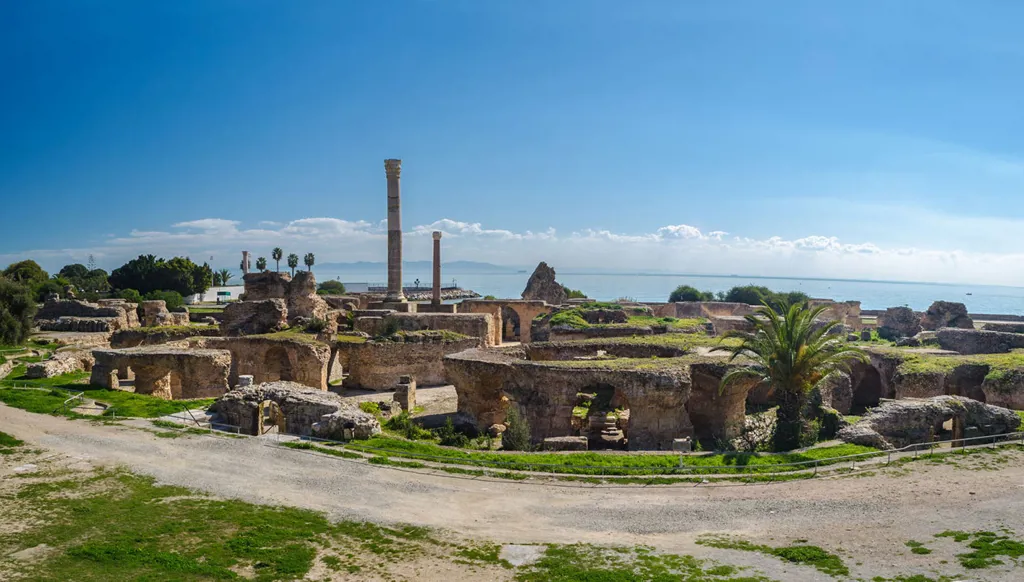


According to legend, a Phoenician princess who fled the city of Tyre in southern Lebanon went on to found the great city of Carthage. The story recounts that, thanks to her extraordinary intelligence, this princess purchased the land on which she founded one of the largest empires in ancient history for “only the hide of a bull.”
Tunisian tradition often recalls this legend when discussing the founding of Carthage and the origins of the Carthaginians, who established an empire far exceeding the borders of that small geographical area. However, the results of a new scientific study have cast doubt on this legend and other prevailing beliefs about the history and origins of the Carthaginians. “The Carthaginians are not Phoenicians,” concluded a study conducted by American researchers over a period of more than eight years.
On April 23, 2025, the scientific journal Nature published a groundbreaking study that revealed unexpected findings regarding the genetic identity of the ancient inhabitants of Carthage, representing “a major shift in our understanding of the origins of Carthaginian civilization,” according to historian and academic at the University of Tunis, Boubaba Nsiri.
The study was conducted by a team of geneticists from Harvard University and the Max Planck Institute in Germany, using modern techniques to analyze DNA extracted from ancient human remains in the Mediterranean basin.
The cost of this study exceeded $7 million, according to Al-Nusairi, who confirms that the research team used the latest techniques in DNA analysis, making its findings “an important scientific discovery.”
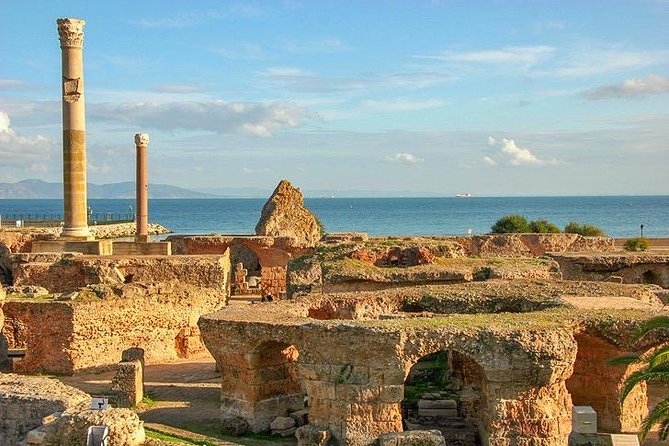
Correcting History
Based on ancient stories and legends, it has long been believed that the city of Carthage was founded in the 9th century BC by a Phoenician princess named Elissa (Dido), who fled from the city of Tyre, in present-day Lebanon.
The legend that Elissa bought the land on which she founded Carthage in exchange for a bull's hide became a symbol of the political acumen behind the most powerful ancient civilizations and is attributed to the Phoenicians.
However, according to Al-Nusairi, the new study, which is “the largest of its kind but not the only one,” analyzed the genes of 203 individuals from archaeological sites in Carthage, Sicily, Sardinia, and southern Spain, dating back to 1200 BC.
The results of the study presented a different narrative that “overturned all the prevailing narratives for centuries,” according to the Tunisian historian. As Al-Nusairi explained, “the results showed that the genetic footprint of the Phoenicians in the population of Carthage was very low, compared to a large proportion of local North African origins.”
Cultural influence
Based on this study, the Phoenician influence in the region did not extend beyond trade and culture, and was limited to the spread of the alphabet, religious traditions, and certain architectural styles. However, the Phoenicians “did not constitute the majority of Carthage's population.” says Al-Nusairi, who points out that “the Phoenicians who came to Carthage, numbering no more than 70 individuals according to some accounts, came as refugees and not as invaders or colonizers.”
He continues: “Phoenician is not a civilization, but rather a description of merchants who had many enemies, which forced some of them to seek refuge in Carthage, which at that time was known as a land of peace and tolerance.”
The speaker emphasizes that Carthage is an ancient civilization, unique in that it was a civilization of laws and legislation, having “enacted the world's first constitution and laws guaranteeing the rights of women, children, and the elderly. It also granted women rights that many countries are still struggling to achieve, such as the right to land ownership, inheritance, and abortion.”
Due to this study, Al-Nusairi argues that “It will be important to rewrite history based on what science has revealed, not on narratives that have prevailed for centuries without scientific proof.”
He emphasizes that Carthaginian civilization is “a product of its environment” and a local creation of the region's indigenous peoples, not the result of external colonization. “The issue here has less to do with genetic origins than it does with identity above all else.”
Al-Nusairi points out that this study refutes all the narratives and myths that have been circulating for decades, confirming that Carthage “was a local civilization with local roots and identity.”
A big stir
The study caused a big stir in Tunisia and was discussed in social media posts by a number of history experts, who asserted that there were many inaccuracies in this narrative, continuing to advance the historically accepted account proven by leading historians in Tunisia and around the world. Others who adhere to the Carthaginian identity theory considered this study to be a “bombshell” that must be relied upon to correct history.