

By the numbers and by law: How countries fought the digital storm to protect children
While some bet on awareness and family control, more governments consider binding legislation the most effective tool for forcing tech companies to assume their ethical and legal responsibilities towards children and teenagers.



 Messenger
 Whatsapp
 Threads
 Email
Email
 Print
Print
 X
X
 Facebook



When Australia made its decision to ban the use of social media platforms for those under sixteen, it knew that the step was not a punishment but a preventive measure to protect minors in a highly sensitive age group. Australia chose to engage in an early confrontation with an unregulated expanding digital world, becoming the first country to break from the norm in a virtual space that has started to strongly dictate daily life.
This world, governed by view races, numbers, and 'trends', often ignores the high psychological cost of this digital addiction, especially on children and teenagers, being the most vulnerable and affected groups. Therefore, the Australian decision was not isolated but opened the door to a rising wave of international voices and movements that sounded the alarm, calling for banning or restricting the use of social media at an early age.
Consequently, other countries followed Australia’s path or started down the same route, driven by increasing study results linking early and excessive use of these platforms to higher rates of anxiety, depression, psychological isolation, and even suicide.
"Our children's feelings are not for sale"
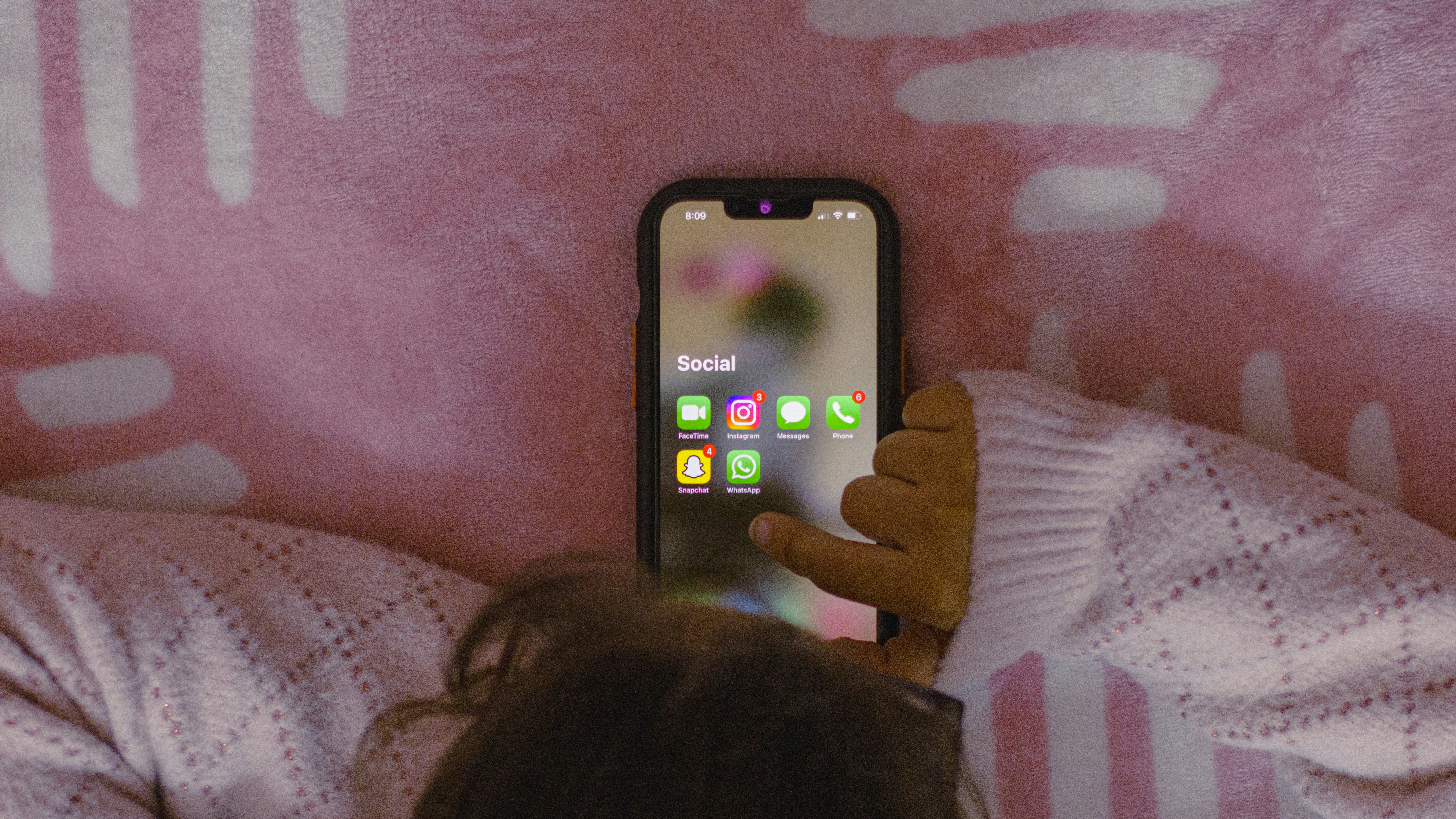
Since December 10, Australia began implementing the law prohibiting children and teenagers under 16 from using social media platforms like 'Instagram', 'YouTube', 'Snapchat', and 'TikTok'. As a result of this measure, platforms canceled about 4.7 million teen accounts just one month after the enactment of this first-of-its-kind global ban.
Conversely, companies that do not comply with the law may face financial fines of up to $49.5 million.
In January 2026, France followed Australia's lead by passing a law prohibiting children under 15 from using social media and banning mobile phones in high schools. The French parliament voted by majority for the legislation, which will be referred to the Senate before coming into effect.
French President Emmanuel Macron considered the adoption of this law as a "great step" towards protecting children and teenagers, affirming that "our children's and teenagers' feelings are not merchandise for sale or manipulation," neither by digital platforms nor through their algorithms.
These initiatives started as limited experiments in countries like Australia and France but quickly transformed into a rapidly expanding global direction. While some rely on awareness and family control, more governments tend to see binding legislation as the most effective tool to force tech companies to take their ethical and legal responsibilities towards children and teenagers.
This trend is supported by concerning data revealed in recent international reports, with a 2024 report from the global Childlight Global Child Safety Institute, affiliated with the University of Edinburgh in Scotland, showing that over 300 million children worldwide fall victim to online exploitation and sexual abuse annually.
The report indicated that pornography affected about 20 percent of children in Western Europe, while 12.5 percent of children worldwide experienced unwanted sexual interactions in the digital space during 2023, highlighting the scale of risks minors face in the virtual world.
Egypt drafts a law
France's move and Australia's leadership served as an impetus for other countries to head in the same direction, foremost among them Egypt, which has also begun serious steps toward this preventive path. The Egyptian parliament is currently studying the preparation of a specific law aimed at regulating the use of social media by children and teenagers, echoing trials adopted in several Western countries.
The draft law, still under preparation, is expected to impose strict financial penalties on global platforms that are lenient in applying age restrictions, alongside obligating them to adopt reliable and effective mechanisms to verify users' ages, thereby limiting minors' access to these digital services.

A report from the National Center for Social and Criminological Research indicated that about half of Egypt's children and teenagers use social media at a rate of 49.8%, compared to 50.2% who do not, an indicator of widespread platform use that raises growing concerns among families and official bodies alike.
A report from the "TikTok" platform issued in mid-January 2026 showed the removal of more than 3.02 million videos during the third quarter of 2025 in Egypt for violating community guidelines. On the live broadcast level, "TikTok" banned 197.88 thousand live stream hosts and stopped 834.24 thousand live streams for policy violations.
Adjusting the digital maturity age?
Amidst this shift, eyes turn to the coming years as a pivotal phase that may redraw the boundaries of what is known as the "digital maturity age," seeking a precise equation ensuring minors benefit from technology without exposing them to its escalating risks.
In Britain, the British House of Lords voted in favor of including a clause banning social media use for those under 16, increasing pressure on the British government to issue the ban, while Denmark reached an agreement to ban children under 15 from accessing some social media platforms, a step that could turn into law by mid-2026. According to the Danish proposal, some parents are granted approval rights for the use of these platforms starting from the age of 13.
In Spain, parliament is studying a draft bill preventing children under sixteen from accessing social media or any virtual space relying on generative AI unless they have explicit parental consent.
In other instances, the draft law sets the minimum age at 14 years to mitigate risks associated with early exposure to inappropriate content, cyberbullying, and digital exploitation of personal data without detailing the nature or precise criteria of these instances.

Furthermore, the Italian parliament is considering a draft law imposing restrictions on children's use of social media under 15. The draft law requires these platforms to verify users' ages through the so-called 'national digital wallet', a means to verify identity linked to the planned European system for age verification.
Meanwhile, the German parliament is considering imposing a comprehensive ban on children below the legal age, without exception, even with parental consent. The government has tasked a committee with studying the feasibility of implementing a similar ban in Germany, along with assessing the broader impact of social media on teenagers.
The Greek government is considering banning social media for children, after a successful experiment in banning smartphones inside classrooms, alongside launching a website directing parents on activating parental control tools.
In the same context, a Turkish parliamentary committee approved a similar proposal aimed at restricting minors' access to social media, as part of an official direction to curb its psychological and behavioral impacts.

Measures in Gulf Countries
On the other hand, Arab countries still face "this frightening digital tsunami" with individual decisions targeting a specific game or application without yet moving towards legislating specific prohibition laws.
So far, there are no regulations in Saudi Arabia banning platform use for children, but the kingdom adopts regulations and measures to protect children from digital risks, such as content monitoring and application rating.
"TikTok" removed about 3.9 million videos for violating community guidelines during the third quarter of 2025, indicating a tightening of proactive content oversight within the platform. The proactive removal rate in Saudi Arabia reached 99.2%, while about 96.7% of violating content was removed in less than 24 hours.
Additionally, Saudi Arabia mandated "Roblox" to halt voice and text chats and to content monitoring. According to a report by The Guardian, the game has attracted approximately 85 million users, 40% of whom are under age 13.
In the UAE, there is no comprehensive ban on minors using social platforms, but new digital laws focus on child protection within the digital environment, including monitoring thousands of platforms to shield children from harmful content.
In this context, "TikTok" removed over a million videos in the UAE during the first three months of 2025 as part of a stringent campaign against content violating its community guidelines. The platform also banned nearly 87 thousand live hosts and stopped more than 140 thousand live broadcasts in the country during the same period.
The UAE also joined Oman, Qatar, Kuwait, and Saudi Arabia in confronting the famous game "Roblox," implementing new modifications in collaboration with the company to enhance digital safety and security levels for platform users, especially children.
In Iraq, on the other hand, the new parliament has yet to elect its parliamentary committees, leaving the government in a caretaker mode, thus preventing serious exploration of new legislative projects at the current stage. As a result, there is currently no draft law in Iraq aiming at banning social media use for those under 16. The only measure is the ban on the "Roblox" game within the country based on decisions from the Federal Supreme Court.

Numbers and statistics
- The monthly number of TikTok users globally is 1.7 billion, ranking it among the top five platforms alongside 'Facebook', 'YouTube', 'X', and 'Instagram'.
- The TikTok platform recorded its highest historical rate of content removal within less than 24 hours, reaching 94.8%.
- TikTok removed over 22 million accounts suspected of belonging to persons under 13 years old worldwide during the third quarter of 2025.
- Globally, TikTok suspended more than 32.2 million non-compliant live broadcasts and banned 623 thousand live hosts.
- TikTok proactively stopped more than 2.48 million live broadcasts in several Arab countries.
- TikTok removed about 17,410,000 videos in the Middle East and North Africa, including Egypt, Saudi Arabia, the UAE, Iraq, Lebanon, and Morocco, from July to September 2025, for violating community guidelines.
- The average number of active monthly users on 'WhatsApp' in the European Union reached 51.7 million in the first six months of 2025.
- The 'Instagram' platform recorded three billion active monthly users, with over 3.8 billion uploads since its launch.
- The 'Facebook' platform registered more than 3.07 billion active monthly users, with approximately 2.11 billion daily active users in 2025.