

After Syria declares zero Lebanese detainees, families demand truth, recognition, and accountability


 Messenger
 Whatsapp
 Threads
 Email
Email
 Print
Print
 X
X
 Facebook


It's not surprising that a statement from Syria reveals there are no Lebanese detainees in Syrian prisons. Years and decades of negligence by both Lebanon and Syria made this outcome inevitable.
Yesterday, a statement emerged from the Syrian Justice Minister, Mazhar Al-Wais, in which he said, "No Lebanese prisoners remain in Syria."
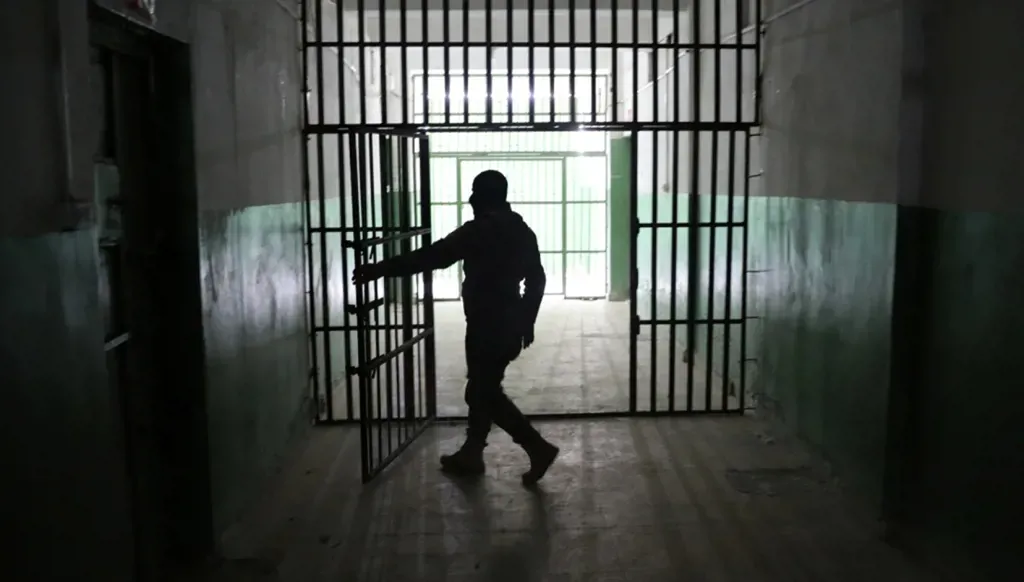
The doors of Syrian prisons have opened, and even secret detention centers have become relatively known, with some of them revealed. But what does this statement mean in practical and "lebanese" terms? More importantly, how can this ongoing crisis finally be addressed?
Ali Abu Dahn, President of the "Association of Lebanese Detainees in Syrian Prisons," states: "Sure, there are no Lebanese detainees left in Syrian prisons. We weren't surprised by this statement, as we've said it ourselves after the fall of the Assad Syrian regime."
Coming from a meeting with Deputy Prime Minister Tarek Mitri, tasked with coordinating with Syria on the matter, Abu Dahn believes the issue should be addressed within a clear framework, especially after the significant changes in Syria in recent years.
He reveals that he requested from Mitri and, through him, the Lebanese authorities, two swift steps: "First, to designate a national day of tribute for all martyrs, detainees, and victims who suffered the Syrian occupation and paid various prices. Second, to make an official announcement to the families of the victims that there are no living Lebanese detainees in Syria."
Abu Dahn emphasizes, "We are talking about Lebanese detainees in Syria specifically, a total of 622 detainees, not about the 17,000 victims of enforced disappearance. These are separate files, and thus, the solutions differ." He adds, "No one can outbid us on this. We want practical and logical mechanisms for the detainees' file, and today, the authorities must take responsibility before the families of the victims."
Fundamentally, official Lebanese negligence is chronic, dating back nearly 35 years, essentially to 1990, the official end of the Lebanese civil war. More specifically, it is linked to April 26, 2005. Meaning, if we were to "justify" the Lebanese regime that existed before that with the pretext of "collusion" with the Syrian regime under the guise of "brotherhood, cooperation, and coordination," after Syria's military withdrawal, it was expected that the Lebanese authorities, which gradually took over governance in Lebanon, should have fulfilled their duty towards this humanitarian file. At that time, perhaps, it might have been possible to release living Lebanese detainees from Syrian prisons. But today, the equation is entirely reversed.
Abu Dahn comments: "It is enough wasting the families' energy, time, and effort. They should be told the truth, accompanied by compensations. And compensations are not limited to just the financial aspect, alike the compensations for those freed from Israeli prisons, but also moral compensations, by commemorating the memory of these martyrs, dedicating a national day to them, and preserving their memory as part of the national memory, which is indivisible."
Loyalty to the cause isn't achieved by telling a detainee's mother, "Your son isn't in Syrian prisons," and closing the file there. On the contrary, according to Abu Dahn, this is where the work begins with clear mechanisms, and as long as there has been significant negligence, the authorities must rectify this path and correct the mistake at the very least.
Over the years, there was still great hope that Lebanese detainees might be alive in Syria. Yet, no Lebanese official or President bothered to ask about them! But today, the sacrifices of the families must be respected, and the detention file in Syria closed, so that the other file, that of the victims of enforced disappearance and mass graves, can be activated... This more than chronic issue will stretch from Lebanon to Syria to begin the search for the remains of sons, husbands, and brothers who were executed in Lebanon and Syria or "between the two," to truly reach transparency and reconciliation.