

Analysis: Iran War Exposes Costly ‘Reload Gap’ as Coalition Burns Through $26 Billion in Munitions


 Messenger
 Whatsapp
 Threads
 Email
Email
 Print
Print
 X
X
 Facebook
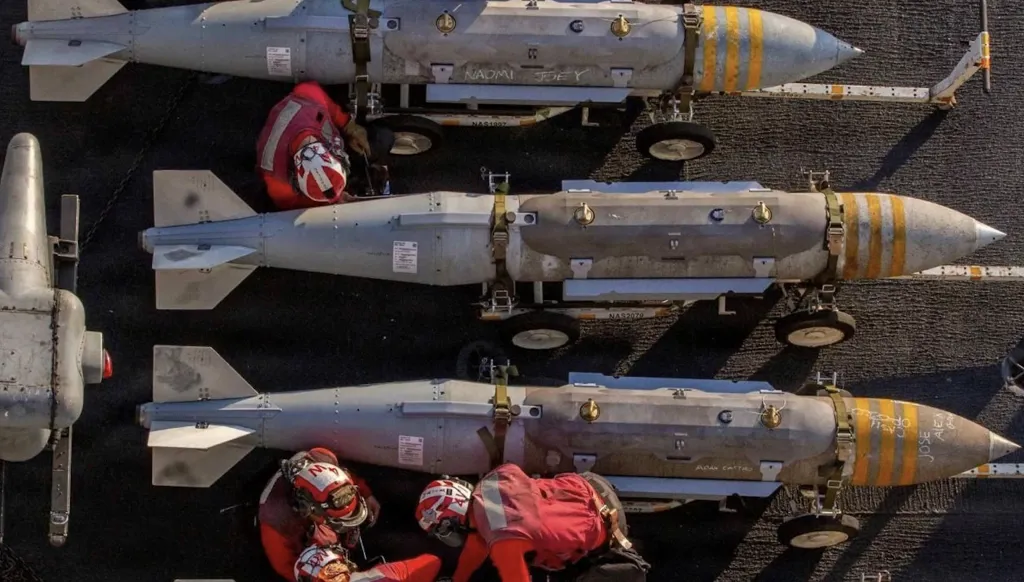


BEIRUT: The first 16 days of the war against Iran have underscored a new reality of modern conflict: battlefield dominance is no longer defined by how much firepower is used, but by how quickly it can be replaced.
According to an analysis by the Royal United Services Institute (RUSI), U.S., Israeli and allied forces expended more than 11,000 munitions in just over two weeks, at an estimated cost of $26 billion. But the true cost runs far deeper.
Replacing those weapons could exceed $50 billion, nearly double the initial expenditure, highlighting what analysts describe as the “premium of wartime industrial velocity,” or the gap between firing weapons and regenerating stockpiles at scale.
A war of rapid depletion
The pace of consumption has been striking. More than 5,000 munitions were used in the first four days alone, before the conflict shifted into a sustained exchange of missiles, drones and airstrikes.
Coalition forces have combined offensive strikes with intensive air defense operations, intercepting waves of Iranian projectiles. But that defensive effort has come at a steep cost, often requiring expensive interceptor missiles to neutralize far cheaper threats.
This imbalance is accelerating the depletion of advanced stockpiles, particularly precision-guided weapons and air defense interceptors.
The rise of “command of the reload”
The RUSI report argues that wars are now governed by what it calls “command of the reload” the ability to sustain combat operations through continuous resupply.
For decades, Western military doctrine emphasized “command of the commons,” the capacity to project power globally across air, sea and space. But in a conflict defined by mass missile and drone warfare, endurance has become the decisive factor.
Even technologically superior forces risk losing their advantage if they cannot maintain a steady flow of munitions.
Stockpiles under pressure
The report warns that current consumption rates could push key weapons systems toward critical shortages within weeks.
Some advanced munitions, particularly long-range strike systems and high-end interceptors, depend on complex manufacturing processes and constrained supply chains, making rapid replenishment difficult.
In some cases, rebuilding stockpiles depleted in just days of combat could take years.
The cost of defense
The war has also exposed a structural weakness in Western defense strategy: cost asymmetry.
Iran and its allies have relied heavily on relatively inexpensive drones and missiles, forcing coalition forces to respond with far more costly systems.
In many instances, multiple interceptors are used to ensure a successful defense, further driving up costs.
Analysts suggest that without a shift toward cheaper, layered defense solutions, such as gun based air defenses, the current model risks becoming economically unsustainable in a prolonged conflict.
Strategic consequences
The implications extend beyond the Middle East.
Every munition used in the Iran war reduces available inventories for other global commitments, from deterrence in Asia to ongoing support for Ukraine.
This creates what analysts describe as a “second-theatre strain,” forcing difficult trade offs between competing priorities and raising questions about long-term readiness.
Endurance as the new metric of power
The central lesson of the conflict is clear: modern warfare is increasingly constrained by industrial capacity rather than battlefield capability.
The gap between the $26 billion spent and the more than $50 billion required to replace it illustrates the growing importance of production speed, supply chains and industrial resilience.
In this environment, military power is no longer measured solely by the ability to strike, but by the ability to keep striking.