

The Greenland gambit: Trump’s bold bid for the Arctic jewel


 Messenger
 Whatsapp
 Threads
 Email
Email
 Print
Print
 X
X
 Facebook
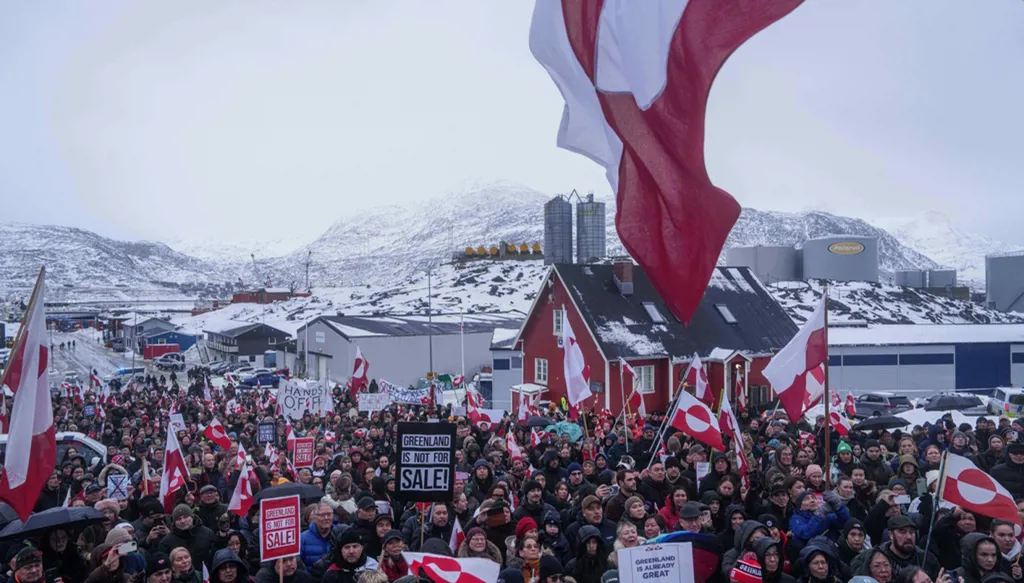


In his bid to acquire Greenland, U.S. President Donald Trump blends two games that have long been popular in America and around the world: "Monopoly" and "Risk." The first is purely commercial, where the winner monopolizes all properties and money, bankrupting the other players one by one. The second is military, where victory goes to the player who defeats the others’ armies and conquers the world.
Greenland, both in the game Risk and in reality, is clearly important due to its size and strategic significance. As the world’s largest island, it spans roughly 2,166,000 square kilometers. About 58,000 people live on this icy land, most of them Inuit—descendants of North American indigenous peoples who migrated there around 4,500 years ago for hunting, and perhaps also to test humanity’s early capacity to adapt to some of the harshest environments on their only home planet.
What interests Trump in the island is not its rich history, the culture of its indigenous people who fiercely strive to preserve it, or even the aurora borealis that paints its skies in mesmerizing shades of blue, green, and purple. He is not concerned with reclaiming its indigenous population as prehistoric Americans either. His focus is on the practical goals mentioned earlier: acquiring its resources and exploiting its strategic geographical location. He seeks to do so either by buying it, as in "Monopoly," or by seizing it through force, as in "Risk."
His claims to Greenland are not supported by international law or established norms. Moreover, its residents have not requested that he “rescue” them from Denmark and bring them under American control, unlike the pretext Vladimir Putin used to justify his invasion of Ukraine. These residents, though few in number, seek full and complete independence from all outside powers.
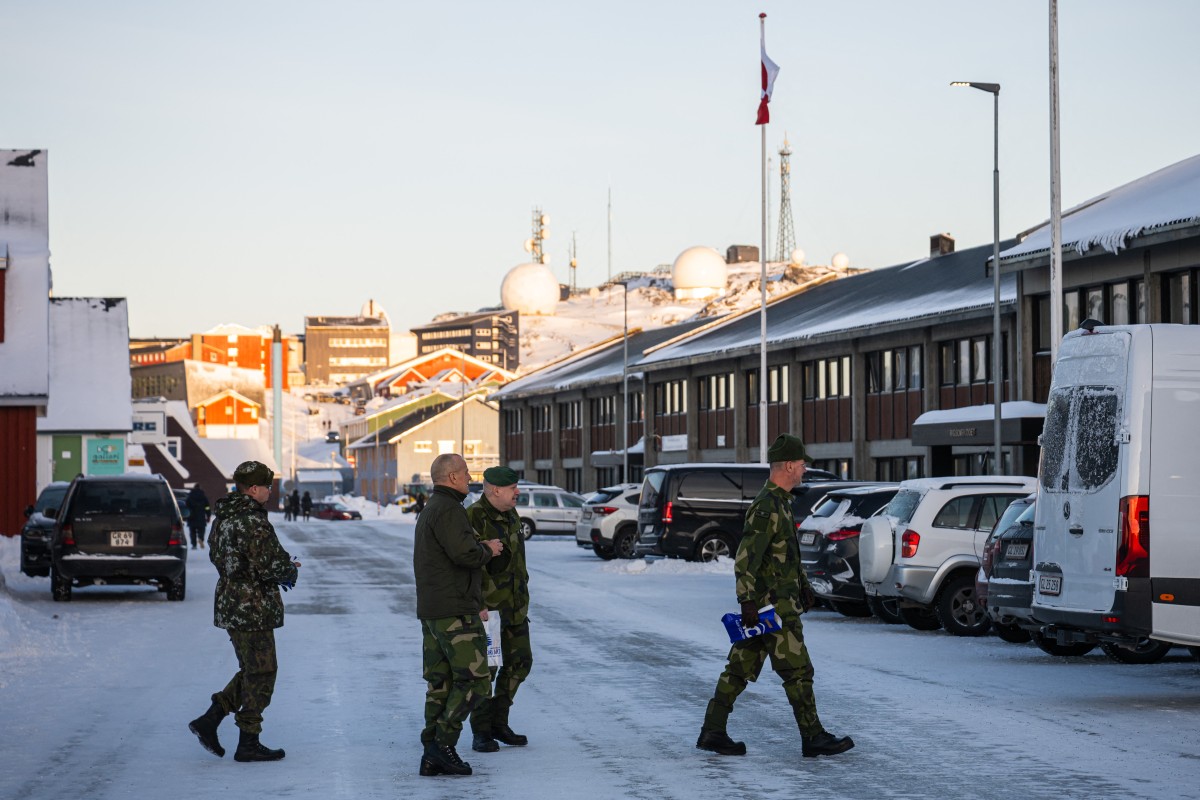
Trump, on the other hand, sees Greenland as a dispute between two colonial powers. What is permissible for the European colonizer, he reasons, should also be permissible for others—especially if they are as strong, or even stronger. Threatening the use of force against NATO is nothing new for him. The potential collapse of the U.S.–European alliance holds little concern, as he has long criticized NATO, calling it a leaky basin that drains American money without offering meaningful returns to its richest and most powerful member. Europeans, in his view, rely on American generosity without ever showing gratitude. So why would he leave them this unique jewel of the planet, while he focuses on closing the dome around America—first against China, then the rest of the world—from the Caribbean and South America all the way to the Arctic?
Trump’s fascination with Greenland did not emerge overnight. William Seward, Secretary of State under President Andrew Johnson, had entertained the idea of acquiring it long before, though no formal negotiations ever took place. In 1867, at that time, the United States purchased another vast territory from its neighbor, the Russian Empire: Alaska, which eventually became the 49th state, followed later by Hawaii as the 50th and final state.
In 1946, Harry Truman offered Denmark $100 million for the icy island, an offer the kingdom rejected as entirely inadequate, regardless of the currency’s value at the time. Today, Donald Trump frames his proposal in the spirit of Don Vito Corleone’s immortal line from The Godfather: “An offer he can’t refuse.” The phrase carries two implications: either the offer is irresistibly generous, or the consequences of refusal would be dire and mysterious—at minimum, reminiscent of placing a severed horse’s head in the bed of its sleeping owner.
Either "Monopoly," or "Risk," or both.
Disclaimer: The opinions expressed by the writers are their own and do not necessarily represent the views of Annahar.