

Trump Warns Iran Over Violent Crackdown on Protests: Policy Signal or Military Threat?


 Messenger
 Whatsapp
 Threads
 Email
Email
 Print
Print
 X
X
 Facebook
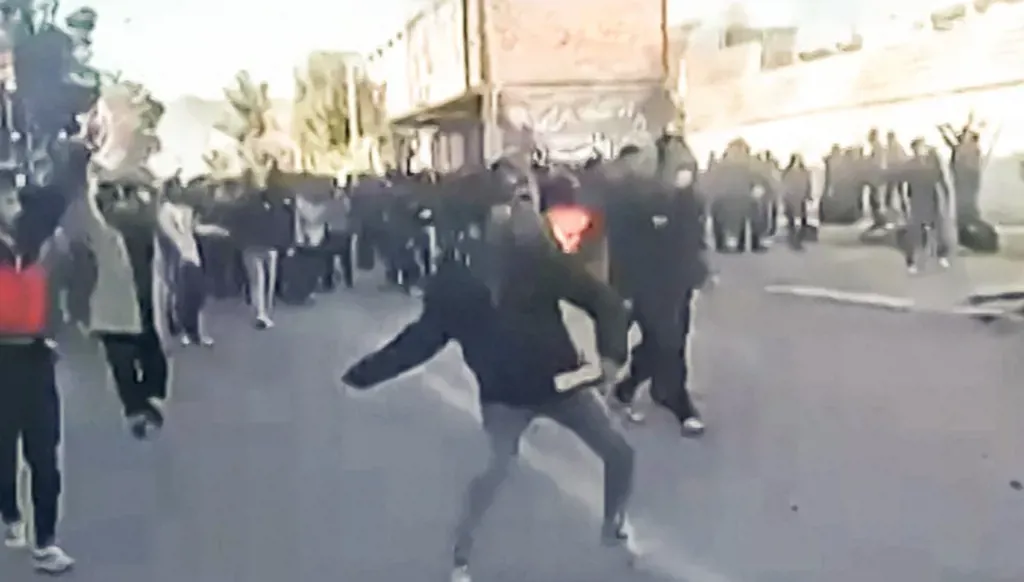


In a notable escalation, U.S. President Donald Trump issued a direct warning to Iran against using violence against protesters, hinting at a potential American intervention. This comes amid escalating protests triggered by a severe economic crisis, casualties, and renewed regional tensions placing unprecedented internal and external pressure on Tehran.
Trump threatened intervention if Iran violently suppresses the ongoing protests, increasing pressure on Tehran in its attempt to contain the discontent over its deteriorating economy.
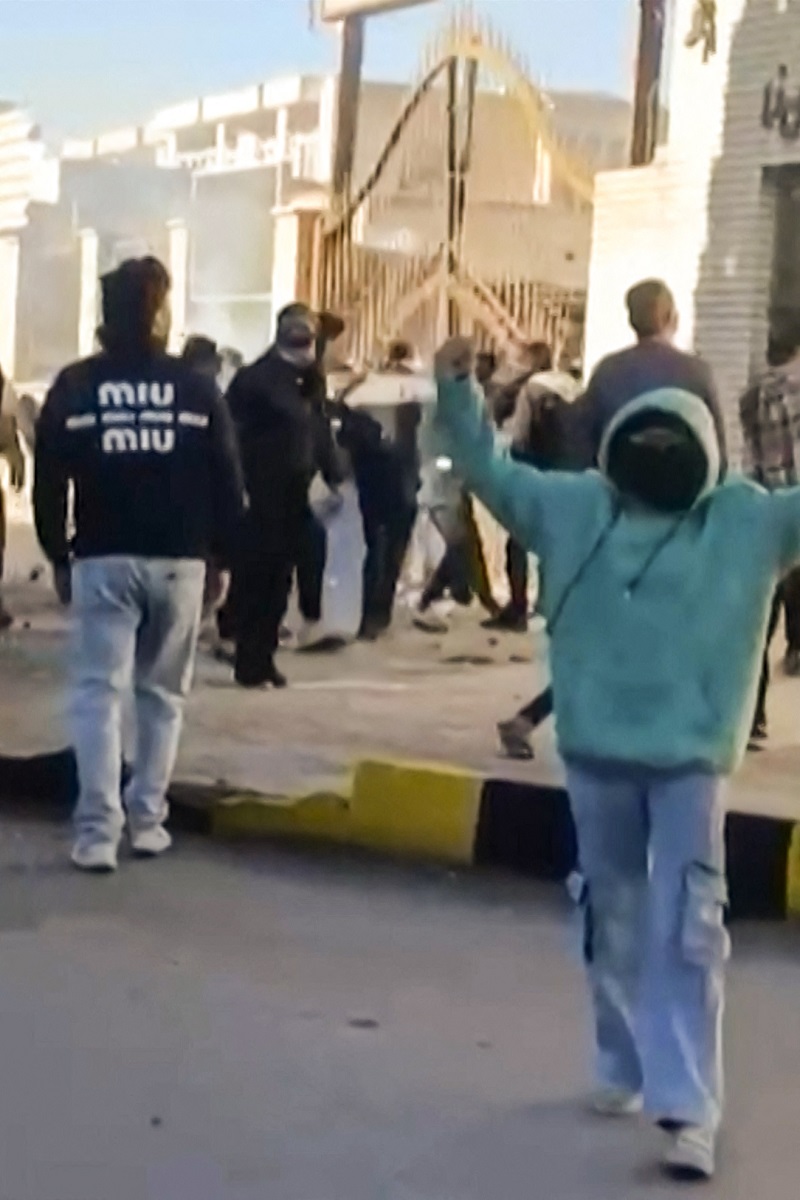
This warning came as the demonstrations, which have lasted nearly a week, turned violent, with clashes between protesters and police resulting in several deaths.
Trump said on the platform "Truth Social": "If Iran fires and violently kills peaceful protesters, as is its custom, the United States will save them. We are ready and prepared to act."
It is not yet clear what action Washington might take. It has imposed sanctions on Iranian human rights violators during previous waves of unrest, but Trump has pursued a more aggressive foreign policy, including bombing Iranian nuclear sites over the summer, even as he continued efforts to achieve peace in Gaza and elsewhere, according to "The Wall Street Journal". Trump had previously warned earlier this week during a meeting with Israeli Prime Minister Benjamin Netanyahu that Iran would face military strikes if it attempted to rebuild its missile or nuclear programs, which were severely damaged during the June war.
The "New York Times" stated that "it is unclear whether any planning for such a move is underway or whether the administration will actually implement Trump's threat".
Bloomberg agency noted that Trump's statements indicate his readiness to intervene in foreign crises he had pledged during his campaign to avoid.
Edward B. Joseph, a lecturer and senior fellow at the Johns Hopkins School of Advanced International Studies in Washington, tells "An-Nahar" that Trump's warning on Truth Social about "coming to save" protesters in Iran if the government fires at them and kills them is simultaneously unserious and serious. First, it is highly unlikely that Trump would strike Iran over the regime's ongoing brutal repression. This is unrealistic for several reasons, including that promoting democracy and human rights is not a priority for the administration, while respecting state sovereignty is one of its priorities."
Joseph adds to "An-Nahar": "Additionally, Trump's administration was hesitant to strike Iran in June over its nuclear program until it saw the extent of the Israeli strikes' success... For this reason, Tehran should take Trump's new rhetoric seriously."
He points out that "after the largely friendly meeting with Israeli Prime Minister Netanyahu, Trump's threat of intervention in the protests confirms the more serious threat of intervention in military affairs, whether concerning Iran's missile or nuclear program. The ultimate result is increased pressure on the Iranian regime over its military policies, not its domestic ones - and pressure, as Trump recently suggested, to consider resuming negotiations with the U.S. on the nuclear program."
He emphasizes that "Trump's rhetoric towards the protests has political significance, drawing attention to the Iranian regime's repression and unpopularity. This starkly contrasts with the quiet approach taken by former President Barack Obama during the 2009 protests - which Obama recently admitted was a mistake."
David Des Roches, professor at Thayer Marshall Institute, tells "An-Nahar": "It is always difficult to translate President Trump’s rather broad statements into specific policy and action proposals. I believe it is most probable that he is speaking in terms of a range of actions. I do not believe he is contemplating a ground invasion of Iran or any overt US-led military operations to implement regime change. Rather, I believe he is trying to increase pressure on the corrupt, discredited Iranian ruling elite in order to lead to regime failure and a popular overthrow by Iranians".
He notes that "the U.S. military presence in the Gulf right now is low by recent historical standards. There are no aircraft carriers or amphibious warfare ships within striking distance of Iran; the only naval strike assets in the Gulf and the North Arabian Sea are three destroyers (the Mitscher, Roosevelt, and McFaul) which between them would have the ability to launch fewer than 300 Tomahawk missiles — not the capacity that would be able to comprehensively defeat Iran’s military".
So what can we expect the United States to do if Iran continues killing its people?
Des Roches tells "An-Nahar," "First, President Trump’s preferred mode of power is economic. One can expect enhanced sanctions directed against Iran’s oil exports as well as regime officials. I would expect stepped-up sanctions against relatives of regime officials.
Second, if military action is employed (which IS NOT Trump’s preferred mode of power projection), we could expect limited strikes on Iranian oil export facilities and enhanced seizure of Iran’s shadow fleet, particularly tankers involved in ship to ship transfers of oil, which would deprive the Iranian Revolutionary Guard regime of critical capital.
Stepping up the ladder of military intensity, we might see limited strikes which would be against capabilities that were not definitively destroyed in the summer war between Iran and Israel. Such strikes would be against nuclear facilities which are assessed as being undamaged in the initial strikes, or reconstituting. Any indication of restored or enhanced Iranian air defense would also be a possible target — these targets would be attractive both because of the loss of scarce Iranian hard currency to procure such systems as well as preserving air space dominance over Iran".
Iranian leaders acknowledged legitimate economic grievances in the protests, but hardliners have exploited Trump's threat to portray some protesters as "riot-rousing agents of the country's enemies." Ali Larijani, a senior Iranian national security official, warned the U.S. against intervening in internal affairs, saying this would lead to chaos in the region, and noting that it could endanger U.S. soldiers.
The Iranian scene stands at a dangerous intersection of escalating public anger and increasing international pressure, as Trump raises the threat level without clear execution mechanisms. Amid Washington's warnings and Tehran's intransigence, the prospects for escalation remain open, as Iranians alone bear the cost of a deep economic and political crisis.