

U.S. extends new grace period on containing weapons as tensions persist between Israel and Hezbollah


 Messenger
 Whatsapp
 Threads
 Email
Email
 Print
Print
 X
X
 Facebook
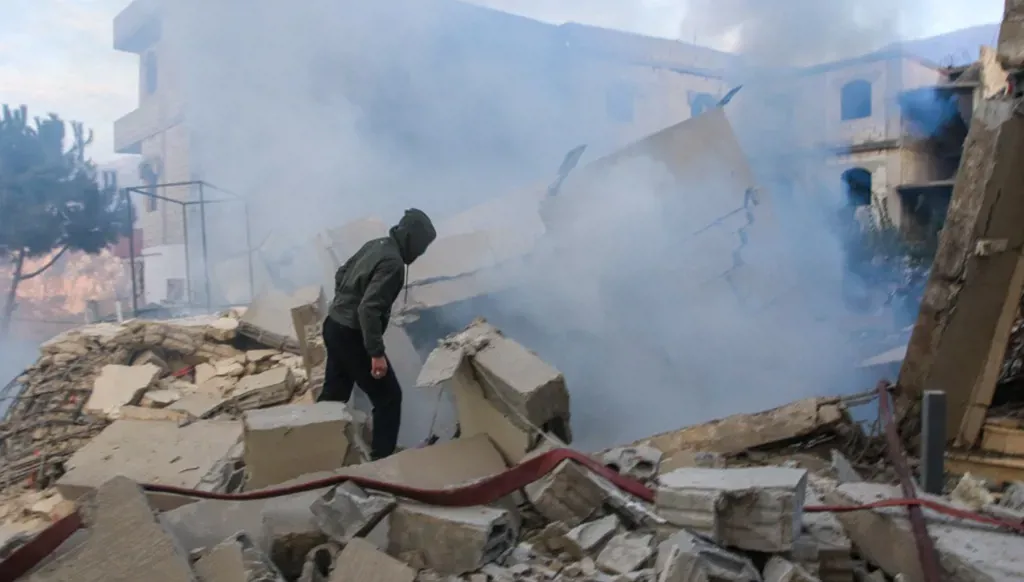


International warnings continue against Israel launching military operations against Hezbollah and Lebanon, amid escalating threats from Israel’s security establishment. However, U.S. approval for a large-scale Israeli war has not yet been granted, prolonging a window for efforts to disarm Hezbollah as Israel continues sporadic attacks.
As fears of an escalatory phase grow, the Lebanese state is betting on easing U.S. pressure until it completes its plan to withdraw weapons south of the Litani River, and later move to contain weapons to its north. Efforts are also intensifying to spare Lebanon major Israeli operations targeting public infrastructure. President Joseph Aoun’s outreach on multiple international fronts may have succeeded, however, in postponing the war for a one to two months period. The Americans have further pressured Israel to comply with this U.S. grace period for Lebanon to allow future ceasefire and disarmament negotiations, particularly following the Mechanism Committee's meeting scheduled for the 19th of this month.
The new American grace period does not signal a shift in Washington’s approach toward Lebanon, as strict conditions regarding weapons remain in place. At the same time, the United States is working on broader regional arrangements involving Lebanon, a process reflected in the division of roles among U.S. envoys and ambassadors. Tom Barrack is handling communications with Israel and Syria concerning Lebanon's situation during his visit to Tel Aviv on Monday, in an attempt to stop the escalation. Meanwhile, envoy Morgan Ortagus is overseeing the Mechanism Committee's negotiations, while U.S. Ambassador to Lebanon Michael Issa is holding talks with Lebanese leaders aimed at pressing Beirut to implement the required conditions. Sources say Issa has sought to extend the grace period granted to Lebanon, with his meetings with Parliament Speaker Nabih Berri suggesting an emphasis on weapons containment as a means of providing Hezbollah with an opportunity to avoid war.
The deadlines facing Lebanon are of critical importance. While the state is striving to spare Lebanon from war, its options are difficult internally, particularly in its relationship with Hezbollah. Hezbollah’s Secretary-General Sheikh Naim Qassem has again accused the government of submitting to American and Israeli will, reviving the proposal of a defensive strategy, which in turn increases external pressure on the state. The presidency and government respond to threats by affirming the plan to disarm Hezbollah, negotiate for Israel’s withdrawal from occupied points, and extend army control over borders. However, Lebanon has also indicated that disarmament cannot be imposed by force to avoid the risk of internal conflict, while the army is nearing completion of its mission south of the Litani River, a development expected to be reflected in a report presented to the Council of Ministers at the start of the new year.
Lebanon is also awaiting the outcome of the Paris meeting on the 18th of this month, attended by Army Commander General Rodolphe Haykal, who will present the army’s plan and needs. Lebanon hopes this meeting will provide an American–French–Saudi umbrella to support the state and prevent war. Paris is seeking documentation of the army’s measures to counter Israel’s justifications for escalation in Lebanon. Ultimately, however, the United States remains the decisive factor in shaping Israel’s decision to wage war, with a Trump-Netanyahu meeting scheduled for later this month.
In practice, the new U.S. grace period reflects an acknowledgment of Lebanon’s complexities. Diplomatic sources say Washington does not wish at this stage to undermine the gains made by the presidency and government over the past year, but rather to give Lebanon a limited opportunity. As a result, the state has little choice but to stay its course and seek to persuade Hezbollah that escalation can only be avoided through this approach, particularly as U.S. officials are promoting an approach focused on ‘containing’ weapons. Hezbollah bears responsibility for engaging constructively with the state’s plans and prioritizing the protection of Lebanon above partisan interests. Persisting in the rhetoric of Sheikh Naim Qassem risks providing justifications for continued Israeli aggression and once again dragging the country into catastrophic confrontations.