

September 11, 2011: A new Pearl Harbor



 Messenger
 Whatsapp
 Threads
 Email
Email
 Print
Print
 X
X
 Facebook


The US presidential candidate on the stage rejected accusations of isolationism, insisting that the U.S. military should not be used for nation-building abroad. That candidate was not Donald Trump, nor Barack Obama, nor Al Gore, nor Bill Clinton.
It was George W. Bush, in a speech before winning his first term. Although Bush had his own campaign platform, it was ultimately overshadowed by another agenda—one imposed by Osama bin Laden, the former leader of al-Qaeda. In the end, it was that agenda that reshaped both America and the world.
From Pearl Harbor to September 11
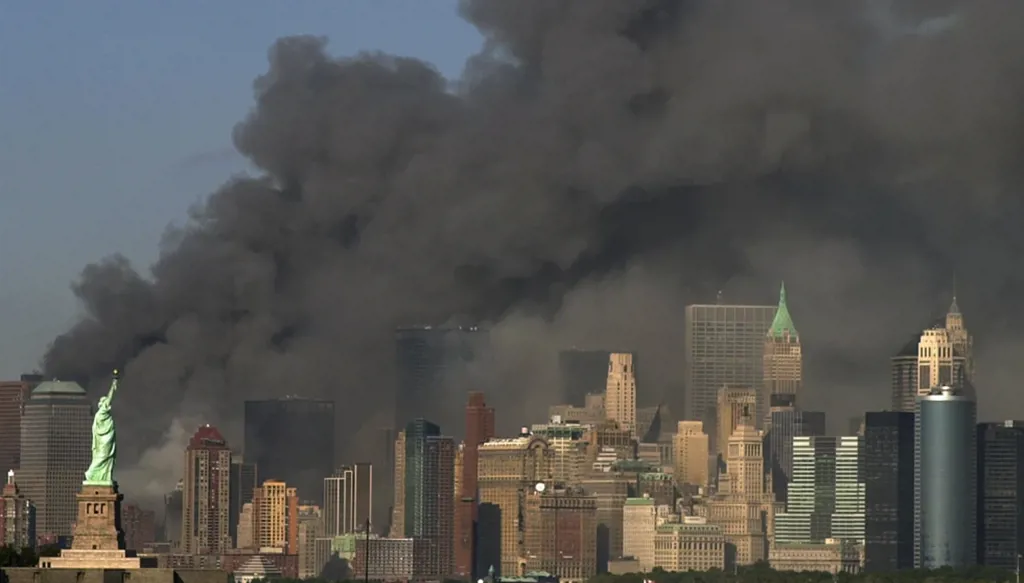
On the morning of September 11, 2001, Osama bin Laden scored a tactical victory. Nearly 3,000 people were killed, two pillars of American power—the World Trade Center and the Pentagon—were struck, and a third target, possibly the White House or the Capitol, was spared only because passengers forced the fourth plane down in Pennsylvania. Beyond the human toll, bin Laden delivered a direct blow to American deterrence at the height of the unipolar era. It was, in effect, a modern-day Pearl Harbor—this time in the heart of the U.S. mainland(Hawaii, where Pearl Harbor occurred, was still a U.S. territory at the time and would only become the 50th state in 1959).
However, as stated by Mark Twain, history doesn’t repeat itself, but it often rhymes. Just as Japan secured a tactical triumph in late 1941 only to face strategic defeat by 1945, bin Laden won the morning of 9/11 but ultimately lost his life a decade later, in May 2011. Over time, even al-Qaeda’s structure and ideological pull eroded. Within two months, the U.S. military and its local partners, especially the Northern Alliance, had dismantled the Taliban regime that sheltered bin Laden. By December 9, 2001, the Taliban had effectively lost the war, their fighters scattered in remote mountains alongside al-Qaeda remnants. A swift military victory was on the verge of becoming a political one, until events took a sharply different turn.
War on Saddam
In 2002, Washington began redirecting its resources toward the Middle East, driven by mounting fears that Saddam Hussein possessed weapons of mass destruction. Diplomacy still had a chance to avert conflict, but that window was narrow from the start. Bush was unwilling to risk another 9/11, especially as Saddam delayed granting full access to international inspectors—hesitation partly rooted in his own fear that the U.S. would exploit inspections to uncover internal vulnerabilities and topple his regime. These two dynamics pushed the region toward a war that quickly became unavoidable.
As in Afghanistan, toppling Saddam’s regime was swift, taking less than a month. Yet the real battle began afterward. Post-Saddam Iraq descended into chaos, attracting extremist fighters seeking vengeance for Afghanistan and driven by ideological, political, and religious motives to confront the United States. The prolonged insurgency drained American strength, costing roughly 4,500 U.S. military lives and hundreds of billions of dollars. More troubling still, the turmoil created space for al-Qaeda and the Taliban to regroup across the Middle East and Central Asia.
Yet the Iraq War did not culminate in outright defeat for the United States. In 2007, President Bush ordered a temporary troop increase—from 130,000 to nearly 170,000 soldiers. The surge, though costly (1,200 dead and 8,000 wounded), proved highly effective in reducing violence, especially from 2008 onward. The strategy was reinforced by partnering with Iraqi tribal leaders, who helped undermine the insurgency and strip militants of the social environment they relied on.
Meanwhile, as U.S. attention remained fixed on Iraq, the Taliban capitalized on the distraction, intensifying attacks on Afghan and Western targets—particularly in 2006, a year that also marked one of the most difficult periods for American forces in Iraq.
Short Breath
The twin experiences of Afghanistan and Iraq left the American public deeply skeptical of further military entanglements. That aversion shaped presidential decision-making: Barack Obama sent roughly 30,000 additional troops into Afghanistan, bringing the total close to 100,000, yet he simultaneously ordered a full withdrawal from Iraq in 2011. That vacuum contributed to the rise of ISIS. The American project of nation-building proved far more complex than anticipated. Weak governance, corruption, and fragmented political institutions in both countries fueled extremist networks, but Washington’s own impatience compounded the challenge.
Historical context underscores this miscalculation. South Korea required decades after the Korean War to reach democratic maturity, yet few Americans today question the strategic value of sustained U.S. support across that long arc. More than twenty years after Saddam Hussein’s fall, Iraq has not become a Korean analogue, but it has made measurable strides toward stability and representative governance. Analysts who travel across its provinces report pockets of capable, even commendable administration.
Afghanistan’s trajectory also defies fatalistic assumptions. Afghan women gained suffrage in 1919, earlier than American women, a reminder that societies outside the West are not predestined to stagnate. The narrative that certain countries in the Global South are incapable of modernization is flawed and counterproductive for Washington.
Yet successive U.S. presidents yielded to domestic fatigue. Obama completed the Iraq withdrawal; Donald Trump set the framework to exit Afghanistan; Joe Biden executed it. All leaned on the rhetoric of ending “endless wars,” even as those withdrawals created new strategic liabilities. American leaders frequently highlight the staggering financial and human costs of the post-9/11 campaigns—roughly 6.5 trillion dollars including future interest payments, and nearly 7,000 U.S. service members killed. What they rarely emphasize is the core outcome: for nearly twenty-five years, the United States has not experienced another mass-casualty attack on the scale of September 11.
Even in the later years of the Afghanistan war, U.S. military losses rarely exceeded 25 fatalities annually—a stark contrast to Russia’s current campaign in Ukraine, where President Vladimir Putin has conceded that roughly 5,000 Russian soldiers are dying each month. The core problem in Iraq and Afghanistan was never battlefield performance; it was the belief that ambitious political goals could be achieved quickly. Even withdrawal was mishandled. Both Trump and Biden negotiated directly with the Taliban, sidelining Kabul and granting the group legitimacy without extracting meaningful concessions. Many analysts argue that maintaining as few as 2,500 American troops might have been enough to keep Afghanistan—and parts of Iraq—from slipping into the hands of Washington’s rivals.
A widespread assumption holds that Americans demanded an end to these wars.
In reality, public sentiment was far more complex. At no point did U.S. opinion resemble the intense anti-war pressure of the Vietnam era, when American casualties were nearly eight times higher than the combined deaths in Iraq and Afghanistan. The withdrawal from Afghanistan, in particular, was never a popular grassroots demand. By 2019, only 12 percent of Americans said they were closely following news about the U.S. military presence there. Public attention surfaced mainly during spikes in casualties—such as the bloodiest stretch in Iraq in 2007, when losses exceeded 900.
Once the consequences of the Afghanistan pullout became visible, support for withdrawal plummeted, dropping by 20 points between April and mid-August 2021, according to Politico. This underscores a broader truth: American reluctance toward foreign military engagement is not fixed, but heavily dependent on context and cost.
Trump’s criticism of allies for taking “free rides” triggered backlash from governments that argued they had never asked Washington to shoulder their human and financial burdens in Afghanistan, where many had fought alongside the U.S. against the Taliban and al-Qaeda.
The Outcomes of Counterterrorism Policy
Terrorist organizations have come to recognize that they can no longer strike the United States with the force of September 11, prompting a shift toward decentralized, small-scale attacks, as noted by Christian Alexander of the Riyadh Center for Security and Defense in an analysis for the Atlantic Council.
A recent study published in Sage Journals reinforces that U.S. counterterrorism policy in the post-9/11 era has been largely effective—most notably in driving down the number of global terrorist attacks.
Washington’s record in eliminating successive Al-Qaeda and ISIS leaders underscores its continued dominance in confronting extremist groups. The campaign that stripped ISIS of territory once approaching the size of the United Kingdom remains a major achievement credited to the United States and its partners.
Even with the Taliban back in charge, the movement has so far appeared cautious about allowing Al-Qaeda to reconstitute itself on a broad scale, despite ongoing ties. The U.S. strike that killed Ayman al-Zawahiri in Kabul in 2022 was both a demonstration of Washington’s long-range reach and a signal to the Taliban that hosting Al-Qaeda’s leadership carries consequences. The fact that Zawahiri was found in a building owned by a member of the Haqqani Network—aligned with yet distinct from the Taliban—also highlights internal divisions within the movement and a calculated reluctance to provoke the United States outright.
Meanwhile, the decision by Hay’at Tahrir al-Sham leader Ahmed al-Sharaa (formerly Abu Mohammad al-Julani) to break from Al-Nusra, then fight it, and reportedly pass intelligence that aided the U.S. operation against ISIS leader Abu Bakr al-Baghdadi, suggests a growing recognition among jihadist factions that waging a prolonged war against America is unwinnable.
Taken together, these developments offer a cautious, narrow window of optimism for Syria’s future after Assad—and for the broader security landscape heading into the second quarter of the 21st century. But none of this warrants complacency. The threat has evolved, not disappeared, and the next phase will demand the same vigilance that defined the past two decades.
The next quarter century
A growing sense of self-satisfaction risks pushing the United States toward a posture of quiet arrogance in its dealings with global crises and even with its closest allies, ultimately eroding parts of the power it still commands. Yet complacency is only half the danger; the other half is how quickly it can flip into hesitation and self-doubt. It is no coincidence that one of Foreign Affairs’ most read essays last year was Fareed Zakaria’s “The Great Power with Self-Doubt,” in which he argues that America continues to outpace its competitors on every major index of power, even as the international order becomes more unstable.
This hesitation has become one of Washington’s most glaring vulnerabilities. Its consequences are visible across multiple fronts: the unfulfilled “red line” in Syria, Biden’s long-standing fatigue with the Afghanistan mission and the chaotic withdrawal, the absence of a coherent strategy on Ukraine, the muddled response to Houthi attacks in the Red Sea, and the lack of a clear plan to stop Iran’s nuclear ambitions. If the United States continues down this path, it risks entering the next quarter-century with diminished credibility.
Meanwhile, the threat landscape is changing. With the proliferation of advanced technology and artificial intelligence, terrorist groups may eventually gain the capability to execute far more sophisticated attacks. Analysts already warn of an ISIS resurgence in Syria. The danger ahead is not just the persistence of terrorism, but the fact that it is unfolding within a global environment marked by simultaneous wars in the Middle East and Eastern Europe.
As Mara Karlin of Johns Hopkins University notes, the world appears to be sliding back toward a form of “total war.” After 9/11, counterterrorism defined U.S. strategy and largely pushed interstate conflict to the margins. Today, the boundaries of war are expanding once again. In Karlin’s words, “The era of limited war is over; the era of comprehensive conflict has begun.”
According to his memoirs—discovered in his final hideout in Pakistan—Bin Laden believed the September 11 attacks would ignite mass protests across the United States, ultimately pressuring Washington to withdraw its forces from the Middle East and clearing the way for his organization to dominate the region. The reality proved the opposite. His reading of American resolve, and of the resilience of U.S. partners in the region, was fundamentally flawed. Yet in a broader strategic sense, Washington cannot afford to hand Bin Laden a posthumous victory by slipping into a new cycle of isolationism.
If the United States is to meet the dangers of a far more volatile world, it must recover its strategic composure, shed its hesitation, and restore a sense of clarity to its global leadership. None of this guarantees smooth passage through the next quarter-century. But the alternative—a continued drift marked by doubt and inconsistency—would be the surest and fastest route to failure.