

Is Russia rethinking its strategy in the Middle East?


 Messenger
 Whatsapp
 Threads
 Email
Email
 Print
Print
 X
X
 Facebook
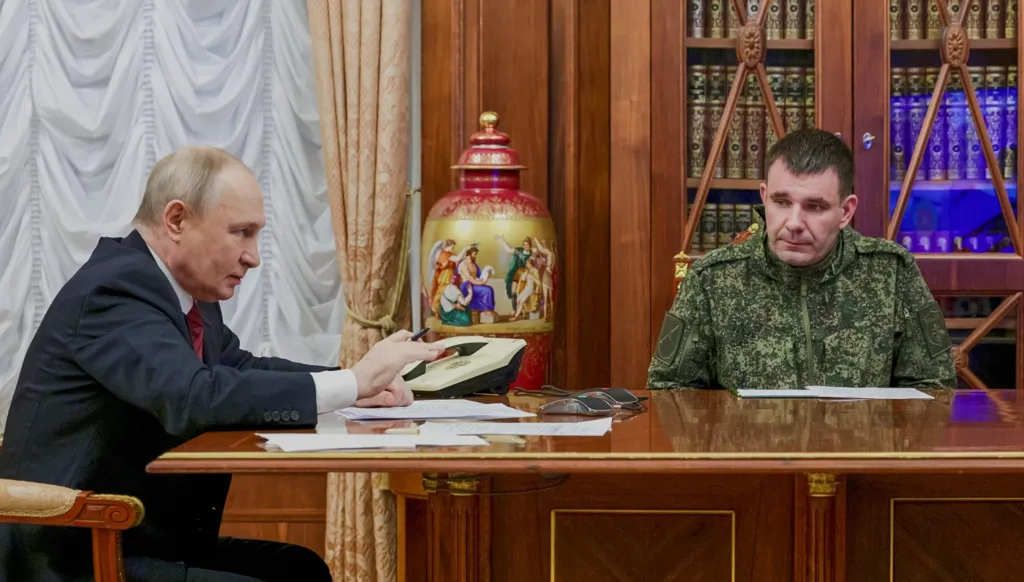


Each setback in U.S. Middle East policy opens space for Moscow to move in, and Russian diplomacy has been quick to exploit every American miscalculation.
Over the past decade—after the “Arab Spring” and the collapse of U.S. and European strategies for managing regional turmoil—the West effectively handed Russia the role of restoring balance through its arrangements in Turkey, Syria, and Israel. Moscow used the Syrian war as an opportunity to carry out sweeping, brutal strikes against civilians, while fulfilling its rule under the Sochi and Jerusalem agreements under close U.S. oversight.
However, with Russia's intervention in Syria, the West was forced to accept that President Putin was not playing by Washington's rules. Instead, he exploited the cracks in the US's failure to alter the balance and imposed himself as a necessary power broker in the Middle East. Russia has since firmly established its military bases and become the power broker managing the balance between regional states and their proxies.
The invasion of Ukraine overturned this project when Europe, not the Middle East, became the main arena of international conflict. The war in Ukraine was expected to end within weeks, but it has had detrimental, long-term strategic consequences for Russia. In addition to being encircled by NATO (North Atlantic Treaty Organization), Russia lost its bet in the Middle East. Previous talks with Tükiye in Sochi, which sought to turn the two countries into strategic partners for transporting energy from Central Asia to Europe via Ceyhan, Turkey, never materialized into concrete initiatives. Putin therefore failed in this attempt to pivot Türkiye strategically towards Moscow.
Following October 7, the entire strategic context in the Middle East shifted as well. Israel no longer tolerates delegating regional power brokers to manage its cold war with Iran; it now handles matters directly. Moreover, after October 7, Russia lost a large arms market, along with an entire network of its allies and their allies.
In Syria, Russia had promised that Aleppo would become a ‘second Grozny.’ While it succeeded in destroying the city, it failed to rebuild it as it had in Chechnya. The strategic landscape shifted dramatically with the defeat of Assad’s former regime, leading to the collapse of Russia’s most significant remaining asset in the Middle East: the Syrian army. Today, Russian bases in Syria are exposed to potential ground attacks and vulnerable to regional instability. Moscow also recognizes that Ukraine played a pivotal role in supplying drones to Hay’at Tahrir al-Sham, with the impact of Ukrainian naval drones on the Russian Black Sea fleet underscoring the strategic challenge.
This was followed by the brief war between Israel and Iran, which cut short Iran's shift toward Russia. As a result, Russia lost its room for maneuver with Türkiye. Furthermore, Israel proved once again that it would be nothing more than an extension of the West and the United States. Experience has proven that, when it comes to serious matters such as Gaza, Syria, Iran, and Yemen, Russia has been unable to penetrate regional conflicts, offer a peaceful alternative, or decisively intervene on behalf of its allies in Armenia, Syria, Iran, and Türkiye.
The West has effectively withdrawn its mandate for Russia in the region. Moreover, Trump’s proposed strategic plan for Gaza sidelines both Russia and China, leaving Europe and the United Nations with nothing more than supporting roles in recovery and stabilization efforts, as the United States seeks to position itself as the sole power broker. While these plans remain largely rhetorical, they are significant in revealing America’s true intentions.
Russia's strategy suffers from a fundamental flaw: it relies on security agreements and short-term deals with oligarchs, instead of investing in production and development. In a region as unstable as the Middle East—where effective governance and sound management are crucial to the success of any alliance—such arrangements are inadequate for building lasting partnerships, as they can be easily overturned at the first sign of trouble, ultimately becoming a liability for Russia
Moreover, Russia cannot construct its new regional strategy merely by exploiting the void created by U.S. missteps toward Turkey, Syria, Saudi Arabia, or the wider Middle East. For more than three decades, Russian policy has depended on fragile and uneasy pragmatic alliances with Israel, Turkey, Iran, the Gulf states, and, of course, Syria. As the experiences with Sochi and the Turkish S-400 system illustrate, lasting strategic frameworks cannot be built on personal commitments or temporary projects.
While reauthorizing Russia in the region seems completely out of the question and globalization is giving way to a multipolar world with restructured regional structures, a strategic opportunity is emerging for Russia. However, this opportunity hinges on Russia restructuring its interests and alliances in the region. Russia must bet on being a force for stability through alliances with emerging powers that aspire to peace, governance, real development, and stability.
Can Russia present a credible alternative to the faltering governance and stalled development in many regional states? Can it challenge Israel’s dominance and the West’s imbalanced approach to regional development? Can Moscow craft a coherent strategy that addresses the priorities of Arab and Gulf states, particularly in pursuit of a just peace, stability, and sustainable growth? And can it offer a path beyond military intervention and the proliferation of arms? Addressing these questions demands a careful assessment of Russia’s strategy and its vision for advancing its interests.