

International
11-12-2025 | 20:01
Armenia: A journey into captivating nature and complex history
This small, mountainous nation -steeped in rich history- must reintroduce itself to the world beyond the tragedies long associated with its name



 Messenger
 Whatsapp
 Threads
 Email
Email
 Print
Print
 X
X
 Facebook
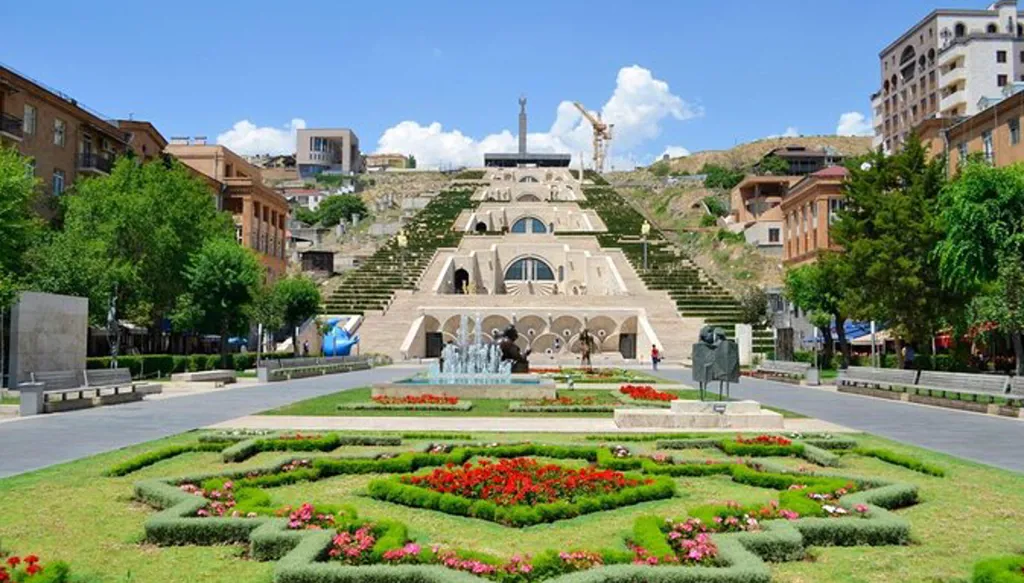
Yerevan Cascade (tripplanner)


Artur, the driver, seemed enthusiastic. Aware that it was our first visit to Armenia, he left no detail unexplained. Since none of us understood his language, he called on Razmig, the tour guide, to help him clarify his point He was particularly concerned with navigating the heavy traffic congestion enveloping the road from Yerevan to Levon’s Cave, a delay he desperately wanted to overcome so we wouldn’t miss our appointment.
According to Lucine Jevorjian, head of the Tourism Committee, the number of tourists in Armenia reached a record 2.3 million tourists last year. She also revealed the government's ongoing efforts aimed at bolstering tourism through draft legislation and marketing strategies.
Yerevan’s traffic congestion reflects not only how its roads can no longer accommodate its inhabitants, but also how the once forgotten capital is re-emerging in the minds of investors and tourists, and the millions of Armenians abroad.
Indeed, this geographically small but historically rich mountainous country needs to present itself to the world in ways not overshadowed by the tragedies associated with its name.
Despite my Lebanese background - where over 100,000 Armenians reside- I discovered a side of Armenia I had never truly known, one that looks toward the future with both hope and caution. Still, it is hard not to recognize that the layering of histories, cultures, civilizations, and past traumas is precisely what distinguishes Armenia from any other country.
“Mother Armenia”
Visitors to Yerevan cannot help but feel awe in front of Mother Armenia, the huge statue that stands guard over the heart of the capital. Located in Victory Park, the statue depicts a woman holding a sword pointed westward toward Turkey, backed by the Ararat Mountains—an image that encapsulates chapters of Armenian history.
Erected in 1962, this monument representing an Armenian mother ready to defend her family, replaced a statue of Soviet leader Joseph Stalin, symbolizing the victories of World War II. It is said that when the statue was dismantled, it fell on the workers, killing several of them. The anecdote of the statue’s fall during its dismantling, resulting in worker casualties, serves as a somber reminder of the past— “Stalin's last victims,” as tour guide Razmik playfully quips.
Soviet architecture continues to dominate Yerevan, with basalt buildings shaping much of the urban landscape. However, contemporary influences are increasingly evident: contemporary buildings, European brands, and local industries now fill its neighborhoods and main streets. Yerevan is clearly gradually shedding its Soviet mantle— a trend that has intensified in recent years after Moscow’s withdrawal of support from Yerevan regarding the Nagorno-Karabakh region.
Where Soviet Ladas once lined the streets, German Opels and other European cars now prevail. Street names and traffic signs are shifting toward English instead of Russian to accompany Armenian text. Nevertheless, Russia's presence in the country remains strong. Russian is still the second language, and Russians outnumber tourists of other nationalities, especially since Armenia became a transit route for them following the war in Ukraine and the embargo imposed on Moscow.
During the day, Yerevan's streets are crowded with cars, and at night, the neighborhoods that have become synonymous with entertainment come alive. Sarian Street, in particular, blends the ambiance of European sidewalks with Beirut’s nightlife and Cairo’s hookah cafés. It is also home to the renowned En Vino bar, which offers hundreds of varieties of local and international wine and has become a must-visit stop for foreign tourists. The bar stands opposite the Martiros Saryan House Museum, whose facade is decorated with a stunning mosaic of Mount Ararat.
What stands out most about Yerevan is how modern life has not diminished the importance of its ancient history and rich heritage. Armenia diligently preserves its memory and heritage, honoring its great figures by naming streets after them —from Mesrop Mashtot, creator of the Armenian alphabet in the 5th century, and writer Khachadour Abovyan, from the early 19th century, to the military leader and former prime minister Vazgen Sargsyan. Even its currency bears the names of artists, poets, and figures who have left their mark in these people’s history.
In the Matenadaran manuscript museum, —built like a fortress under the symbolic protection of “Mother Armenia”—Yerevan safeguards treasures from “Greater Armenia,” including manuscripts from Artsakh. The museum houses rare manuscripts donated by many countries around the world. During an international conference held at the United Nations and co-chaired by France and Saudi Arabia, Armenian Deputy Foreign Minister Vahan Kostanyan announced that Palestinian cultural heritage threatened with destruction would be temporarily housed at the Matenadaran Museum in Armenia.
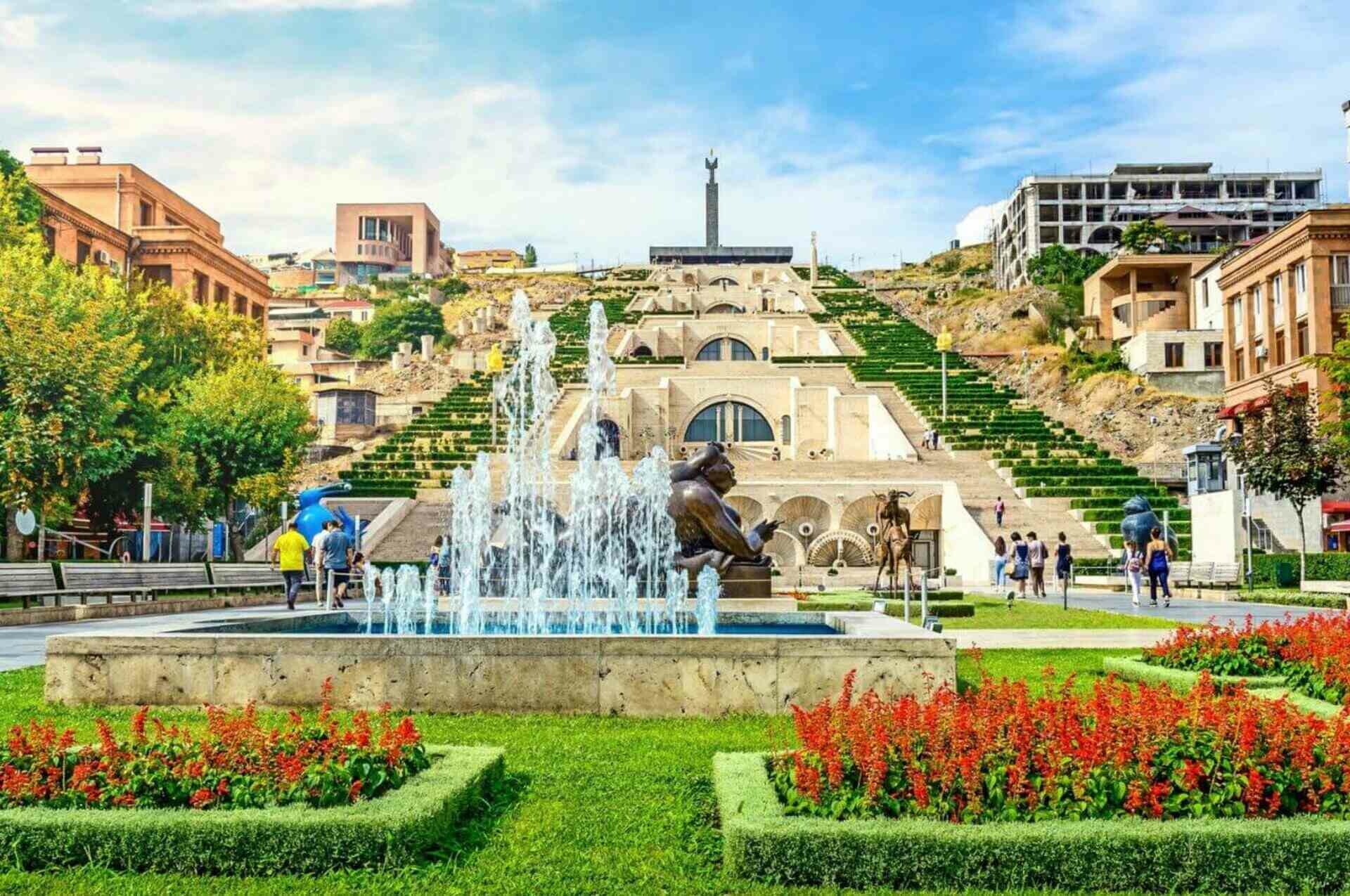
The Cascade complex is a major landmark in the city, with its unusual design, a complex of waterfalls, galleries and staircases. The structure leads to a park built to celebrate Stalin's victory over fascism, in front of which stands a monument to Alexander Tamanyan (1878-1936), who was once the city's chief architect.
Visiting Armenia means journeying not only through breathtaking landscapes but also through a layered history shaped by centuries of invasions and transformations. Great civilizations have succeeding one another on this land— from the Hittites and Mongols, to the Ottomans and Russians— left behind a diverse legacy that visitors can see in the stone architecture, museums, and archaeological sites that make the country an exceptional destination for history lovers.
Armenia is the world’s oldest Christian nation. Its capital and provinces are home to 4,000 churches, monasteries, and cathedrals, led by the Echmiadzin Cathedral, the first church in the world. Not visiting it in Armenia is tantamount to going to Rome without visiting St. Peter's Cathedral.
In the far south lies Tatev Monastery, the jewel of medieval Armenian architecture, once a strategic political and educational center. Its library contained more than 10,000 manuscripts, all of which were burned and destroyed by the Mongols in a single night. Today, the Tatev cable car provides easy access to this monastery, nestled in a picturesque valley.
Our tour also included the 13th-century Noravank Monastery and the 10th-century Haghartsin Monastery, which was restored by Sharjah's ruler Sheikh Sultan Al Qasimi after decades of neglect, wars, and earthquakes left it on the brink of collapse.
In addition to churches, Armenia preserves an architectural masterpiece located 25 kilometers from Yerevan, deemed to be the only pagan temple in the former Soviet Union. Built in the first century AD and dedicated to the sun god Mithra, the Garni Temple offers one of the most iconic vistas in Armenia.
Among the country’s hidden natural wonders is the Symphony of Stones—a mountain carving sculpted by the wind over the years into shapes resembling piano keys that is considered one of the wonders of the world due to its sheer beauty.
Armenia, a country steeped in history, is also a land of generosity. No visit is complete without tasting gata sweets and lavash bread— both listed on UNESCO's Intangible Cultural Heritage List.
Medical tourism also has a special place, with Jermuk in the south of the country occupying a prominent position in this regard. Pine trees refresh the air of this town, located more than 2,000 meters above sea level, while its 50-degree natural springs and modern therapeutic resort—equipped with advanced European medical technologies and specialized teams—make it a leading center for health tourism.
However, movement in and around Jermuk was affected by the Nagorno-Karabakh conflict. Today, like the rest of Armenia, it awaits peace to fully recover and move forward.
I leave Armenia with many beautiful images that will remain in my mind, and a souvenir from Razmig: the letter “M” in Armenian, a reminder that in that corner of the Caucasus lives a promising country and determined people looking toward the future with great hope.
According to Lucine Jevorjian, head of the Tourism Committee, the number of tourists in Armenia reached a record 2.3 million tourists last year. She also revealed the government's ongoing efforts aimed at bolstering tourism through draft legislation and marketing strategies.
Yerevan’s traffic congestion reflects not only how its roads can no longer accommodate its inhabitants, but also how the once forgotten capital is re-emerging in the minds of investors and tourists, and the millions of Armenians abroad.
Indeed, this geographically small but historically rich mountainous country needs to present itself to the world in ways not overshadowed by the tragedies associated with its name.
Despite my Lebanese background - where over 100,000 Armenians reside- I discovered a side of Armenia I had never truly known, one that looks toward the future with both hope and caution. Still, it is hard not to recognize that the layering of histories, cultures, civilizations, and past traumas is precisely what distinguishes Armenia from any other country.
“Mother Armenia”
Visitors to Yerevan cannot help but feel awe in front of Mother Armenia, the huge statue that stands guard over the heart of the capital. Located in Victory Park, the statue depicts a woman holding a sword pointed westward toward Turkey, backed by the Ararat Mountains—an image that encapsulates chapters of Armenian history.
Erected in 1962, this monument representing an Armenian mother ready to defend her family, replaced a statue of Soviet leader Joseph Stalin, symbolizing the victories of World War II. It is said that when the statue was dismantled, it fell on the workers, killing several of them. The anecdote of the statue’s fall during its dismantling, resulting in worker casualties, serves as a somber reminder of the past— “Stalin's last victims,” as tour guide Razmik playfully quips.
Soviet architecture continues to dominate Yerevan, with basalt buildings shaping much of the urban landscape. However, contemporary influences are increasingly evident: contemporary buildings, European brands, and local industries now fill its neighborhoods and main streets. Yerevan is clearly gradually shedding its Soviet mantle— a trend that has intensified in recent years after Moscow’s withdrawal of support from Yerevan regarding the Nagorno-Karabakh region.
Where Soviet Ladas once lined the streets, German Opels and other European cars now prevail. Street names and traffic signs are shifting toward English instead of Russian to accompany Armenian text. Nevertheless, Russia's presence in the country remains strong. Russian is still the second language, and Russians outnumber tourists of other nationalities, especially since Armenia became a transit route for them following the war in Ukraine and the embargo imposed on Moscow.
During the day, Yerevan's streets are crowded with cars, and at night, the neighborhoods that have become synonymous with entertainment come alive. Sarian Street, in particular, blends the ambiance of European sidewalks with Beirut’s nightlife and Cairo’s hookah cafés. It is also home to the renowned En Vino bar, which offers hundreds of varieties of local and international wine and has become a must-visit stop for foreign tourists. The bar stands opposite the Martiros Saryan House Museum, whose facade is decorated with a stunning mosaic of Mount Ararat.
What stands out most about Yerevan is how modern life has not diminished the importance of its ancient history and rich heritage. Armenia diligently preserves its memory and heritage, honoring its great figures by naming streets after them —from Mesrop Mashtot, creator of the Armenian alphabet in the 5th century, and writer Khachadour Abovyan, from the early 19th century, to the military leader and former prime minister Vazgen Sargsyan. Even its currency bears the names of artists, poets, and figures who have left their mark in these people’s history.
In the Matenadaran manuscript museum, —built like a fortress under the symbolic protection of “Mother Armenia”—Yerevan safeguards treasures from “Greater Armenia,” including manuscripts from Artsakh. The museum houses rare manuscripts donated by many countries around the world. During an international conference held at the United Nations and co-chaired by France and Saudi Arabia, Armenian Deputy Foreign Minister Vahan Kostanyan announced that Palestinian cultural heritage threatened with destruction would be temporarily housed at the Matenadaran Museum in Armenia.
The Cascade complex is a major landmark in the city, with its unusual design, a complex of waterfalls, galleries and staircases. The structure leads to a park built to celebrate Stalin's victory over fascism, in front of which stands a monument to Alexander Tamanyan (1878-1936), who was once the city's chief architect.
Visiting Armenia means journeying not only through breathtaking landscapes but also through a layered history shaped by centuries of invasions and transformations. Great civilizations have succeeding one another on this land— from the Hittites and Mongols, to the Ottomans and Russians— left behind a diverse legacy that visitors can see in the stone architecture, museums, and archaeological sites that make the country an exceptional destination for history lovers.
Armenia is the world’s oldest Christian nation. Its capital and provinces are home to 4,000 churches, monasteries, and cathedrals, led by the Echmiadzin Cathedral, the first church in the world. Not visiting it in Armenia is tantamount to going to Rome without visiting St. Peter's Cathedral.
In the far south lies Tatev Monastery, the jewel of medieval Armenian architecture, once a strategic political and educational center. Its library contained more than 10,000 manuscripts, all of which were burned and destroyed by the Mongols in a single night. Today, the Tatev cable car provides easy access to this monastery, nestled in a picturesque valley.
Our tour also included the 13th-century Noravank Monastery and the 10th-century Haghartsin Monastery, which was restored by Sharjah's ruler Sheikh Sultan Al Qasimi after decades of neglect, wars, and earthquakes left it on the brink of collapse.
In addition to churches, Armenia preserves an architectural masterpiece located 25 kilometers from Yerevan, deemed to be the only pagan temple in the former Soviet Union. Built in the first century AD and dedicated to the sun god Mithra, the Garni Temple offers one of the most iconic vistas in Armenia.
Among the country’s hidden natural wonders is the Symphony of Stones—a mountain carving sculpted by the wind over the years into shapes resembling piano keys that is considered one of the wonders of the world due to its sheer beauty.
Armenia, a country steeped in history, is also a land of generosity. No visit is complete without tasting gata sweets and lavash bread— both listed on UNESCO's Intangible Cultural Heritage List.
Medical tourism also has a special place, with Jermuk in the south of the country occupying a prominent position in this regard. Pine trees refresh the air of this town, located more than 2,000 meters above sea level, while its 50-degree natural springs and modern therapeutic resort—equipped with advanced European medical technologies and specialized teams—make it a leading center for health tourism.
However, movement in and around Jermuk was affected by the Nagorno-Karabakh conflict. Today, like the rest of Armenia, it awaits peace to fully recover and move forward.
I leave Armenia with many beautiful images that will remain in my mind, and a souvenir from Razmig: the letter “M” in Armenian, a reminder that in that corner of the Caucasus lives a promising country and determined people looking toward the future with great hope.