


 Messenger
 Whatsapp
 Threads
 Email
Email
 Print
Print
 X
X
 Facebook
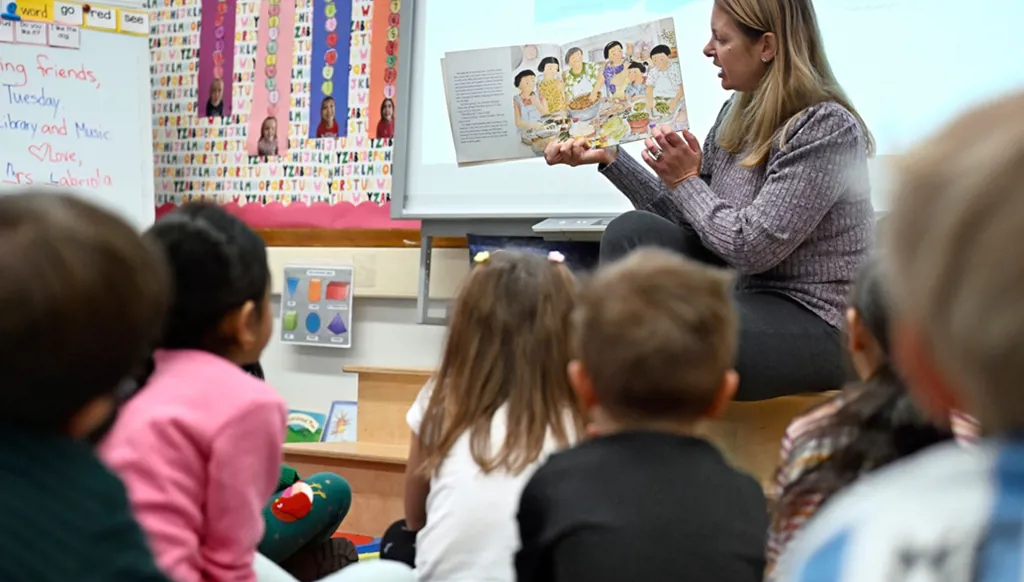


Book or tablet? That is the question confronting education today. The world is divided between those who cling to the familiarity and structure of paper textbooks and those who champion a new digital approach to education, free from paper’s constraints Amid this debate, Dr Rabih Baalbaki, president of the Education Technology Association in Lebanon, acknowledges that paper books still hold relevance. “They are a visual tool that helps form mental images stored in a child's brain, which is essential because it allows knowledge and information to be transformed into creativity and critical thinking through mental analysis.”
Dr. Baalbaki lists three learning styles for An-Nahar:
● Visual: a student memorizes the text by seeing and reading the words.
● Auditory: a student reads the text aloud to understand it.
● Kinesthetic: a student follows the words with their finger while reading.
Paper books serve the visual style, while tablets combine all three styles: they display images, produce sound and allow motor interaction. 'For this reason, short videos easily reach different types of learners, because they combine sound, image and movement, making them faster and more effective at conveying knowledge. The more visual, auditory, kinesthetic, and analytical learning is, the more we can nurture the multiple intelligences of the learner, which is reflected in their ability to apply knowledge creatively," Baalbaki says.
What are the advantages of tablets?
● Immediate access to information with constant updates.
● Lower cost compared to paper books.
● A variety of formats are offered, including audio, visual and kinesthetic.
● Interactive experiences such as videos, tests and simulations.
According to Baalbaki, AI is now capable of responding to each learner individually: “It recognizes their specific abilities, identifies their educational gaps or deficiencies, and then guides them along the precise path that suits their cognitive needs.” This development enables us to transition from textbooks to project-based learning, incorporating simulation patterns that textbooks are limited to illustrating with diagrams. AI-powered tablets can combine patterns and models into a single, interactive simulation that is clearer and easier to understand.
But do tablets replace the act of writing? The role of traditional books is beginning to shrink: “But we have not yet dispensed with writing, for if we lose it, we lose the essence of our human creativity,” Baalbaki says “True learning requires us to write, draw, analyze and plan, all of which involve writing and are essential for embedding knowledge deeply in the human memory.”
“It's not an either/or choice between books and digital, with no third option,” he adds. “The most important key to knowledge is intelligent integration between the two. Books provide structure and reliability, while digital resources offer updates and interaction. Completely abandoning paper books would deprive children of irreplaceable experiences.”
Baalbaki concludes by emphasizing that this is also an issue of digital justice and the human right to access knowledge. “Students need to have access to technological tools that help them transform knowledge into skills, then competence, and ultimately leadership.”