

Artificial intelligence: Empowering students with learning difficulties


 Messenger
 Whatsapp
 Threads
 Email
Email
 Print
Print
 X
X
 Facebook
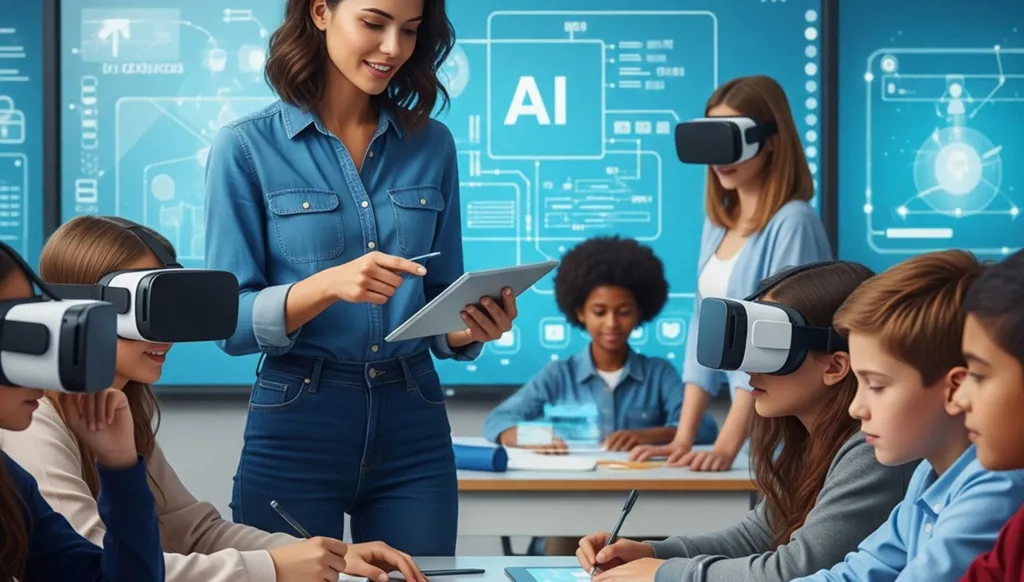


Today, the integration of artificial intelligence into education signals a major shift in teaching and learning methods, particularly for students facing various learning difficulties. As technology advances, experts stress that education must remain human-centered rather than machine-driven. In this context, Rowayda Fawaz, professor and educational researcher specializing in AI in education, told An-Nahar that these technologies can be leveraged to create individualized learning plans that accommodate student differences while supporting teachers rather than replacing them.
Specialized Educational Plans
Fawaz emphasized that the guiding question for educators should be, “How can we help at least one student learn better?” She noted that this principle lies at the heart of effective education. AI, she explains, plays a crucial role in designing personalized plans that address the unique needs of students with learning difficulties.
Modern technologies allow learners to access content in ways tailored to their abilities: blind students can use computer vision to transform images into audio explanations, deaf students benefit from speech-to-text systems, and text-to-speech tools assist those struggling with reading.
According to Fawaz, these tools do not replace teachers. Instead, they enhance educators’ understanding of student abilities by analyzing performance and behavior data, highlighting strengths, weaknesses, and appropriate learning activities. Smart systems can even suggest audio texts and repetition exercises to improve reading fluency at a measurable pace. Yet, Fawaz stresses, the true value lies in merging intelligent analysis with a human perspective—one that recognizes and nurtures each student’s individual learning potential.
Smart learning tools
Fawaz explained that modern platforms not only display content but also monitor learner’s behavior and adapt to his performance. She points out that some of the most notable tools include Project Read AI based on the principles of the “reading science,” WordQ, and SpeakQ which support students with writing difficulties by providing them with vocabulary and clear text-to-speech support, in addition to BeeLine Reader which uses color gradients to guide eye movement during reading.
Fawaz furthermore referred to DreamBox and ALEKS platforms, which are based on adaptive learning and adjust the level of difficulty according to the student's performance. Fawaz pointed out that most of these tools are only available in English, calling for the development of similar tools that support the Arabic language with its phonetic and scriptural peculiarities, as the difficulties of reading and writing in Arabic differ from those in other languages.
Early and accurate diagnosis
Fawaz explained that AI has advanced significantly in the early diagnosis of learning difficulties by analyzing subtle indicators that are often hard for humans to notice, such as phonetic errors or slow response times. However, she emphasized that these systems do not provide a definitive diagnosis, but rather an early warning that helps with timely intervention. “Artificial intelligence gives us an initial alert,” she said, “but it does not replace the teacher who interprets the results and situates them within the appropriate context.”
According to Fawaz, combining the precision of smart tools with a humanistic educational approach is what makes these systems useful and safe, affirming that the balance between technology and human expertise is the real guarantee of success for any educational system.
Continuous assessment and adaptation
Fawaz noted that AI systems monitor students’ progress in real time and point out how to adjust content to match their evolving needs. However, she cautions against potential linguistic and cultural biases, as well as the phenomenon of informational “hallucinations,” which can produce inaccurate outputs. Fawaz also highlights the privacy risks associated with handling sensitive data, such as academic records and audio recordings.
Any failure to protect this data could also lead to its use for non-educational purposes, which would constitute a clear ethical breach. The success of these systems depends on strict ethical controls and on teachers remaining at the center of the educational process in order to ensure equal access and prevent the marginalization of any one learning group.
Tutors at the heart of the process
AI in special education should serve as a supportive tool rather than a replacement for tutors, as it reduces routine tasks and allows more time for human interaction, according to Fawaz. She notes that these technologies can design multi-level activities and suggest alternative strategies.“Using an AI tool to generate three-level expressive exercises can save approximately 45 minutes of preparation time, which can instead be devoted to engaging directly with students,” she explained.
Fawaz concluded by emphasizing that artificial intelligence is not a substitute for teachers, but rather a tool that gives them more time for thoughtful engagement, ongoing support, and a learning environment based on empathy and personal understanding. Education remains, at its core, a human endeavor before it is a technical one.