

Strait of Hormuz closure: How the world’s most critical oil choke point shook global markets
From skyrocketing oil prices to regional economic shocks, the closure of the Strait of Hormuz exposed the fragility of the global energy system—and created winners, losers, and unprecedented financial turmoil worldwide.


 Messenger
 Whatsapp
 Threads
 Email
Email
 Print
Print
 X
X
 Facebook
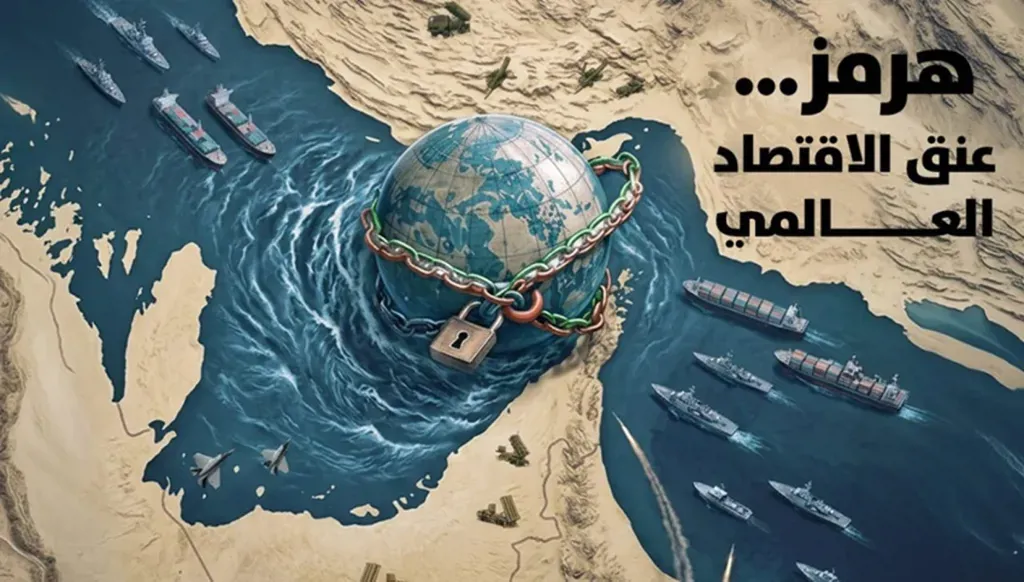


The Strait of Hormuz is no longer merely a narrow sea passage between Iran and Oman. With the outbreak of the latest Gulf war, it has become the most critical choke point in the global economy, serving as a stage for the disruption of one of the world’s most vital energy arteries. The effective closure of the strait to oil tanker traffic has thrown energy markets into acute turmoil. Oil prices have surged due to the reduced supply, while shipping and marine insurance costs have risen, reshaping the balance of winners and losers in the international economy.
Asia: The first losers
The major industrial Asian economies are the first to feel the impact of the strait’s closure, given their heavy dependence on Gulf oil.
- China: It imports 6.5 to 7.5 million barrels of oil per day through the Strait of Hormuz, accounting for roughly 40–45% of its total oil imports. With a significant portion of these supplies disrupted, energy and industrial production costs will rise, placing pressure on its economy. China will need to seek alternative sources, even if they come at higher prices or lower quality. If oil prices reach $150 per barrel, China would have to pay an additional $560 million per day—based on the difference between $70 and $150 per barrel—to maintain the same supply.
- India: Imports 4.5 to 5 million barrels of oil per day through the strait, representing roughly 60–65% of its oil needs. Oil from Iraq, Saudi Arabia, and the UAE is fundamental to India’s energy security, and disruption will sharply increase its energy costs. This rise will directly affect its balance of payments and domestic inflation rates.
- Japan and South Korea: Japan depends on the Strait of Hormuz for about 90% of its oil needs, with daily imports reaching 3.2 million barrels. South Korea receives roughly 2.8 million barrels per day through the strait, covering 75% of its total crude oil imports. Japan is particularly vulnerable to supply disruptions due to its near-total reliance on the strait; a daily cost increase of $256 million would strain its financial reserves and immediately raise living costs. For South Korea, a daily increase of $224 million would undermine the price competitiveness of Korean products, affecting both exports and industrial production.
Economically, the closure of the Strait of Hormuz would trigger a severe supply shock in Asian energy markets, driving up production, transportation, and shipping costs.
The Gulf: Export volumes vs. Prices
Gulf oil-exporting countries are not immune to the repercussions of the crisis, despite the significant rise in global prices. Iraq, which exports about three million barrels daily through Gulf ports, faces substantial disruptions in its export flow due to the strait’s closure. Kuwait, which relies almost entirely on this passage for its oil exports, sees its export capacity significantly reduced. Qatar, the world’s largest exporter of liquefied natural gas, will also experience impacts on its exports, as the vast majority of its gas shipments pass through the strait.
The new winners
Iran occupies a strategic position on the north bank of the Strait of Hormuz, making the economic cost of a closure extremely high for the country. With exports of about 1.5 million barrels per day, closing the strait would result in a direct cash flow loss for Tehran estimated at $105 million daily, based on a pre-war oil price of $70 per barrel. This interruption translates into a financial drain exceeding $735 million weekly and $3.15 billion monthly from oil revenues alone, turning the option of closing the strait into a double-edged sword. While it can be wielded as a political pressure tool, it effectively imposes a self-inflicted financial paralysis, depriving Iran of its most critical cash resources and threatening economic stability by halting marine trade through its key ports. These losses apply only to crude oil; when accounting for major commercial port activities and the trade of petrochemical products, Iran’s economic losses effectively double. The resulting strain increases pressure on the Iranian Rial, raises living costs, and hampers the country’s ability to secure essential goods for its citizens.
The global economy: The biggest loser