

Energy shockwaves: How the Iran war reshaped oil and gas profits
Rising crude and gas prices handed Iran billions in export revenue and made LNG producers and tankers the clear winners of the crisis.


 Messenger
 Whatsapp
 Threads
 Email
Email
 Print
Print
 X
X
 Facebook
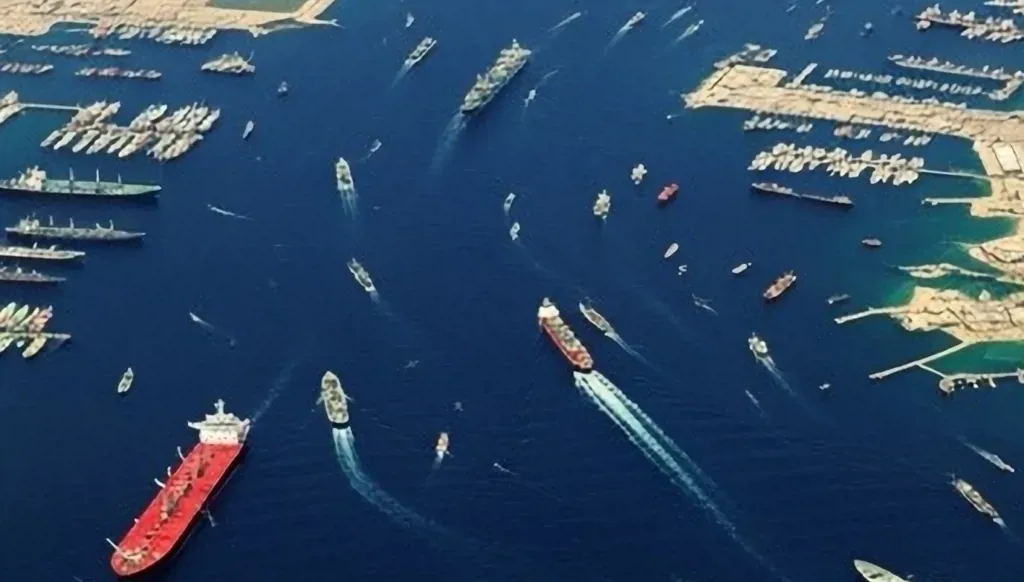


Major global oil companies have recorded significant profit jumps amid the military escalation between the United States and Iran since February 28. What has been the upward trajectory of oil and gas prices during the first twenty days of the war, how much profit have countries passing through the Strait of Hormuz earned, and which five oil companies have benefited the most, including their earnings?
Reports predict that U.S. oil companies could achieve additional gains of up to 63.4 billion dollars in 2026 if oil prices remain at 100 dollars per barrel, after prices rose 47 percent since the start of the Iran war on February 28. The closure of the Strait of Hormuz negatively affected major international oil companies, while U.S. shale oil companies benefited from the price increase, according to the Financial Times.
Models prepared by investment bank Jefferies indicate that U.S. producers generated an additional five billion dollars in cash flow during March alone, following a roughly 47 percent rise in oil prices since the outbreak of the U.S.-Iran war.
The combined market value of the “Big Six” publicly listed global oil giants increased by more than 130 billion dollars in just two weeks following the first strikes carried out by the United States and Israel against Iran.
Amr Wahib, a global financial markets expert, told An-Nahar that oil price indicators in global markets recorded a sharp and complex upward trajectory during the first twenty days of the war, which practically began on February 28, 2026. Brent crude was around 70 dollars before the military escalation between the United States and Israel on one side and Iran on the other. It then closed at 77.74 dollars on March 2, reached 81.40 dollars on March 3 and 4, rose to 85.41 dollars on March 5, reached 92.69 dollars on March 6, and jumped to 98.96 dollars on March 9. During intraday trading on the same day, it peaked at 119.50 dollars before surpassing 100 dollars again on March 12 and 13. It closed at 100.21 dollars on March 16, 103.42 dollars on March 17, and 107.38 dollars on March 18, with prices continuing to rise after the close.
This means Brent crude increased by approximately 38 percent between March 2 and March 18, and by about 53 percent when comparing the March 18 level with the February 28 close, which was near 70 dollars.
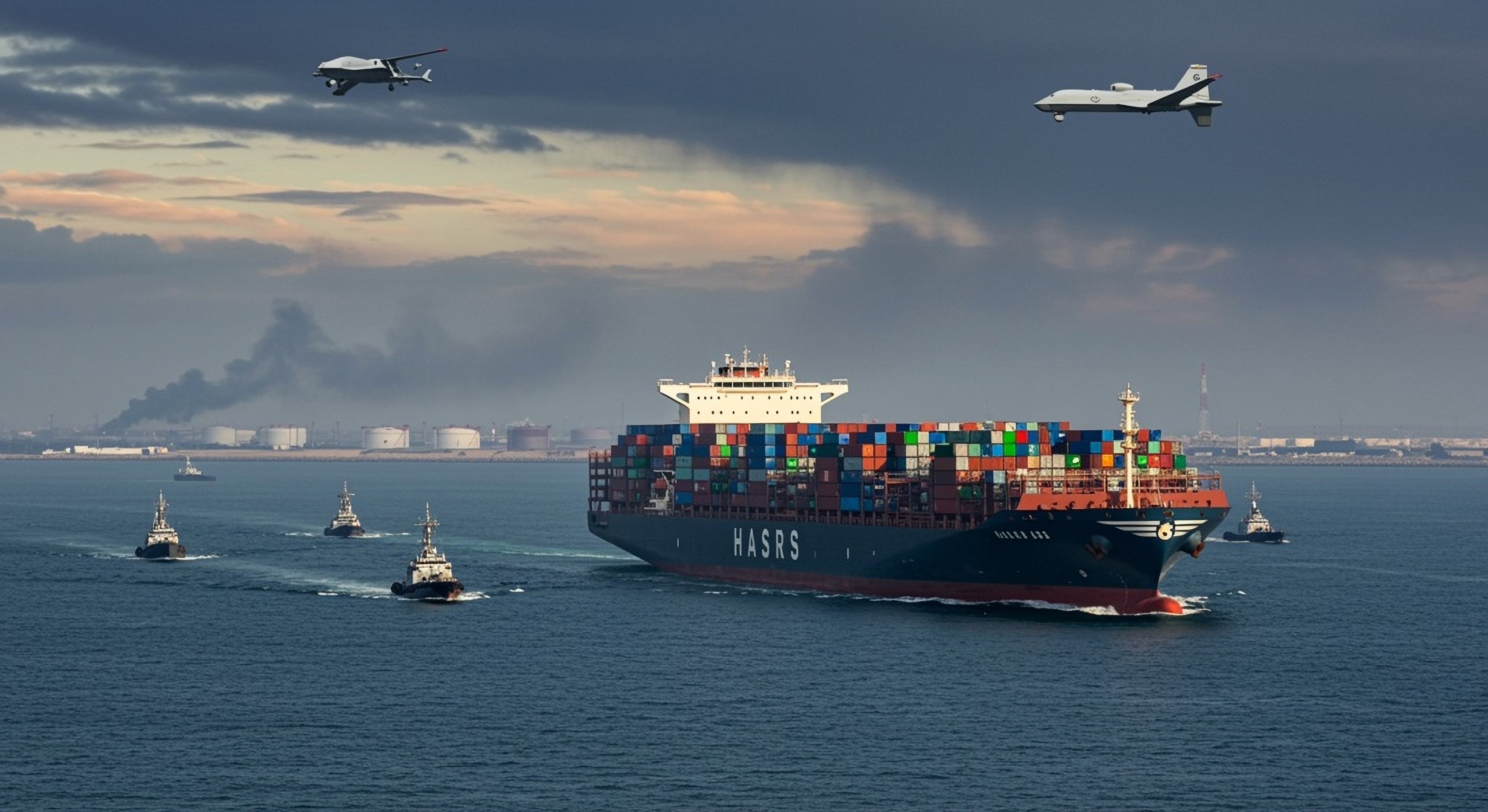
Wahib added that U.S. contracts reached 119 dollars in one trading session amid fears of supply disruptions through the Strait of Hormuz and damage to energy facilities in the region.
In the gas market, European gas prices jumped more than 30 percent at the start of the crisis, while spot liquefied natural gas (LNG) prices in Northwest Europe rose 57 percent in a single day to 15.479 dollars per million British thermal units. The surge then extended to the Asian market, with spot prices doubling to reach their highest level in about three years.
At the same time, a review of tanker tracking data showed that Iran continued exporting oil through the Strait of Hormuz at a near-normal pace. Its shipments totaled 13.7 million barrels from February 28 to March 11, meaning its total revenues during the first twenty days of the war could range from 1.7 to 2.5 billion dollars, depending on price levels and the usual discounts on its crude.
Top Five Companies Benefiting from the Situation
A global financial markets expert noted that the first twenty days of the war saw a strongly upward trajectory for oil and gas, albeit with extreme volatility. The clearest sovereign beneficiary of continued passage through the Strait of Hormuz was Iran, with estimated export revenues of around 1.7 to 2.5 billion dollars during the twenty days.
At the company level, the biggest beneficiaries so far are not only oil producers but also liquefied natural gas (LNG) companies and tanker operators. Leading the gains is Venture Global, a U.S. company specializing in developing, building, and operating LNG facilities. Venture Global clearly emerged as a direct beneficiary of the gas shock. The company had previously guided its 2025 EBITDA between 6.18 and 6.24 billion dollars. On March 2, Reuters reported that its core quarterly profits nearly tripled thanks to higher LNG sales.
Another major beneficiary is Frontline, a company specializing in oil tanker shipping, which reported a net profit of 379.08 million dollars in 2025, including a fourth-quarter profit of 227.9 million dollars. Rates for supertankers from the Middle East to China exceeded 200,000 dollars per day as tensions rose, making Frontline one of the clearest winners from the shipping boom, according to Reuters.
Scorpio Tankers, a Monaco-based maritime shipping company, also benefited, recording a net profit of 344.29 million dollars in 2025. The company profited directly from the sharpest increases in refined products, as jet fuel prices rose 114 percent and Singapore gas oil 57 percent since February 28, boosting demand for product tankers.
Hafnia, ranked the largest operator of product and chemical tankers in the world, achieved an annual net profit of 339.7 million dollars, with a quarterly profit of 109.7 million dollars. The company benefited from higher prices and transportation of oil products in Asia, according to Business Wire.
Finally, DHT Holdings, listed on the New York Stock Exchange and specialized in maritime shipping, earned a net profit of 211.09 million dollars in 2025. It remains one of the biggest winners among crude tanker owners, as Middle East exports remained limited and intermittent, raising shipping rates and risk premiums, according to Reuters.
The financial markets expert concluded that while the war drove up crude prices, it also increased shipping premiums, risk costs, and refined product bottlenecks to a degree exceeding the crude itself.
Estimated Revenues for Countries Continuing Passage Through the Strait of Hormuz
Despite the hardships of war, Iran is the only country benefiting from tanker traffic through the Strait of Hormuz. Iranian exports continued at a near-normal pace, while the passage of non-Iranian ships nearly halted before some tankers gradually resumed transit on March 16 and 17. There are no reliable or detailed figures available for each country, such as Iraq or Kuwait, for the entire period, according to Reuters.
A global financial markets expert said that Iran’s total export revenues from oil passing through the Strait of Hormuz from February 28 to March 19 range between 1.9 and 2.8 billion dollars. This represents approximate export revenue, not net profit. The calculation is based on data indicating that Iran exported between 1.1 and 1.5 million barrels per day from February 28 to March 11, totaling 13.7 million barrels according to Tanker Trackers, and 16.5 million barrels during the first eleven days of March according to Kpler statistics. This rate was then extended through March 19.
Based on these figures, Wahib concluded that Iran alone earned approximately 1.9 to 2.8 billion dollars in export revenues through the Strait of Hormuz between February 28 and March 19, 2026.
Regarding other countries granted passage permits by Iran, Wahib noted that there is no official Iranian list of countries allowed to transit the strait. However, reports indicate that China and India were the main beneficiaries of exceptions, along with a single Turkish vessel that received special permission.
Tehran has stated that any ship wishing to pass must now coordinate in advance with the Iranian Navy, meaning that transit is subject to selective approvals on a case-by-case basis rather than an open navigational route as before the war.