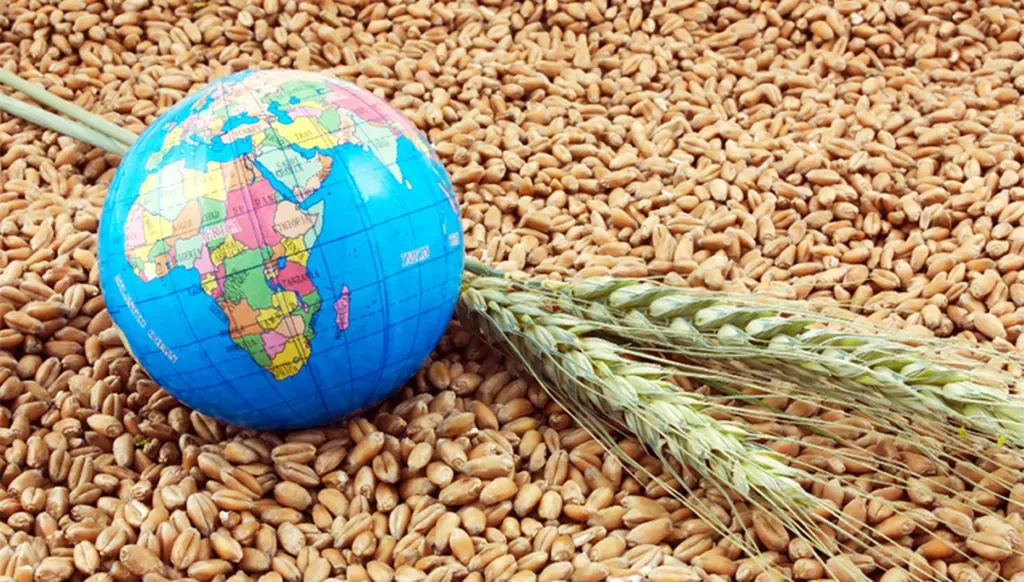
Food security at risk: Fertilizer markets shake under Middle East tensions
American-Israeli war on Iran sends urea and nitrogen fertilizer prices soaring, threatening food security worldwide and straining production across major exporting nations.
Analysts warn that the American‑Israeli war on Iran, now entering its third week, is causing severe disruptions in fertilizer markets and threatening food security in developing countries in the near term.
Here are the main impacts of this conflict on fertilizer prices, trade flows, and production:
How important is the Strait of Hormuz for fertilizer supplies?
Fertilizer production is an energy-intensive process that depends heavily on natural gas, with energy costs accounting for up to 70 percent of total production expenses.
As a result, much of the fertilizer industry is concentrated in the Middle East, with a third of global trade in this sector passing through the Strait of Hormuz—a narrow shipping lane along the Iranian coast that has been nearly completely closed since the war began.
About 20 percent of global oil and liquefied natural gas trade passes through the Strait, and its near-complete closure—along with missile and drone attacks in various parts of the Gulf—has forced energy facilities in the Middle East to halt production.
This has led to the closure of fertilizer factories in the Gulf region and beyond, just as farmers in the Northern Hemisphere prepare for spring planting, leaving little room for delays.
Why are fertilizers essential for food security?
In this context, Marina Simonova, a commodity market analyst at Argus, said that roughly half of the world’s food is grown using fertilizers, meaning any prolonged supply disruption would have widespread implications for food availability.
In some countries, fertilizers account for up to 50 percent of grain production costs. The United Nations food agency warned that several low-income countries were already facing food insecurity before the war began.
Nitrogen-based fertilizers, such as urea, are particularly critical in the short term, as crops can suffer if farmers skip them for even one season. This effect is generally less pronounced for other fertilizers, such as phosphate- and potassium-based products.
The global urea market was already facing supply shortages before the current conflict, after Europe cut production due to the halt of cheap Russian gas, and China imposed restrictions on fertilizer exports, including urea, to secure local supplies.
Food security (Archive).
Which fertilizer factories have stopped or reduced production?
Qatar Energy halted production at the world’s largest urea plant after suspending gas output following attacks on its liquefied natural gas facilities.
Analysts from Scotia Bank and Rabobank said that Egypt, which supplies eight percent of globally traded urea, may face difficulties producing nitrogen fertilizers after Israel declared a state of force majeure on its gas exports to the country.
India, one of the world’s largest urea markets, reduced production at three urea plants following a decline in liquefied natural gas supplies from Qatar.
India, home to nearly one-fifth of the world’s population, sources over 40 percent of its urea and phosphate fertilizers from the Middle East. It recently agreed to purchase 1.3 million tons of urea, part of which cannot be delivered on time.
Bangladesh shut down four of its five fertilizer factories, while Australian company Wesfarmers warned of potential delays in shipments, including urea.
Brazil relies on imports for nearly 100 percent of its urea, with about half of these shipments passing through the Strait of Hormuz.
In the United States, farmers reported that store shelves are nearly empty, facing an estimated 25 percent shortfall in fertilizer supplies at this time of year.
Globally, Scotia Bank expects urea exports to fall to around 1.5 million tons in March, down from 3.5 million tons without Chinese supplies, or 4.5–5 million tons with Chinese supplies.
How has the conflict affected fertilizer prices?
Argus data showed that Middle East urea export prices surged by about 40 percent to just over $700 per ton last Friday, compared to less than $500 before the war.
In the United States, fertilizer prices have risen by up to 32 percent since the conflict began.
Analysts say that nitrogen fertilizer prices, such as urea, could nearly double if the war continues.
Chris Lawson, an analyst at CRU, stated that given the Middle East’s dominant market share, no producer can quickly compensate for the supply shortfall.
He noted that Russia, the world’s largest fertilizer exporter, is facing supply disruptions due to Ukrainian drone raids, while China is imposing restrictions on its exports despite its significant production capacity.



 Messenger
 Whatsapp
 Threads
 Email
Email
 Print
Print
 X
X
 Facebook