Just three narrow waterways—Hormuz, Bab el Mandeb, and the Suez Canal—carry vital oil, food, and industrial goods. Any disruption in them can stall factories, spike energy prices, and challenge the rules that keep the global economy running.
Three strategic straits that shape global trade (Annahar deisgn)
Imagine that just three narrow sea passages can slow global trade, raise energy prices across distant continents, and delay the arrival of goods to stores around the world.
At these small points on the map, a large share of the planet’s economy passes through: the oil that powers factories, the food that fills markets, and the components that sustain global supply chains.
In these tight spaces, geography intersects with politics, and straits and canals become chokepoints of the international system. If navigation through them is disrupted, factories can stop, shipments are delayed, and major powers must reconsider their calculations. Here, importance is not measured by the width of the passage, but by the scale of the world that moves through it every day.
Discover three straits that control the world economy:
Strait of Hormuz
Strait of Hormuz
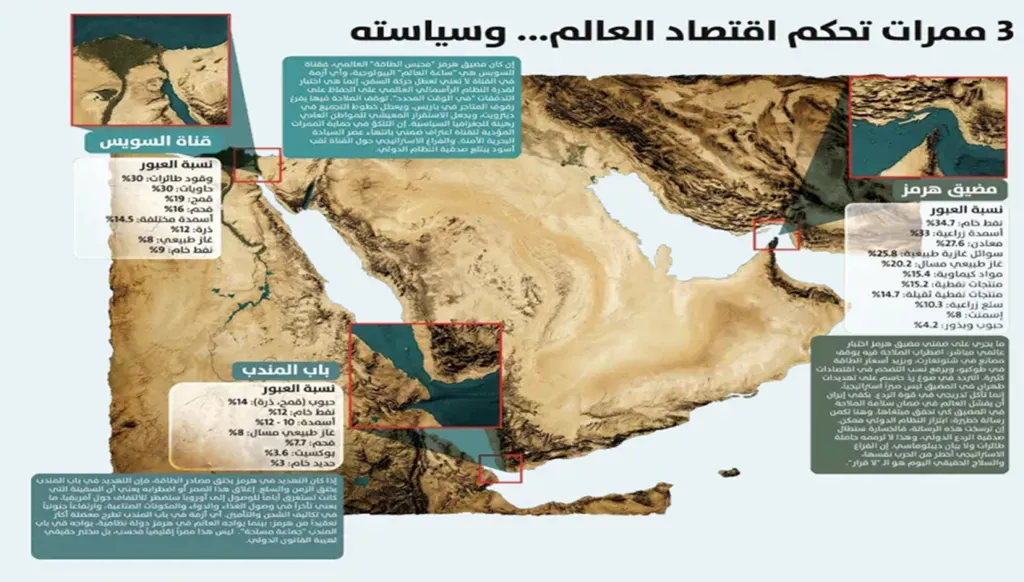
Share of different goods passing through: Crude oil: 34.7% Fertilizers: 33% Metals: 27.6% Natural gas liquids: 25.8% Liquefied natural gas: 20.2% Chemicals: 15.4% Refined petroleum products: 15.2% Heavy petroleum products: 14.7% Agricultural commodities: 10.3% Cement: 8% Grains and seeds: 4.2%
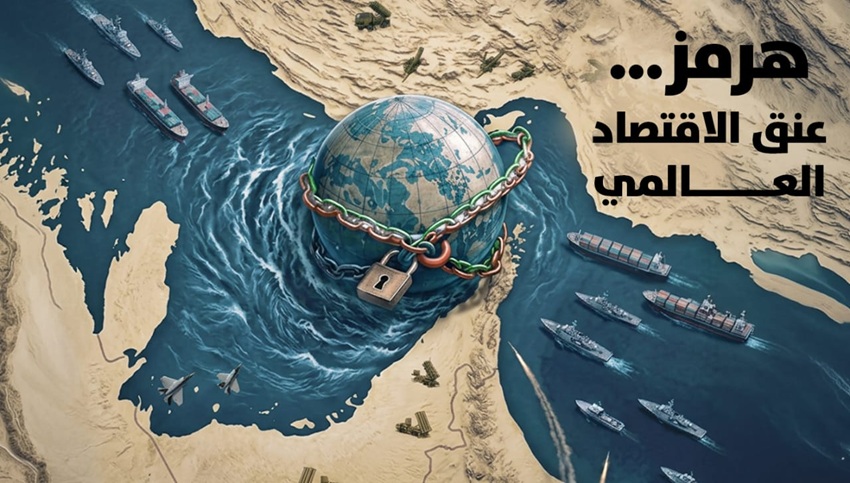
The crisis of the Strait of Hormuz is not fundamentally an oil crisis. It is a decisive test of the international system’s ability to protect the rules on which it is built. What is happening along the shores of the strait is a direct global test. Disruption to navigation there can halt factories in Stuttgart, raise energy prices in Tokyo, and increase inflation in many economies far removed from the strait itself.
Hesitation to formulate a decisive response to threats from Tehranin the strait is not strategic patience. It is a gradual erosion of deterrence. For Iran, it is enough that the world fails to guarantee the safety of navigation there in order to achieve its objective.
This is where a dangerous message emerges: the international system can be blackmailed. If this message takes hold, the loss will affect the credibility of global deterrence, and that is not something an aircraft carrier or a diplomatic statement can repair. Strategic vacuum is more dangerous than war itself, and today the real weapon is “no decision.”
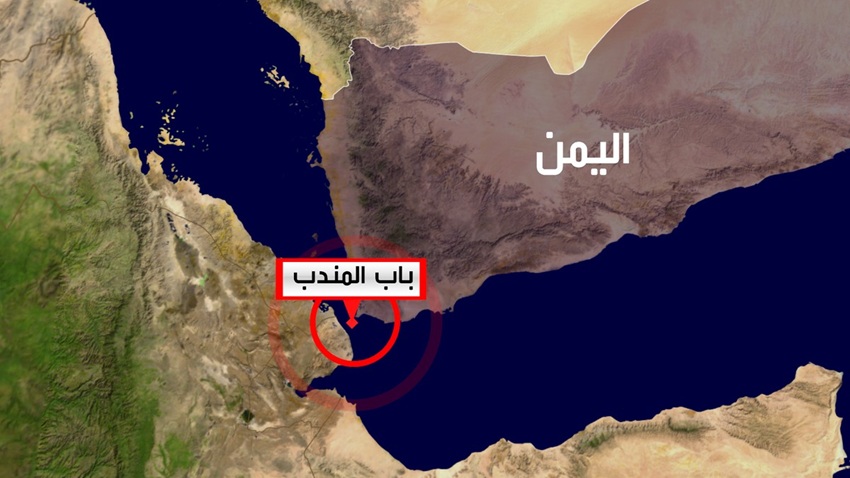
Map of Bab el Mandab
Bab el Mandeb
Share of different goods passing through: Grains (wheat, corn): 14% Crude oil: 12% Fertilizers: 10 to 12% Liquefied natural gas: 8% Coal: 7.7% Bauxite: 3.6% Iron ore: 3%
If the threat in the Strait of Hormuzchokes energy supplies, the threat in Bab el Mandeb, sometimes called the Strait of Tears, chokes time and trade.
Closing this passage or disrupting it means that a ship that once needed only days to reach Europe through the Suez Canalwould be forced to sail around Africa. That would delay the arrival of food, medicine, and industrial components, while causing shipping and insurance costs to surge dramatically.
Any crisis in Bab el Mandeb presents a more complex dilemma than Hormuz. In Hormuz, the world faces a sovereign state. In Bab el Mandeb, it faces an armed group. So far, the Houthishave not entered Iran’s war and have not closed the strait.
But this passage is not merely a regional route. It is a real test of the authority of international law.
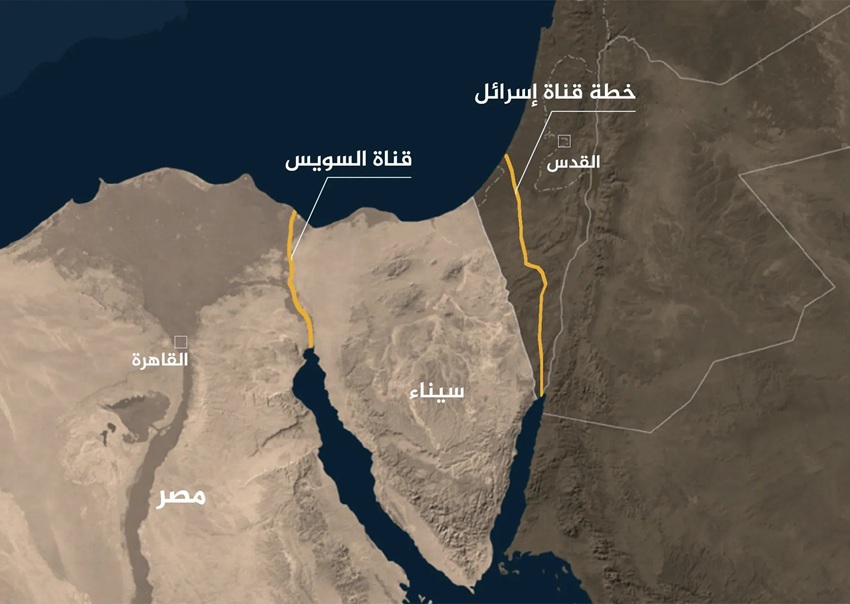
Map of the Suez Canal
Suez Canal
Share of different goods passing through: Jet fuel: 30% Containers: 30% Wheat: 19% Coal: 16% Various fertilizers: 14.5% Corn: 12% Natural gas: 8% Crude oil: 9%
If the Strait of Hormuzis the world’s “energy valve,” the Suez Canalis the heartbeat of global trade, especially as it serves as the main outlet for the Bab el Mandeb.
Any crisis in the canal does not just disrupt shipping; it tests the global capitalist system’s ability to maintain “just-in-time” flows. A halt in navigation not only drives up energy prices but also empties store shelves in Paris, disrupts assembly lines in Detroit, and makes the everyday stability of ordinary citizens hostage to geopolitics.
Delays in securing the routes leading to the canal are not cautious diplomacy; they are an implicit acknowledgment that the era of secure maritime sovereignty has ended. The strategic vacuum around the Suez Canal is a black hole that swallows the credibility of the international system.



 Messenger
 Whatsapp
 Threads
 Email
Email
 Print
Print
 X
X
 Facebook