

Straits of risk: How Hormuz and Bab el-Mandeb threaten oil and markets


 Messenger
 Whatsapp
 Threads
 Email
Email
 Print
Print
 X
X
 Facebook
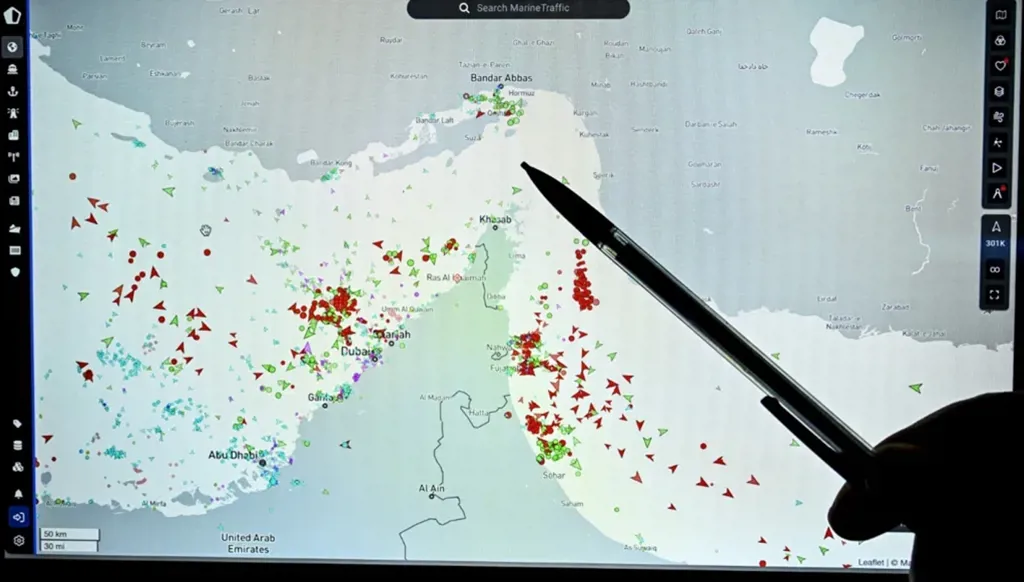


On March 6, the US Secretary of Energy said that the US Navy would escort ships “when it becomes reasonable.” But just a few days later, the White House spokesperson stated that the United States had not actually escorted any oil tankers through the Strait, and the US Navy had been rejecting almost daily requests from the shipping sector for military escort due to the high risk of attacks. At the same time, the Chairman of the Joint Chiefs of Staff said that the Pentagon was considering a “range of options.” Moreover, the statements by the US President regarding protection and insurance indicate that the decision has not yet turned into a permanent security umbrella. This gap between political signaling and military implementation is exactly what markets dislike.
This is not about a secondary route. The Strait of Hormuz normally carries about one fifth of the world’s oil and liquefied natural gas trade. Since the outbreak of the war, traffic through the strait has fallen 97 percent, and at the height of the disruption, the number of daily tankers dropped to zero from 37 before the first strikes. About 15 million barrels per day of crude oil and more than 4 million barrels per day of refined products typically leave the Middle East through this passage. When this volume is disrupted, the problem is no longer just price, but also time, inventories, and the ability of refineries to continue operating without a gradual choking of supplies.
The Bab el-Mandeb Strait is not a comfortable alternative
On paper, rerouting through the Red Sea might seem like a logical solution, especially as Aramco seeks to divert some shipments to the port of Yanbu on Saudi Arabia’s west coast. But even this “alternative” carries its own costs. Shipping costs to Yanbu have jumped to 28 million dollars per tanker, more than double the usual amount, and some shipping arrangements have failed entirely because carriers prefer to avoid the area altogether. Here the most dangerous bottleneck appears: if the Houthis regain the ability to threaten Bab el-Mandeb, the very detour itself turns from an escape route into a dead end.
Recent history offers little reassurance. The Houthis have managed to disrupt most traffic through the Red Sea and Bab el-Mandeb on the route to the Suez Canal for more than two years, despite Western protection. The economic implication is stark: if a relatively small actor can disrupt one of the world’s most important trade routes, the combination of the Hormuz risk with the Red Sea threat creates a double shock—not just for oil, but for trade, insurance, supply chains, and time itself.
Oil first, but it is not the end
The first reaction always starts with energy. Brent has risen more than 36 percent since the beginning of the war, touching levels above 119 dollars per barrel this week alongside West Texas Intermediate before pulling back. Prices rose again today with attacks on tankers, with Brent near 96.45 dollars and West Texas Intermediate at 91.30 dollars after earlier touching 100 dollars and 119.50 dollars respectively. This represents a comprehensive repricing of supply, time, and insurance risks.
Currencies: The dollar benefits first, the rest pay the price
In moments like these, markets do not ask first about fairness or logic—they ask about liquidity. That is why the dollar, along with oil, was among the main winners at the onset of the shock, while emerging market currencies and stock indices fell to their lowest levels in three weeks as investors sought quick safety. The euro also came under pressure as Europe’s sensitivity to any new energy price spikes increased. This pattern is familiar: energy-importing economies are punished first in the currency markets, even before the full cost shows up in inflation and growth.
The impact is not limited to fuel prices. A mere 10 percent rise in oil can worsen the current account deficit in some emerging markets by 40 to 60 basis points, creating simultaneous pressures on currencies, external financing, and borrowing costs. That is why economies such as India and much of emerging Asia are more vulnerable to prolonged shocks if the crisis persists or spreads geographically. The euro, therefore, could be among the hardest-hit currencies if geopolitical tensions continue, due to heightened inflation sensitivity from rising energy costs.
Stocks and debt: the logic of safe havens breaks down
The worst aspect of this shock is that market behavior has not remained traditional. Cash has become king, as gold, bonds, and stocks all fell simultaneously, breaking the usual relationship between risky assets and safe havens. On March 11, global stocks fell again while US Treasury yields jumped, signaling that the market was beginning to fear something more complex than the war itself—a mix of higher inflation and weaker growth. The specter of stagflation is once again looming.
This puts global debt markets in a tight spot. Rising oil pushes inflation expectations higher, prompting investors to scale back bets on rate cuts, which drives yields up instead of down. A prolonged Middle East conflict could clearly increase Eurozone inflation and lower growth. The International Monetary Fund estimates that each sustained 10 percent increase in oil could reduce global GDP by 0.1 to 0.2 percentage points. When oil jumps and central banks remain hesitant, bonds lose some of their appeal as a cold-blooded safe haven.
Gold: not a straight path upward
Here many fall into the trap of easy reading. Yes, gold benefits from long-term fear, but it does not rise in a straight line at every moment of tension. In the first days of geopolitical unrest, the metal climbed above 5,400 dollars supported by safe-haven demand, then retreated and stabilized as the dollar strengthened and bond yields rose. The paradox is that gold may lose value in the short term during the shock—not because the risk has diminished, but because the market sells almost everything to secure liquidity or favors the dollar and immediate yield. Yet it remains supported as long as the war continues and fears of a US deficit and geopolitical uncertainty persist.
Insurance and shipping: the global economy pays the fear tax before barrels disappear
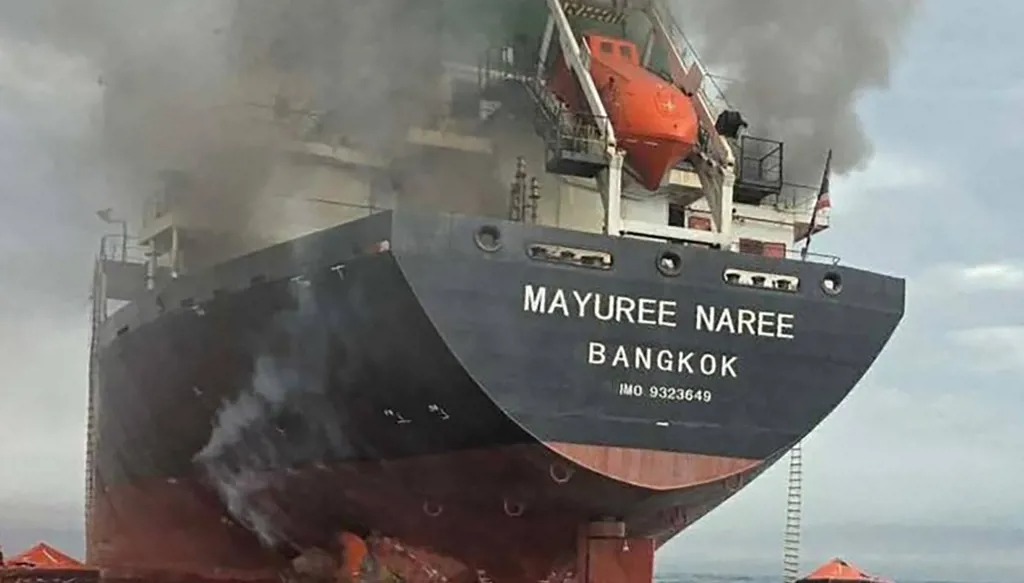
The cost does not start when oil disappears from the market, but when everyone begins to price in the possibility of its disappearance. This is what maritime insurance is doing now. War risk premiums have risen to nearly 3 percent of the tanker’s value, roughly 7.5 million dollars for a tanker worth around 250 million dollars, up from about 0.25 percent or 625,000 dollars before the conflict. Jefferies estimated that industry losses from damaged ships in the first days could reach 1.75 billion dollars. These numbers are part of upcoming inflation: every trip is more expensive, every delay longer, every shipment less certain.
Even withdrawals from strategic reserves do not provide a magic solution. The International Energy Agency announced a record release plan of 400 million barrels, which may seem like only a bandage on a broader shock, because potential disruption could reach 20 million barrels per day, and delivering alternative supplies, especially to Asia, requires time, shipping, and capacity that cannot be activated at the push of a button. The market understood the message immediately: the reserve may calm the headlines, but it does not open the strait.
Three scenarios… three different prices for the world
The first scenario is a gray containment, neither full peace nor total explosion. Navigation remains weak, protection becomes partial, and some flows gradually leave the Gulf, while the Red Sea remains under threat without a full Houthi return. In this scenario, Brent averages around 98 to 105 dollars per barrel, putting pressure on energy-importing currencies, delaying or halting interest rate cuts in several emerging markets, and causing wide swings in stocks and gold without a complete collapse.
The second scenario involves a longer Hormuz drain with delayed or limited US escort. In this case, the problem moves from the oil screen to the heart of the economy. Refineries press against inventories, airlines and shipping companies reprice, bond yields rise further, and markets abandon the idea of a rapid rate cut. This scenario pushes Brent to 110–125 dollars per barrel, with the possibility of exceeding 147 dollars if flows remain paralyzed for longer and strategic reserves are drained. Here, the question is no longer whether inflation will rise, but how much growth will be sacrificed to contain it. This may support a strong US dollar and keep gold steady in a stark safe-haven scenario, as geopolitical tensions drag on.
The third scenario, the most extreme and costly, involves simultaneous shocks in both straits. Hormuz is partially or fully blocked, and the Houthis resume attacks in Bab el-Mandeb and the Red Sea. At that point, there is no reliable detour and no cost that can be absorbed easily. Oil could surge to test 175 dollars per barrel, debt markets would come under pressure, gold would become a volatile haven, and the dollar is first strengthened, then arise the bigger questions on the impact of the shock on the global deficit and growth. This is a scenario that not only reprices energy, but the entire world at large. And this scenario could shift if geopolitical tensions persist for more than a month, potentially leading to stagflation and negatively impacting global stock markets, gold, and even cryptocurrencies. Oil might appear to be the first and last beneficiary.
The real danger is not closure alone, but uncertainty
Markets can sometimes cope with clearly bad news. What they can't digest is bad news that is open to contradictory possibilities. And today, that's the crux of the matter: Washington doesn't want to appear helpless, but it hasn't yet decided how to ensure passage. Saudi Arabia and the Gulf states are searching for logistical solutions, but the Red Sea is no walk in the park. The Houthis aren't a superpower, but their track record shows they can disrupt the calculations of major powers. And every day that passes without a settlement or a reliable safety net adds another installment to the oil bill, then to inflation, then to interest rates, then to stock valuations, and then to the exchange rate.
In simpler terms, the closure of the Strait of Hormuz is not just a threat to oil. It is testing whether the global financial system still has the luxury of separating geopolitics from asset pricing. So far, the answer sounds less comforting than the markets would like to hear.