

Choke points at sea: How narrow shipping routes threaten global trade
Disruptions in the Strait of Hormuz and the Red Sea show that a few key maritime passages carry most of the world’s energy and goods—and that rising risks there can slow trade, raise costs, and shake global supply chains.


 Messenger
 Whatsapp
 Threads
 Email
Email
 Print
Print
 X
X
 Facebook
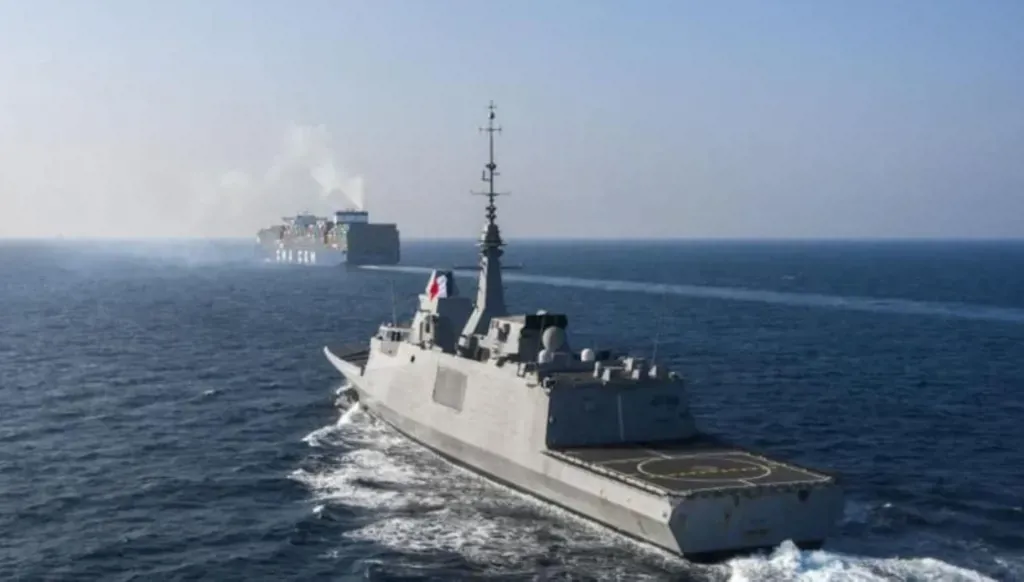


Concerns are growing in global energy and shipping markets as tensions return to the Middle East’s most important maritime routes. Despite its heavy military presence in the Arabian Gulf amid the war with Iran, the United States has not yet begun escorting commercial ships through the Strait of Hormuz and has informed the shipping sector that such escorts are not currently possible. This reflects Washington’s limited willingness to bear the cost of comprehensive naval protection in a passage that carries shipments equivalent to about one-fifth of the world’s oil consumption. At the same time, the Red Sea remains vulnerable to a possible return of Houthi attacks on ships—attacks that previously forced major shipping companies to reroute their vessels away from this corridor.
The global economy today faces a striking paradox: international trade appears as a vast network of routes, markets, and ports, yet in reality it depends on a small number of narrow maritime passages. These routes, carrying energy, goods, and raw materials, are choke points where any disruption can quickly ripple through global markets. With tensions rising in the Strait of Hormuz and continued risks to navigation in the Red Sea, this reality is once again highlighted, exposing the fragility of the system that underpins the global trading network.
Modern economies rely heavily on maritime transport. According to data from the United Nations Conference on Trade and Development (UNCTAD), more than 80 percent of global merchandise trade by volume is carried by sea. Therefore, any disruption in these maritime routes is not just a matter for shipping companies or navigational security—it quickly becomes an economic issue affecting energy prices, commodity costs, and supply chains worldwide.
At the center of this equation is the Strait of Hormuz, one of the most critical choke points in global energy trade. According to estimates from the U.S. Energy Information Administration, about 20 million barrels of oil pass through the strait daily, roughly one-fifth of the world’s consumption of oil and petroleum products. Flows through the strait also account for more than a quarter of seaborne oil trade worldwide, in addition to carrying about one-fifth of global liquefied natural gas trade.
The importance of these figures lies not only in their volume but also in their geographic direction. Approximately 84 percent of the oil and condensates passing through the Strait of Hormuz are headed to Asian markets, particularly China, India, Japan, and South Korea. This means that any disruption in navigation through the strait affects not only global oil prices but also the Asian industrial heartland, which relies heavily on energy imports from the Gulf—and which, in turn, supplies a large share of manufactured goods to markets in Europe and the United States.
The impact of risks in maritime routes does not stop at energy prices. Even a rise in tension can increase insurance premiums for ships passing through dangerous areas and push shipping companies to raise transport costs to compensate for the risks. Reuters reports that war-risk insurance premiums for transit through Hormuz rose by up to 300 percent at the peak of tensions, while the cost of chartering some supertankers on the Middle East–China route exceeded $400,000 per day in early March. This surge reflects not only the danger of the passage but also how sensitive the shipping market is to any signal that military protection is uncertain or insufficient.
If the Strait of Hormuz represents the world’s energy artery, the Red Sea and the Suez Canal serve as key channels for the trade of manufactured goods and containers between Asia and Europe. According to the International Monetary Fund, roughly 15 percent of global maritime trade normally passes through the Suez Canal. UNCTAD data shows that in 2023, before the Gaza war, the canal handled about 12 to 15 percent of global trade, and 22 percent of the world’s seaborne container traffic passed through it. These figures explain why disruptions in the Red Sea have shifted from a regional security issue to a direct threat to global supply chains.
For this reason, navigation disruptions in the Red Sea had an immediate impact on international trade. The IMF reports that trade volumes through the Suez Canal fell by 50 percent year-on-year in the first two months of the Gaza war, while traffic around the Cape of Good Hope rose by 74 percent compared with the previous year. By mid-2024, UNCTAD data showed that the cargo volume transiting the Suez Canal had dropped 70 percent, while arrivals at the Cape of Good Hope had surged 89 percent. In other words, this was not a matter of minor delays on certain voyages, but a real reshaping of maritime trade routes.
This shift in maritime routes was not only geographic—it carried a clear economic cost. Voyages between East Asia and Europe became roughly 10 days longer on average when rerouted around Africa, according to the IMF. The World Bank documented that by October 2024, Red Sea disruptions had increased voyage distances by about 48 percent for cargo ships and 38 percent for tankers, while transit times rose by up to 45 percent and 28 percent, respectively. These increases naturally translated into higher fuel consumption, reduced effective ship availability, and greater operating costs in the global shipping market.
Longer journeys also tie up more capital in goods stuck at sea for extended periods. Shipments that previously reached markets within weeks now take longer, increasing storage costs for industrial and commercial companies and putting pressure on factories and retailers operating on tight time margins. In this context, the World Bank reports that the global supply chain pressure index reached 2.3 million twenty-foot equivalent units (TEUs) in December 2024—more than double its level in the same month of 2023.
These developments quickly affected the global container market. As ships rerouted and risks in the Red Sea escalated, shipping rates on Asia–Europe routes surged far above pre-crisis levels. UNCTAD reports that by mid-2024, spot shipping rates reached levels not seen since the global supply chain disruptions triggered by the COVID-19 pandemic in 2020 and worsened by the war in Ukraine in 2022. The data also show that longer routes increased global demand for ships by three percent and for container vessels by 12 percent, explaining a significant part of the price spike even without a full closure of maritime passages.
These cost increases do not remain confined to the shipping sector. Rising freight costs gradually translate into higher consumer prices. IMF studies indicate that a doubling of maritime shipping costs could raise global inflation by around 0.7 percentage points over the following year, as additional costs pass through to import and retail prices. This shows that a crisis in maritime passages is not just about delayed shipments or higher transport bills—it also imposes additional inflationary pressure on economies that have not yet fully recovered from recent shocks.
These developments reveal a fundamental truth about the global economy: international trade relies heavily on a small number of maritime passages that carry a massive share of trade and energy flows. Key routes include the Strait of Hormuz, the Bab el-Mandeb, the Suez Canal, the Strait of Malacca, and the Panama Canal—strategic points where any disruption can reshape global trade routes and alter both costs and pace.
The greater concern for markets is not the risk to any single passage, but the possibility that multiple major routes could be under pressure at the same time. If the Strait of Hormuz experiences disruptions that constrain energy supplies while risks persist in the Red Sea affecting container routes between Asia and Europe, the global economy could face a dual shock hitting both energy trade and industrial supply chains simultaneously. The problem is not only the potential for a complete stoppage; risk costs appear much earlier—in insurance premiums, freight rates, voyage durations, and the need for companies to restructure logistics in a slower, more dangerous world.
Even without a full closure of these passages, rising risk alone can have tangible economic effects. Ships may still sail, but at higher costs, with more expensive insurance and longer routes. The result is what can be described as a phase of “slower and costlier trade.” In such a phase, goods do not necessarily disappear from markets, but they arrive more slowly, prices rise, and supply chains become less flexible and more vulnerable to shocks.
In a world that relies on maritime transport for most of its trade, these narrow sea lanes are like the arteries of the global economy. If their “circulation” is restricted, the impact does not remain confined to one region—it quickly spreads across the global economy. For this reason, what is happening today in the Strait of Hormuz and the Red Sea is not just a fleeting geopolitical crisis, but a real test of the global economic system’s ability to cope with the fragility of its underlying infrastructure.