

The DERP Plan: A credit-led 2-year roadmap to safeguarding deposits and reviving the economy


 Messenger
 Whatsapp
 Threads
 Email
Email
 Print
Print
 X
X
 Facebook
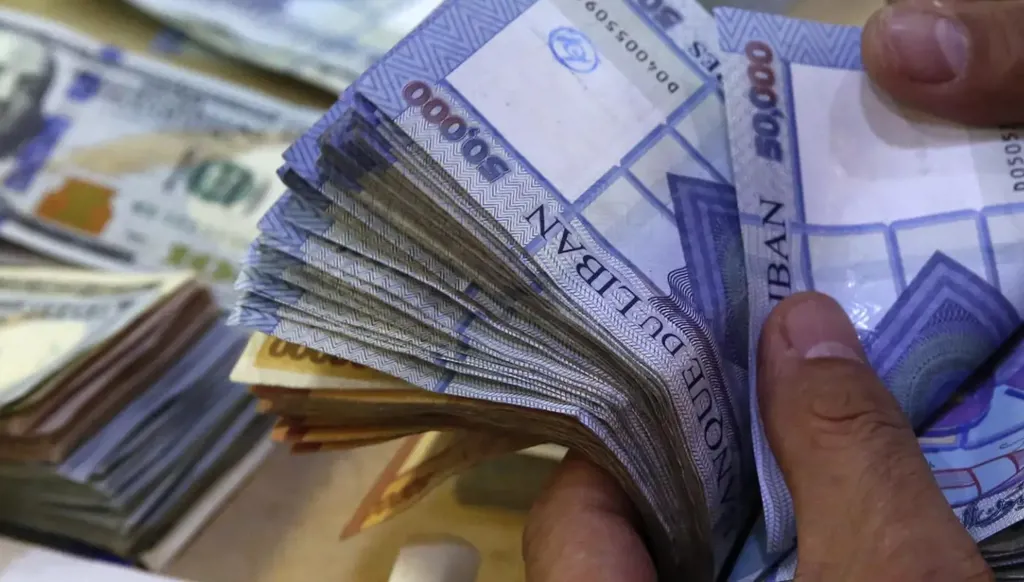


After more than six years of financial paralysis, during which depositors are still waiting for a credible solution to the banking crisis, the Deposits and Economy Recovery Plan (DERP) proposes a radically different approach: rebooting the economy through credit to protect deposits and rebuild trust in the financial and banking sector.
Lebanon’s financial collapse, which began in 2019, has left the country operating far below capacity. The banking system remains largely dysfunctional, the economy has shifted heavily toward cash transactions, and millions of depositors are still unable to access their savings.
Successive policy responses, partial withdrawals, arbitrary caps, and open-ended promises have failed to restore confidence or revive economic activity. Instead, they have deepened uncertainty, weakened purchasing power, and reinforced public mistrust of financial institutions.
For depositors, the question is no longer when their savings will be recovered, but whether they ever will be.
In practical terms, two fundamental pillars of a normal economy have all but disappeared: credit and savings. Without access to credit, businesses cannot invest, expand, or create jobs. Without confidence in the banking system, households cannot save, plan, or consume normally. This double breakdown has locked the economy into a self-reinforcing cycle of stagnation, illiquidity, and fear.
It is against this backdrop that the Deposits and Economy Recovery Plan positions itself as an alternative to the incremental measures that have, so far, failed.
A recovery logic centered on credit
The DERP is built around a straightforward rationale: there can be no economic recovery without growth, and no growth without credit.
Rather than exhausting limited liquidity through partial and ineffective deposit repayments, the plan proposes a structured, actionable two-year roadmap designed to address both the deposit crisis and the paralysis of economic activity simultaneously.
Its objective is to restore lending, stimulate job creation, improve household incomes, reduce the fear of bank runs, and, over time, secure and release deposits in full.
A three-pillar framework
The plan relies on coordinated action among three core actors of the financial system:
The Central Bank (Banque du Liban) would continue providing depositors with monthly payments proportional to their deposits. In parallel, it would extend approximately $8 billion in financing lines to commercial banks, proportional to client deposits and banks’ holdings at the central bank. These facilities would be backed by free reserves, available assets, and, if required, Lebanon’s gold reserves, whose rising value represents a strategic asset for the country.
Commercial banks would channel these funds exclusively toward lending to productive and social sectors, under strict criteria set by the central bank. They would be required to meet minimum profitability thresholds to generate free liquidity, suspend dividend distributions, and progressively recapitalize over a five- to seven-year period to meet regulatory standards.
Depositors, in turn, would see their funds gradually secured and released, while regaining access to credit—a prerequisite for economic recovery. Restored confidence would encourage savings, curb bank runs, and help reactivate the natural economic cycle.
System-wide benefits
The DERP aims not merely to stabilize banks, but to deliver a broad-based economic recovery.
For depositors: gradual access to their savings after two years, reduced financial stress, and a return to normal saving and consumption behavior.
For the economy: sustained growth, job creation, rising purchasing power, renewed investment, and a gradual reduction in cash-based activity.
For the state: higher public revenues from VAT, customs duties, and income taxes as economic activity resumes.
For social institutions such as the National Social Security Fund and trade unions: increased contributions, revenues, and, ultimately, benefits.
For the central bank: a reactivation of its role and function, system stabilization, and the gradual restoration of monetary credibility.
For commercial banks: a reduction in bank runs, revived activity under clear conditions, rebuilding of liquidity, restored solvency, and preservation of banking jobs.
Where conventional approaches have prioritized contraction and scarcity management, the DERP takes the opposite approach: growth as the mechanism to protect deposits, rather than sacrificing them in the name of ineffective austerity.
By reconnecting Lebanon with the fundamentals of a functioning economy—credit, employment, savings, and trust—the plan seeks to turn a systemic crisis into an opportunity for reconstruction.
The remaining question is whether Lebanon is ready to move beyond half-measures and embrace a coherent strategy for recovery.
Disclaimer: The opinions expressed by the writers are their own and do not necessarily represent the views of Annahar.