

Lebanon's road back to CEDRE: Six years since the failed initiative


 Messenger
 Whatsapp
 Threads
 Email
Email
 Print
Print
 X
X
 Facebook
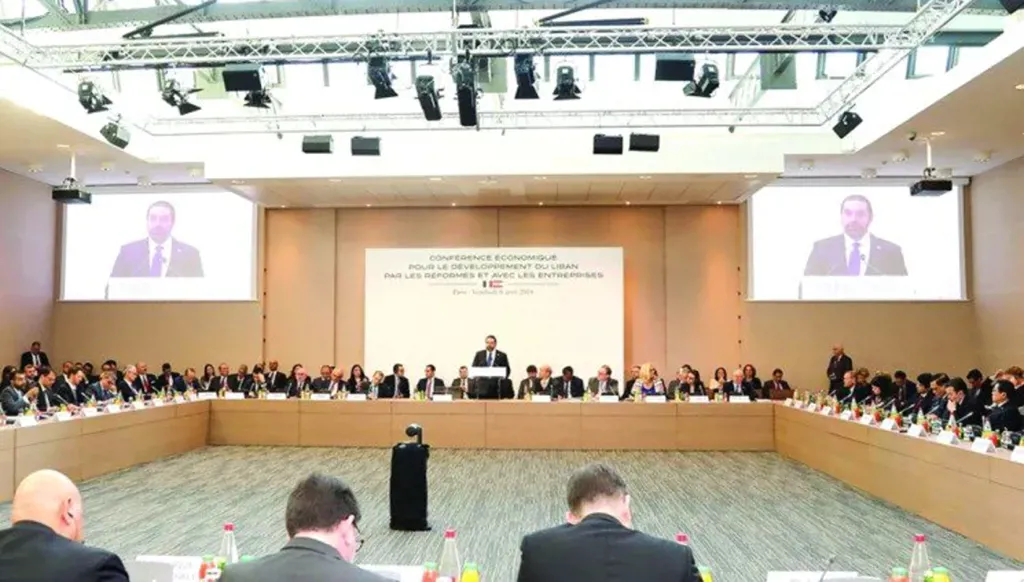


Lebanon was supposed to receive $10.2 billion following the CEDRE conference, a partnership expected to support Lebanon's economy and stability. This was in 2018.
Most support was promised conditionally, and many conditions remain unfulfilled. What were the conditions? And what were the obstacles to their implementation?
At that time, the international community pledged, through the CEDRE conference, to provide loans and grants amounting to nearly $11 billion to finance infrastructure projects and structural reforms, particularly in the energy, water, and transport sectors, in exchange for a Lebanese commitment to combat corruption and several reformist laws.
The aim of the CEDRE conference was to boost the sluggish economy, create jobs, and stabilize the Lebanese pound through projects funded by concessional loans from countries and international institutions. Less than a year later, the collapse derailed the plans. In 2019, the country experienced a dramatic economic decline with political upheavals that spared no sector or administration, resulting in the first nail in the coffin of the conference's goals being driven in, instead of implementing financial and administrative reforms and fighting corruption and updating investment-encouraging laws, the first nail in the coffin of the conference's goals was driven, leaving the aid ink on paper without any translation.
Today, does the current government represent a real turning point in the Lebanese economic path after years of failure?
Dr. Patrick Mardini, President of the Lebanese Institute for Market Studies, said that "the optimism for the year 2026 is based on exceptional government performance after a full decade of consecutive economic failures. This optimism is manifested in serious attempts to address key issues like monetary stability, public budgeting, and the electricity sector, working with a system and seriousness that reflects a reformist approach not seen in the country for many years."
Unfulfilled conditions
The CEDRE project included a range of projects, most notably infrastructure projects, with focus on the transport, electricity, and water sectors.
The most important conditions were:
•Implementing comprehensive structural and financial reforms to ensure sustainability of funding.
•Reducing the budget deficit, specifically reducing the fiscal deficit.
•Reforming the electricity sector by implementing a comprehensive and sustainable plan for the sector, including increasing tariffs, reducing wastage, and ensuring supply.
•Fighting corruption, enhancing transparency, and modernizing public administration.
•Implementing investment projects for infrastructure, amid strict international monitoring to ensure funds from the conference are used in their designated areas.
Lebanon has not effectively implemented any of these conditions; in fact, in most cases, it has moved in the opposite direction entirely, only exacerbated after the port explosion in 2020.
A year into Joseph Aoun's term
Dr. Mardini observed that "there are serious reforms in monetary stability, public budgeting, and the electricity sector, which distinguishes the current government from its predecessors, as it makes tangible efforts on economic and financial issues. This is evident in attempts to manage public finances and achieve relative monetary stability, in addition to practical steps in the electricity file, one of the chronic challenges in Lebanon."
On the other hand, many structural challenges and reforms still await, most importantly restructuring the public sector and combating corruption, as there is still a need for serious measures to enhance transparency and governance.
Mardini explained that "experience shows that the success of any reformist government requires political cohesion and parliamentary support, especially amidst the economic and financial challenges Lebanon faces. The inability of reformist forces to protect their ministers within the government opens the door for traditional forces to reclaim their influence after the upcoming elections, which may jeopardize the reform path that has begun to take shape."