

Egypt’s new government tackles economic challenges with bold reforms


 Messenger
 Whatsapp
 Threads
 Email
Email
 Print
Print
 X
X
 Facebook
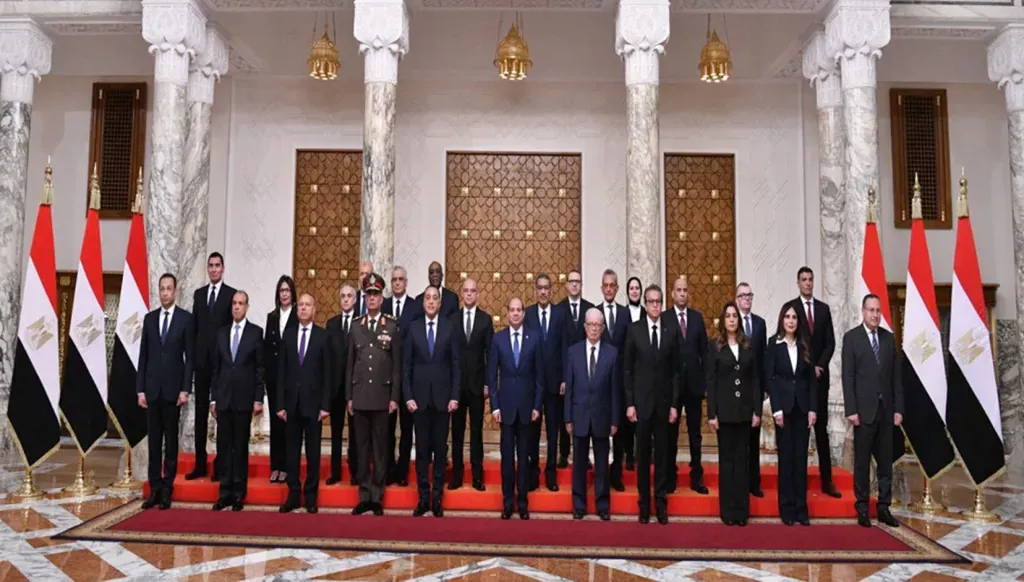


At a critical moment where domestic challenges intersect with regional and international developments, the new Egyptian government, headed by Dr. Mostafa Madbouly, has begun its tasks following the approval of a cabinet reshuffle by the House of Representatives. The reshuffle introduced 13 new ministers and appointed a Deputy Prime Minister for Economic Affairs, a move aimed at injecting fresh energy into the economic team and enhancing the efficiency of managing this phase.
The reshuffle did not only involve changes in personnel but also a reorganization of key portfolios. The Ministry of Planning was separated from International Cooperation, with Ahmed Tawfik Rostom assuming the Planning portfolio, while International Cooperation was added to the Ministry of Foreign Affairs under Dr. Badr Abdel Aaty. The Ministry of Industry was separated from Transportation, with Engineer Kamel El-Wazir continuing as Minister of Transport and Khaled Hashem appointed as Minister of Industry. In addition, the new position of Deputy Prime Minister for Economic Affairs was created and assumed by Dr. Hussein Eissa, and Mohamed Farid was appointed Minister of Investment and Foreign Trade. The Ministry of Information was reinstated, along with new appointments in Justice, Culture, Labor, Communications, Housing, and Military Production.
Abu Bakr El-Deeb, advisor at the Arab Center for Studies and researcher in international relations, told Annahar: “The new cabinet reshuffle in Egypt reflects a strategic step to confront major economic challenges, including high public debt, inflation, unemployment, and rising prices.”
Foreign currency shortages and ongoing pressure on the Egyptian pound are at the forefront of challenges facing the new cabinet, given their direct impact on imports and supply chains. Although some foreign currency resources have improved, market stability remains tied to increased exports and the attraction of foreign direct investment, a key condition for reducing other economic risks.
.jpg)
Inflation is also a natural extension of currency pressures. The urban inflation rate slowed to 11.9% in January, down from 12.3% the previous month, according to data from the Central Agency for Public Mobilization and Statistics. However, pressures on purchasing power remain, requiring the government to balance controlling inflation with stimulating growth.
Despite these pressures, the Egyptian economy grew by 5.3% in the first quarter of the 2025–2026 fiscal year, supported by improvements in revenues from the Suez Canal, tourism, and manufacturing industries. Unemployment stood at 6.4% in the third quarter of 2025 (32.498 million employed), highlighting the need to create sustainable jobs to support growth.
With rising debt service costs, it becomes increasingly important to recalibrate financial priorities to achieve a careful balance between expanding social protection and avoiding an increased deficit. Egypt’s external debt rose to approximately $163.7 billion in the third quarter of 2025, up $2.48 billion from the previous quarter, according to World Bank data, reflecting the significant pressures on the public budget.
According to Abu Bakr El-Deeb, the goal of the reshuffle was not simply to change personnel, “but to restructure ministries according to a clear economic vision, focusing on economic portfolios, separating or merging certain ministries to support vital sectors such as industry, small and medium enterprises, and attracting investment.” He emphasized that the reshuffle sends a clear message from the Presidency to intensify efforts toward improving citizens’ lives, achieving food security, and addressing structural economic problems. “The priority now is to strengthen the performance of the economic team through urgent programs to reduce public debt, stabilize prices, increase incomes, and expand social protection programs.”