

Exclusive- Microsoft MEA President Naim Yazbeck maps the region’s AI investment turning point


 Messenger
 Whatsapp
 Threads
 Email
Email
 Print
Print
 X
X
 Facebook
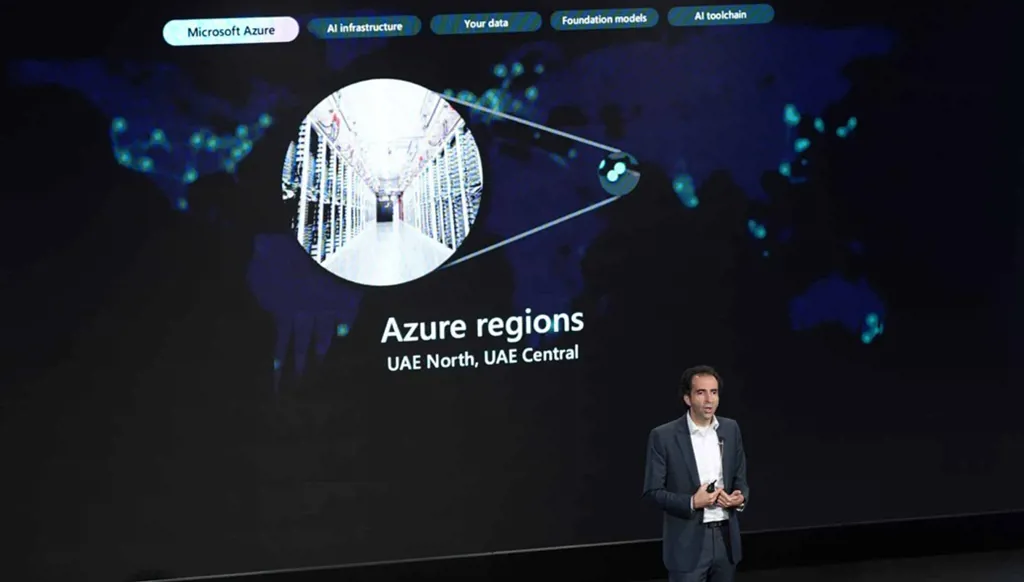
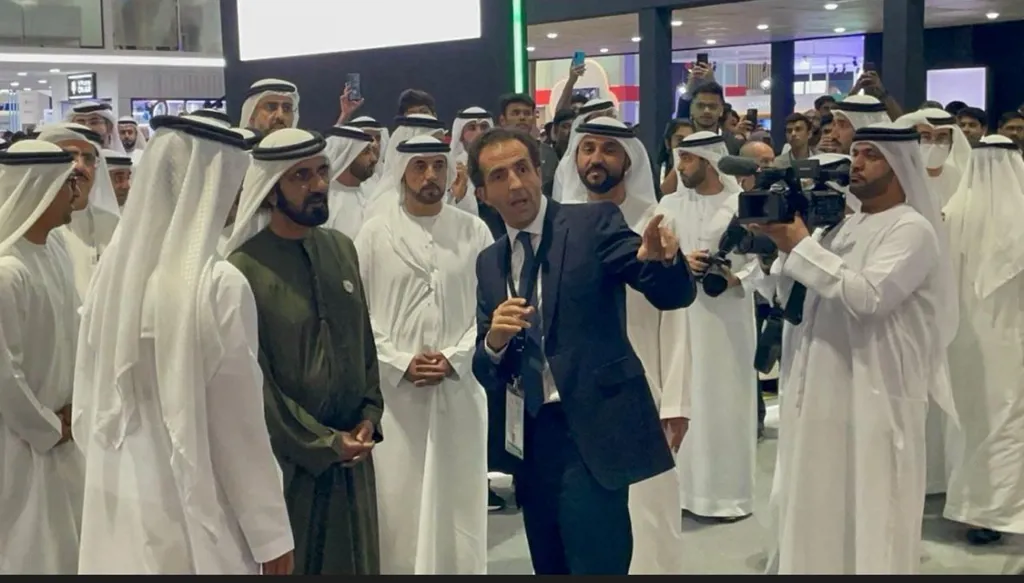


As artificial intelligence moves from experimentation to large-scale deployment, 2026 is shaping up to be a defining year for AI investment, infrastructure, and governance, globally and across the Middle East.
Governments are racing to build sovereign AI capabilities, enterprises are scaling cloud adoption, and the competition for advanced computing power and skilled talent is intensifying.
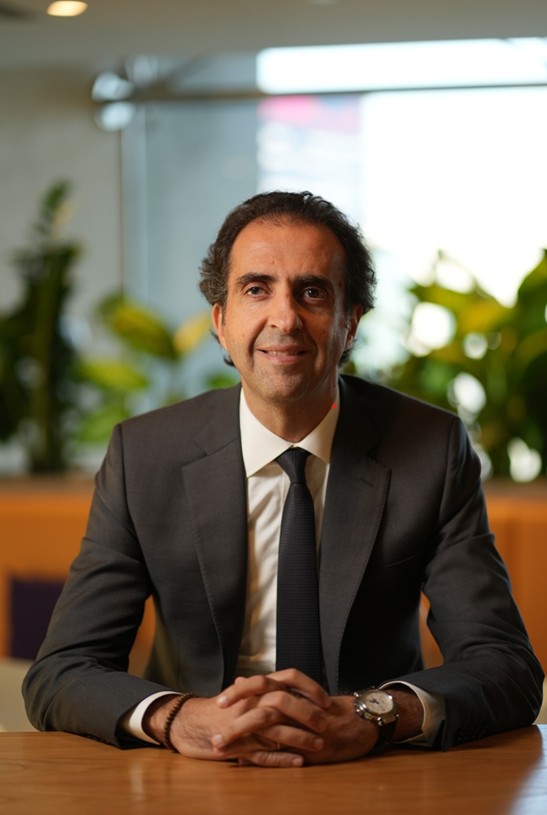
In this exclusive interview with Annahar, Naim Yazbeck, President of Microsoft Middle East & Africa, outlines the three factors that will determine whether AI investments translate into real economic impact: trust, infrastructure, and skills. He discusses Microsoft’s regional priorities, the UAE and Saudi Arabia’s AI acceleration, Arabic language models, digital sovereignty, and why talent development may be the region’s most strategic AI asset.
- At the beginning of 2026, what do you see as the main challenges for AI investments globally and specifically in the Middle East region?
AI investment is accelerating worldwide, but three challenges will define success in 2026.
The first is trust. Governments and organizations want AI that is secure, well governed, and compliant, especially when it is used in public services or critical sectors. In the Middle East, countries like Saudi Arabia and the UAE are showing that strong governance and cybersecurity are essential to moving from pilots to real impact.
The second challenge is infrastructure and compute. AI at scale requires reliable cloud capacity and access to advanced hardware. Without sufficient computing capacity, even the best ideas remain limited experiments. Recent approvals enabling advanced AI chip exports to the region highlight how strategic this has become for national AI ambitions.
The third challenge is skills. AI does not create value on its own. It needs people who can build, deploy, and operate it responsibly in real-world settings. That is why AI skilling is increasingly treated as national infrastructure, not a one-off initiative.
The opportunity is significant, but success depends on aligning trust, infrastructure, and talent to move from experimentation to measurable impact.
- What are the key pillars for Microsoft’s plans in the region in 2026, particularly regarding AI and cloud adoption?
Our priorities are consistent across the region and tailored to each country’s needs.
First, a trusted and secure cloud and AI infrastructure, so organisations can innovate with confidence and at scale. Second, responsible AI adoption, with security, privacy, and compliance built into every stage. Third, skilling at scale, because skills are the real currency of the AI era. And fourth, partnerships that deliver national outcomes, where AI projects are tied to real business results or public priorities.
Data centers hardware
- Microsoft has secured export licenses for advanced GPUs to power AI in both Saudi Arabia and the UAE. How critical is access to such hardware for the region’s AI ambitions, and could limited access become a regional bottleneck?
Access to advanced AI hardware is foundational. Large language models, sovereign AI-powered services, all depend on high-performance computers to operate at scale.
Recent US approvals allowing the export of advanced AI chips to Saudi Arabia are therefore strategically important. They allow countries to move forward with national AI plans under defined security and governance frameworks.
From Microsoft’s perspective, hardware access must be matched with responsible infrastructure design, ensuring security, reliability, and sustainability as demand grows.
UAE AI and innovation hub
- From your perspective, what are the key factors that make the UAE an effective hub for AI and innovation?
The UAE combines ambition with execution. According to Microsoft’s AI Diffusion Report 2025, nearly 60% of working-age adults in the UAE already use AI – one of the highest rates globally. This reflects long-term investment in infrastructure, skills, and coordinated national policy.
Three factors stand out: clear national direction, strong public-private partnerships, and deliberate focus on adoption at population scale – not just technology development. This balance explains why AI is already improving productivity, services, and innovation across the economy.
- With the flow of AI investments in the UAE market, how does Microsoft measure return on investment not just in financial terms but also in economic growth, talent development, AI adoption, and tangible improvements for local businesses and government agencies over the coming years?
We look at impact across three layers.
First, business productivity – whether the organizations save time, improve quality, or create new services. Second, national capability – building trusted digital foundations that can support AI at scale. Third, human capital – how many people gain practical skills and translate them into real jobs and opportunities. The strongest outcomes come when these three layers move forward together.
Saudi Arabia's digital transformation
- What are the biggest challenges in implementing such a comprehensive AI-driven ecosystem in Saudi Arabia?
The biggest challenge is coordination. AI must operate securely across ministries and critical sectors, with clear rules for data protection, cybersecurity, and responsible use. Countries also need access to trusted, secure cloud and AI platforms that allow organizations to deploy AI confidently, at scale, while meeting regulatory requirements.
And none of this works without people. AI systems succeed only when local teams can build, deploy, and continuously improve them. That requires sustained skilling and long-term capability development, not one-off training programs.
Progress happens when governance, infrastructure, and people advance in parallel under a shared national vision.
- How is Microsoft addressing data localization and building local cloud infrastructure in a market as large and complex as Saudi Arabia while maintaining global standards?
Microsoft addresses this through a sovereign-ready, trusted cloud approach that meets national requirements while operating on a global scale.
In Saudi Arabia, our new cloud datacenter region coming online this year will support data residency, high availability, and secure national-scale workloads, including AI and critical government services.
This allows organizations to keep data within the Kingdom while benefiting from Microsoft’s global security, reliability, and innovation standards. Alongside infrastructure, we work closely with national authorities to align local governance, cybersecurity, and responsible AI frameworks.
The objective is practical and balanced: to support national data requirements while enabling AI to scale safely and confidently.
- In sectors like smart cities, healthcare, and energy, which areas do you see AI having the greatest impact in the next few years?
We expect the fastest impact where AI improves outcomes at scale.
For example, in government services, AI can simplify citizen journeys and improve responsiveness. As AI agents mature, they will increasingly act as digital coworkers inside government teams, helping public servants with data analysis and service coordination.
Likewise, in energy and industrial operations, AI is already improving safety and efficiency, as seen with companies like ACWA Power using Azure AI for operational insights.
In healthcare, AI is moving beyond diagnostics to support clinical documentation, patient engagement, and operational efficiency, always with strong governance and privacy safeguards. According to the Microsoft AI Trends predictions, over the next few years, AI has the potential to help address care gaps by supporting clinicians with triage, planning, and administrative tasks, always with strong governance, privacy, and regulatory compliance in place.
Across all these sectors, AI delivers the greatest value when it augments human expertise.
- Given Microsoft’s investment in AI in the region, how do you evaluate the development and impact of Arabic language models?
Arabic models are essential because they make AI useful, inclusive, and culturally relevant.
A key milestone is the availability of SDAIA’s ALLaM Arabic large language model on Microsoft Azure. The real impact comes as Arabic AI moves from demonstrations to everyday use in education, government services, customer support, and productivity tools, with strong governance and trust built in from day one.
Talent development
- With over a million people trained in Saudi Arabia and the UAE: What skills are currently most in shortage in the region, and how can governments and Microsoft address this gap?
The greatest need today is for applied AI skills – the ability to use AI tools confidently and responsibly in real-world environments.
Not everyone needs to be an AI engineer, but everyone needs AI literacy: understanding what AI can do, where it helps, and where human judgment matters.
In Saudi Arabia, more than one million have already been trained in AI and digital skills through national initiatives such as SAMAI, the AI Academy, the MCIT Skilling Center of Excellence, and the Datacenter Academy. Building on this model, recent discussions in Lebanon with the government and universities are focused on developing similar pathways to equip students, public servants, and developers with job-ready capabilities connected to global opportunities.
For countries like Lebanon, continued focus on talent development represents one of the fastest and most sustainable pathways into the AI economy.
Digital sovereignty
- How do you manage the tension between countries’ digital sovereignty and the increasing reliance on global cloud solutions?
We see sovereignty as a design requirement, not a contradiction. Countries want control over data, compliance, and security. Our role is to provide trusted cloud infrastructure that respects national requirements while benefiting from global standards in security, resilience, and innovation.
When designed correctly, this balance enables AI adoption rather than slowing it down.
Regional gaps and lessons
- How do you see the situation of the digital gap in the region, and what success stories tell?
A key lesson from the UAE and Saudi Arabia is that progress comes when strategy, infrastructure, and governance move together.
Across the Middle East, many countries, including Qatar, Kuwait, and Egypt, have national roadmaps in place. The fastest way to close the gap is to treat cloud connectivity, cybersecurity, and digital skills as national infrastructure, then build partnerships that turn that foundation into real services and jobs.
- During your visit to Lebanon, Microsoft announced a partnership with the government to support digital transformation. Could you share the key priorities of this partnership?
Our discussions in Lebanon focused on a clear priority: building people’s capabilities so the whole country can benefit from AI.
Together with the Government of Lebanon and the Ministry of State for Technology and Artificial Intelligence, we are exploring a comprehensive AI skilling approach spanning public-sector upskilling, student pathways, developer training, and “AI for Everyone” learning. The goal is to help Lebanon strengthen its talent base and economic resilience by connecting local skills to global opportunity.