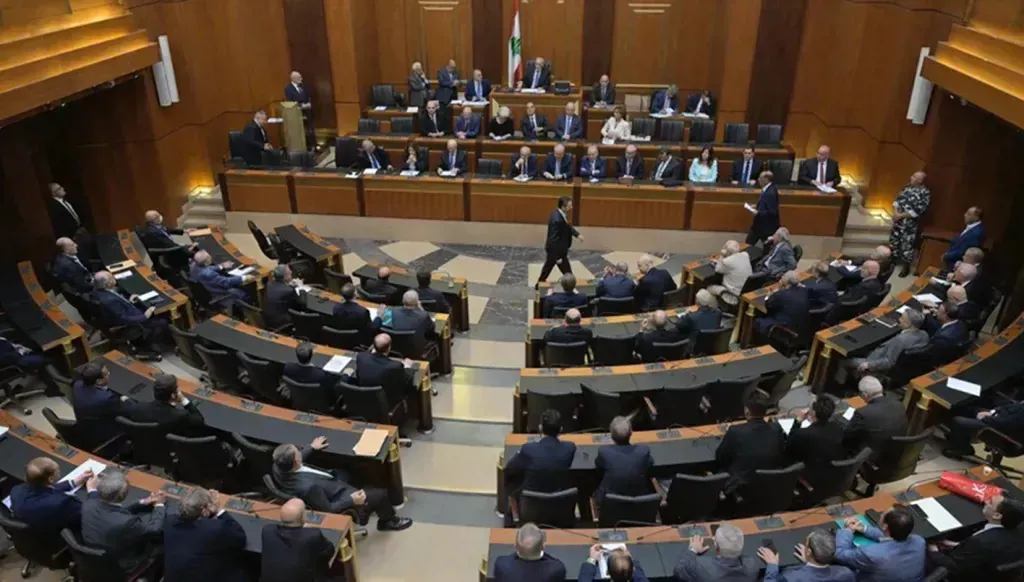
Today, the Parliament begins discussions on the general budget bill at the invitation of Speaker Nabih Berri, within an intense three-day session aimed at completing and approving the bill. The push to finalize the law is driven by two factors: first, to meet the constitutional deadline at the end of January, and second, to allow parliamentary work on the Financial Order Bill (the so-called “Gap Law”) to begin. This subsequent law—which will define how financial losses are distributed throughout the state—cannot be referred to the Finance Committee until the budget is approved. The General Assembly’s discussions are expected to reflect the differences and debates that emerged in the Finance Committee debate. The discussion will likely be an opportunity for Members of Parliament to push populist rhetoric amid a highly competitive election season.
As of last night, fifty MPs have requested to speak, though this number is expected to rise. This surge is also fueled by the budget bill itself, which was presented without a clear roadmap for the next stage and is not directly linked to the cabinet-approved "Gap Law," under which the state and central bank agree to assume the burden for roughly 85% of the losses. These figures were not reflected in the current draft of the budget, which imposes additional debt on the treasury that should have been accounted for.
The committee proposed around 15 amendments, which can be summarized as canceling newly proposed taxes and limiting fee increases to adjustments based on exchange rate fluctuations. Additionally, the amendments allocated 4,500 billion Lebanese pounds to the Ministry of Health for hospitalization and cancer medications, 1,500 billion pounds to the Ministry of Education for the Teachers’ Fund, and 386 billion pounds to the Ministry of Environment for joint projects with municipalities. Another 1,000 billion pounds were allocated to strengthen the Civil Defense budget, alongside increased funding for the army and security agencies to cover deployment, equipment, and medical expenses.
The amendments also increased allocations for oversight agencies, suspended high rental contracts, settled the dues of healthcare centers, audited support for non-governmental organizations, and halted funding for inactive institutions. Funds were allocated for major road projects, the budgets of governorates were supported, and 961 billion Lebanese pounds were earmarked for the Lebanese University, covering retirement benefits, debt settlement, and building maintenance.
The declared positions of the parliamentary blocs ahead of the session reveal a clear divide, which will no-doubt be reflected when the General Assembly votes.
Major blocs expected to approve the budget have not yet declared a final, official position, citing the need to wait for the final version after the amendments. However, they are unlikely to disrupt the discussion and are expected to support the budget’s approval following the Finance Committee’s amendments.
The position of the "Democratic Gathering" bloc stands out, with MP Hadi Abu El-Hosn stating that the budget is "the best possible" option, although not as reformative as needed. While it is primarily operational, the bloc has stated that it will not oppose its approval in parliament.
The "Loyalty to the Resistance" and "Liberation and Development" blocs are also expected to support the project, though largely to ensure a quorum. They justify their stance by emphasizing their commitment to legislative stability.
The "Strong Republic" bloc has not hidden its concerns about the project, particularly its objections to how the budget was discussed in the Finance and Budget Committee. The bloc considers that certain items and revenues were included without clear justification and has previously criticized the nature of debate, especially regarding budget allocation and distribution mechanisms. However, sources within the bloc have emphasized that these objections are related to the "Gap Law" itself, not to the budget law, which the bloc insists should be presented to the General Assembly in line with its commitment to legislative work and avoiding disruption.
There will be no outright rejection of the budget itself, but the bloc's stance and vote will depend on how responsive the government is to its concerns and whether these remarks are addressed in the final version of the "Gap Law."
The Kataeb bloc clarified through its sources that it did not review the project in advance, as it is not represented in the Finance and Budget Committee. While the bloc will have remarks, it has ruled out abstaining from the vote.
The "Strong Lebanon" bloc will use the budget discussion as an opportunity to intensify its criticisms of both the government and the presidency. It argues that the budget falls short in terms of reform vision and financial sovereignty, instead yielding completely to external pressures while raising unrealistic expectations and ambitions.
Among independent and reformist MPs, positions vary and will largely depend on electoral rhetoric, with some expressing concerns about the possibility of their exit from the parliamentary session in the upcoming elections.
Some MPs have voiced general reservations about the budget and the methodology of its discussion, particularly regarding the lack of core reforms and tax justice. However, a clear stance has not yet been taken, as they are awaiting the upcoming discussion sessions.



 Messenger
 Whatsapp
 Threads
 Email
Email
 Print
Print
 X
X
 Facebook