

From Tehran and Moscow to the Gulf: The transformation of economic influence in Syria
Syria’s economy is being reshaped after the fall of the Assad regime, with Turkey and the Arab Gulf states stepping in as the main drivers of investment and reconstruction while Russian and Iranian influence fades.


 Messenger
 Whatsapp
 Threads
 Email
Email
 Print
Print
 X
X
 Facebook
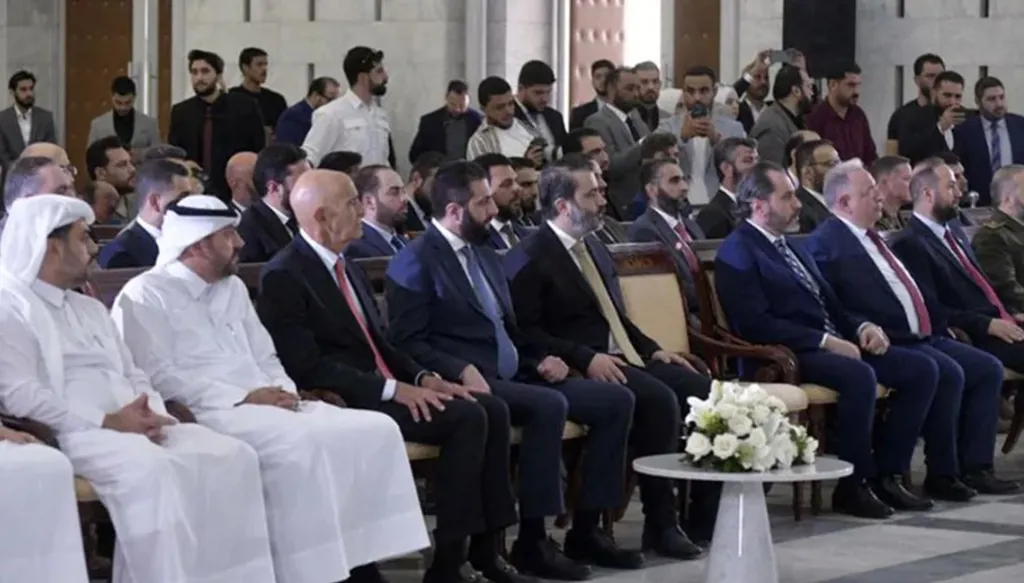


Economic influence in Syria is undergoing a geopolitical transformation marked by the decline of former backers’ dominance and the emergence of Turkey and the Arab Gulf states as regional powers steering investment and reconstruction. Russian and Iranian influence has noticeably reduced in Syria’s economic arena, making way for a diplomatic and financial strategy aimed at integrating Syria into a new regional league centered on the Gulf.
There is no doubt that the political and financial orientation in Damascus has changed following the fall of the Assad regime. A clear retreat of Russian influence is evident, as Moscow is preoccupied with the repercussions of Ukraine’s war and lacks financial capacity to compete. The new Syrian government canceled the management contract related to Port of Tartus that had been signed with a Russian company and reassigned it to an Emirati firm, while the Port of Latakia has come under the supervision of a French group.
In the same context, Iran’s power in Syria has waned despite investments estimated between $30 and $50 billion to support the former government. Its economic ambitions have faded, and its major projects have come to a complete halt as a result of the transfer of power.
The fall of the regime is viewed as a decisive blow that weakened the path of Persian regional influence that once linked Tehran to Damascus via Baghdad and Beirut. Iran is struggling to adapt to the new government, which has declared its rejection of foreign interference and canceled a number of agreements that previously bound the two countries. It is worth noting that as Russia became absorbed in other conflicts, Moscow reduced its support for its allies in Syria, indirectly affecting Iran’s ability to maneuver and bringing it into confrontation with the Turkish-Arab role that is eager to lead reconstruction efforts.
Following the collapse of the regime, Gulf States moved swiftly, leading a geopolitical race to shape the Syrian reality through massive, strategically directed investments. In terms of figures and facts, Saudi Arabia has pledged more than $6 billion in agreements covering vital sectors such as energy, infrastructure, telecommunications, and banking, in addition to investing over $1 billion in digital systems. Qatar has emerged as a key partner in a $7 billion energy consortium and is currently leading a $4 billion project to modernize and expand Damascus International Airport. Meanwhile, the United Arab Emirates is seeking to develop maritime facilities with investments approaching $800 million, alongside a project to establish a metro network in Damascus.
Notably, these countries are working to create long-term influence by controlling Syria’s main gateways - ports, airports, and telecommunications - which will constrain the country’s economic and political direction for decades to come. As for China, it has adopted a cautious approach focused on securing long-term positions in logistical and industrial hubs through the development of free trade zones.
In a related context, attention must be paid to the activities of the World Bank and the International Monetary Fund, which have contributed to projects that achieve high impact with low capital to address urgent social and humanitarian needs. These initiatives include implementing irrigation systems for small farmers to enhance food security and resource sustainability, distributing medicines and medical equipment to rebuild basic services and meet immediate humanitarian needs, as well as professional training centers to help build local capacities. This support provided by international organizations has undoubtedly fostered independence from the dominance of the former regime’s allies and encouraged other countries to contribute to these projects.
Overall, Syria appears to be steadily moving toward reliance on the financial and investment power of regional states, laying the groundwork for economic alliances and partnerships that may shape its future stability and prosperity. However, this rapprochement carries specific implications that bind Damascus to a particular political and strategic orientation. Will the influx of new allies lead to competition among them over control of national decision-making?