

How the Venezuela crisis is reshaping global and Gulf oil markets


 Messenger
 Whatsapp
 Threads
 Email
Email
 Print
Print
 X
X
 Facebook
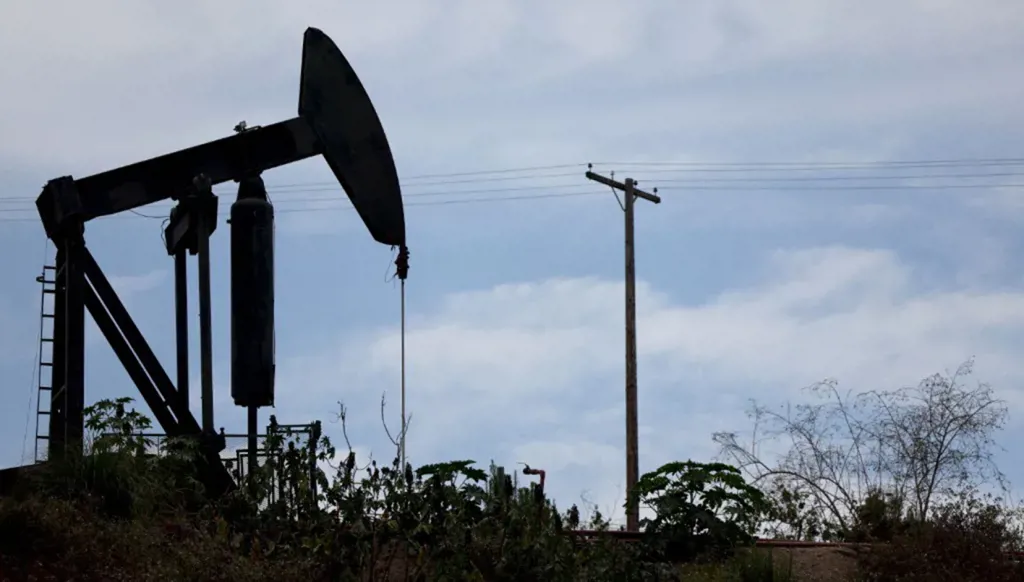


The U.S. operation in Venezuela, the arrest of Venezuelan President Nicolás Maduro and his wife Cilia Flores, and their transfer out of the country on Saturday, January 3, led to a roughly 1% drop in oil prices at the start of the new trading week. How does this new geopolitical tension affect oil prices in the Gulf and globally? How did OPEC respond to the event?
Venezuela holds proven oil reserves estimated at 303 billion barrels of crude oil, which U.S. President Donald Trump claims the United States now controls, urging American companies to invest there.
Oil is currently trading at around $57 per barrel, which puts the total value of Venezuela’s reserves at an estimated $17.3 trillion. Even if the United States were to sell Venezuelan oil at half the market price, the amount would still reach $8.7 trillion. This shows that the United States has taken control of oil reserves whose value equals the combined gross domestic product of all the world’s countries except the United States and China, equivalent to four times Japan’s GDP.
Dr. Gamal Al-Qalyoubi, Professor of Petroleum Engineering and Energy in Egypt, told Annahar that instability inside Venezuela means instability in oil sales. Venezuela’s production share is estimated at around 950,000 barrels per day, of which just over 550,000 barrels per day are exported, compared with production of 3.2 million barrels per day thirty years ago.
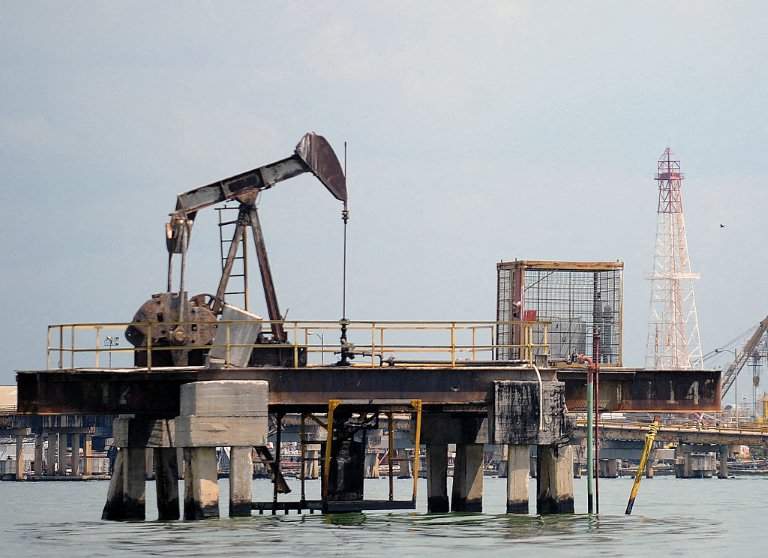
Al-Qalyoubi attributes this weakness in production to the economic sanctions imposed by the United States on Venezuela over the past decade and a half, which prevented the development of Venezuelan oil platforms and also restricted oil export operations. Following the U.S. operation in Venezuela, a shortfall of around one million barrels has emerged in the market, which could affect Venezuela’s commitments to the non-OPEC oil market and create a sense of reduced supply. This shortfall could be offset by supplies from Iran and Libya, as well as from Senegal, Equatorial Guinea, or Brazil itself.
The oil expert adds that the instability resulting from recent geopolitical tensions, along with the complete or near-complete halt in Venezuelan oil production, especially after the state-run Venezuelan national oil company (PDVSA) announced a cut in crude production due to exhausted storage capacity caused by the ongoing U.S. oil blockade, may not be felt by the market at present. “But if instability inside Venezuela continues, we may see a supply shortage of around one to one and a half million barrels, which would negatively affect oil price stability and could even push prices up slightly to between $63 and $68 per barrel.”
Al-Qalyoubi stresses that global and Gulf oil markets are unlikely to see price spikes reaching the $80 level anytime soon, as seen in the past, noting that “the market is currently saturated as a result of supply-and-demand policies aligned with producing countries’ strategies and the needs of consuming countries.”
It is worth noting that oil prices fell at the start of the new trading week on Sunday, January 4, amid concerns over oil supplies following Maduro’s arrest. U.S. crude fell by 31 cents, or 0.54%, to $57.01 per barrel, while global benchmark Brent crude declined by 22 cents, or 0.36%, to $60.53 per barrel.
In a related development, the OPEC+ alliance agreed on Sunday, January 4, to maintain the suspension of oil production increases during the first quarter of 2026, following a brief meeting. The oil expert expects a freeze in the global economy during the first quarter of the current year, leading to a slight decline in oil prices of around $2.5 to $3 per barrel. As a result, the global market is expected to experience an oversupply, despite developments in Venezuela.