




 Messenger
 Whatsapp
 Threads
 Email
Email
 Print
Print
 X
X
 Facebook
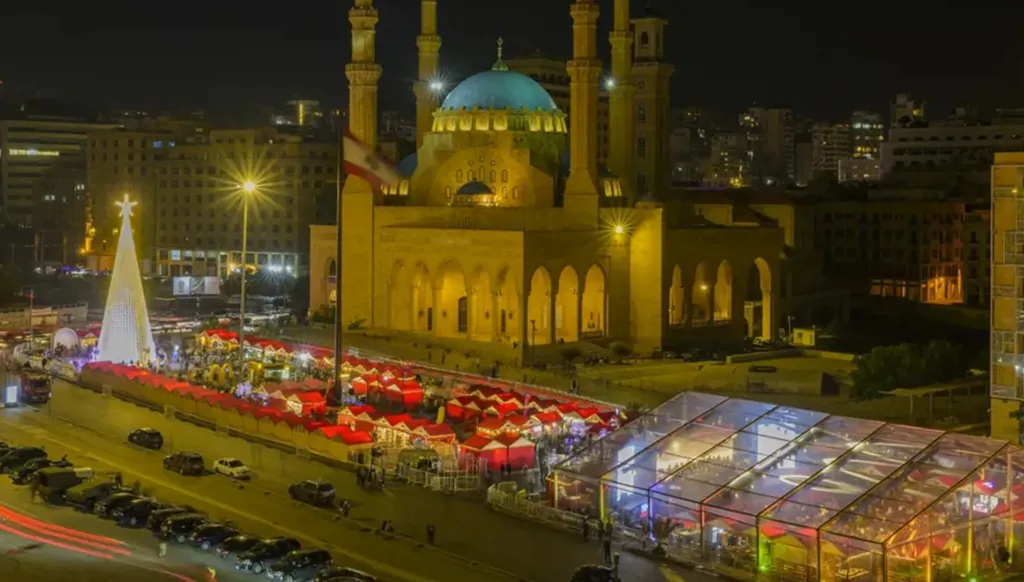


Dozens of wooden huts and tents, adorned with Christmas lights, line both sides of the streets. The aroma of food fills the air, music plays, and families stroll by - this is the scene at the temporary Christmas markets that have emerged across various regions of Lebanon in recent years.
Often set up in public squares or historic streets, these markets have evolved into lively social gathering spaces and seasonal economic drivers. This year, in particular, they are noticeably larger than in previous years, when the looming threat of war and the economic crisis curtailed such activity.
Notably, these stalls provide artisans, small business owners, and local home-based producers with an opportunity to showcase their goods directly to consumers without the burden of high rental costs. This raises an important question: How strong is public turnout at these markets in Lebanon just days before Christmas and roughly a week ahead of New Year’s?
Gino Aoun, owner of "Street Festival" and organizer of the market and festival currently taking place in Martyrs’ Square in downtown Beirut - running until January 7, 2026 - told Annahar that the event is being organized jointly with the municipality, which insisted that entry to the square remains free for all.
“This is the third time we’ve organized a market in Martyrs’ Square, but this year the turnout has been exceptional,” Aoun said. "We currently have around 90 wooden huts and stalls, and we plan to add at least 10 more in the coming days, as the strong turnout - despite the rain - allows for expansion. Since the opening, we estimate that no fewer than 25,000 visitors have entered the market.”
He added that there is a clear desire among visitors to see this historically significant gathering place revived and filled once again with life and activity. “You often hear that someone from Batroun wants the Batrouni market to succeed, or someone from Byblos wants the Byblos market to thrive. But everyone wants the market and festival in downtown to succeed, because Beirut belongs to everyone.”
Aoun also noted that some of the market stalls are set up inside the tent recently used by Pope Leo XIV to host an ecumenical meeting of religious leaders, lending the festival and market a distinctive sense of blessing and spiritual significance.
Meanwhile, the Batroun Christmas market, which runs until January 6, 2026, has emerged as a major attraction for visitors from across Lebanon. In this context, Michel Merchak, head of the Capital de Noël committee, noted that around 170 new stands have been set up in Batroun.
He highlighted that this year’s edition is distinguished by decorations spanning all the town’s streets, with seven themed stations, each offering a unique experience. He also revealed that visitor numbers exceeded 200,000 last Saturday and Sunday alone, prompting the creation of additional parking areas in coordination with the municipality to accommodate the exceptional turnout.
These markets are no longer confined to Christian-majority areas or the capital, Beirut, as other regions are increasingly keen to recreate similar festive atmospheres, albeit on a smaller scale.
A notable example is the city of Aley. According to municipal council member Imad Hadi Halimeh, the market is being held in Aley for the first time to coincide with Christmas and New Year’s celebrations. He acknowledged that the initiative posed several challenges, particularly since the 25 kiosks are set up in an open courtyard and had to contend with rainy weather. Nevertheless, he noted that attendance exceeded expectations and revealed plans for a significant expansion next year, stressing that this year’s edition was merely a trial run.
It’s also notable that entry to these markets is free, which encourages residents, especially families, to stroll through them, enjoy the atmosphere, and reconnect with the true meaning of the holiday, which has genuinely returned after years of successive crises.