

Rémy Rioux: Old financing framework is being redefined, and we don't have the words for it yet
Remy Rioux discusses AFD’s strategic investments in the Arab world at Momentum 2025 in Riyadh


 Messenger
 Whatsapp
 Threads
 Email
Email
 Print
Print
 X
X
 Facebook
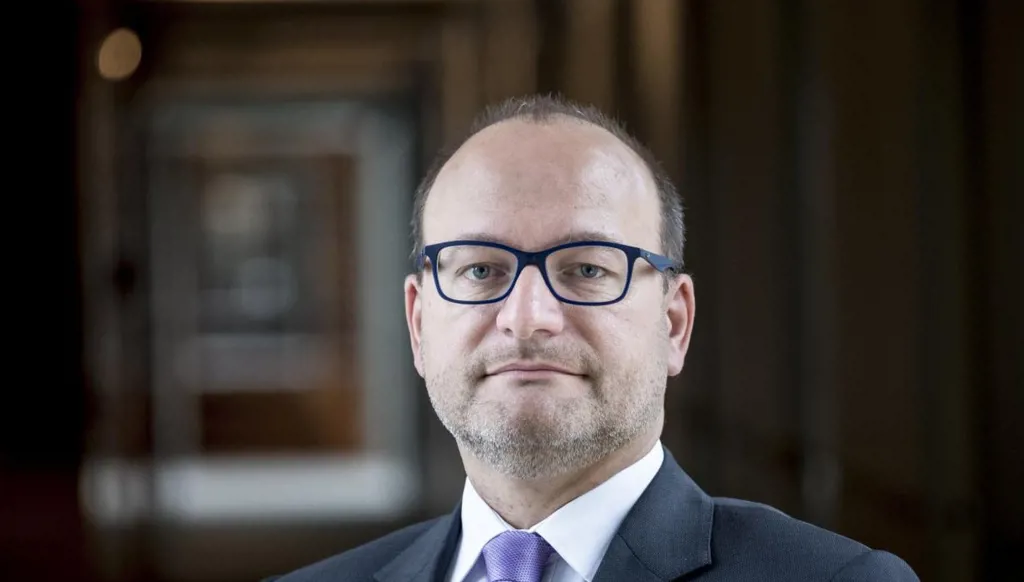


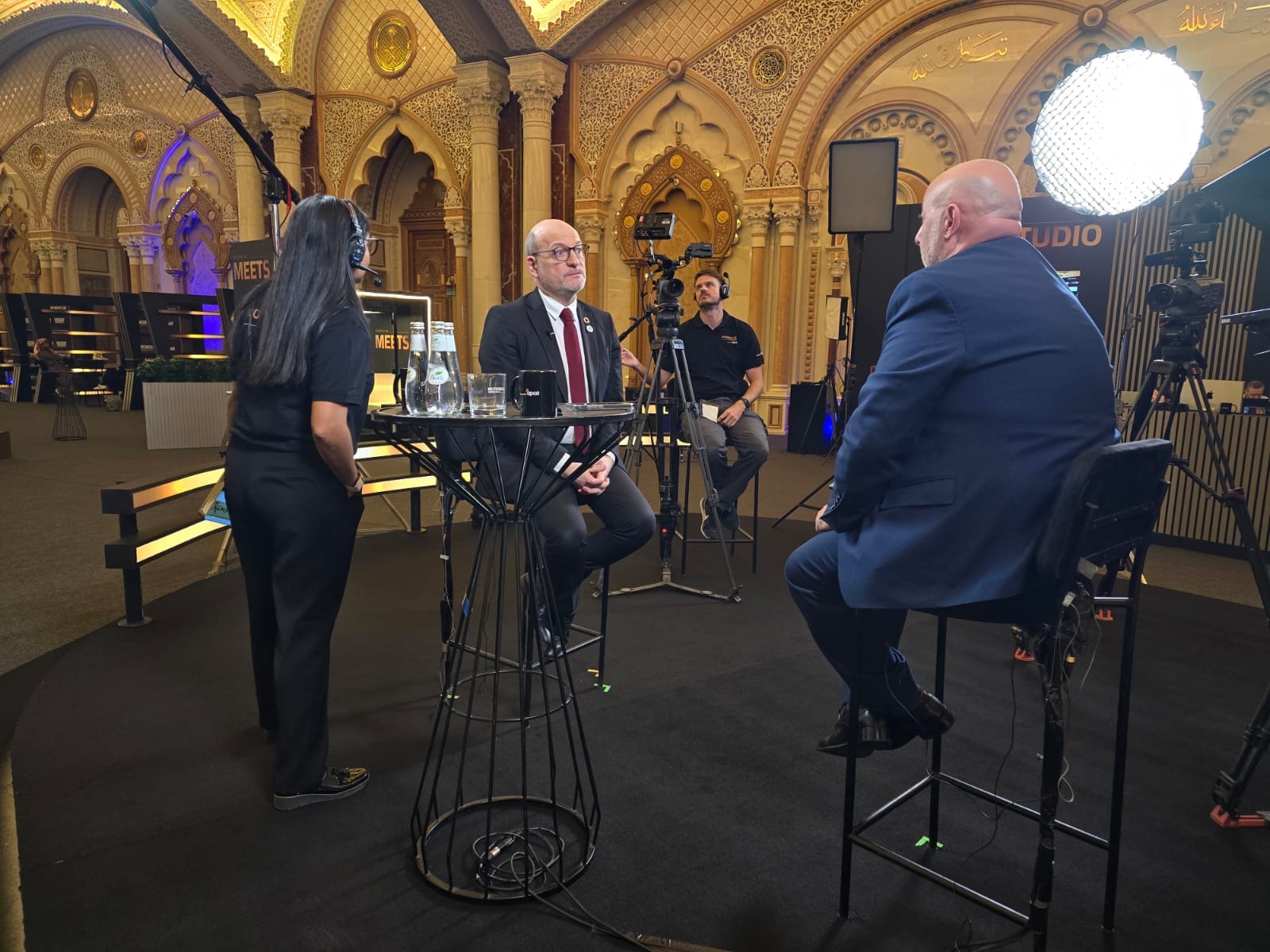
On the sidelines of "Momentum 2025" in Riyadh, where policymakers, financiers, and development leaders gathered to debate the future of global growth, "Annahar" met Rémy Rioux, Chief Executive Officer of the French Development Agency (AFD). The conversation took place at a moment when development finance is facing mounting pressure: widening funding gaps, overlapping crises, and rising demands from emerging economies.
Against this backdrop, Rioux discussed the scale and direction of French investments in the Arab world, the strategic priorities guiding AFD’s engagement in the region, and how development finance can adapt to an era of constrained resources and growing expectations. He offered insights into France’s approach to long-term partnerships, the role of public development banks in mobilizing private capital, and the challenges of translating ambition into sustainable impact.
This interview explored how AFD views the Arab region—not only as a recipient of financing, but as a key partner in shaping a more resilient and inclusive development model:
What mechanisms should the National Development Fund in Saudi Arabia put in place to strengthen coordination and integration between national development funds in the region and worldwide, in order to maximize synergies and impact on development?
First of all, thanks to the National Development Fund, Saudi Arabia's major public bank, for inviting us to this Momentum 2025 forum. We need Momentum right now, and it's a good example, I believe, of the role that the financing institutions are playing— often overlooked but very numerous and powerful—which we indeed call public development banks. These are institutions owned by governments, by the state, but independent, with their own momentum, and with a public mandate. They differ from private banks and from sovereign wealth funds.
Sovereign wealth funds act as savvy investors seeking profit. Here, we're talking about institutions with a public mandate—which doesn't mean they're poorly managed; they generate results—but their primary goal isn't profit. It's implementing public policies, supporting market failures, accelerating transitions, and mobilizing private capital. And you're right: Saudi Arabia, in 2017—my friend Governor Steve Grof did this at the request of Saudi authorities—consolidated 11 specific funds, mostly domestic ones, to finance and invest in the transition, diversification, and decarbonization of the Kingdom's economy.
Two of them have an international dimension: the Saudi Fund for Development, which is obviously a natural partner for the AFD, my institution, and also the Saudi Exim Bank, which supports foreign trade in France. This interests me greatly because we have somewhat the same work in France.
You know we have a very large public bank, the oldest in the world, born in 1816, called the "Caisse des Dépôts et Consignations", which is very well-known and very powerful in our economy. Then there's the AFD, France's international public bank. We're also seeking to connect major international messages and global priorities with our own transformation, our own economy, our own society.
So, there's a dialogue underway through us between the French experience and the Saudi experience. And all this in a discussion that's now become global. In 2020, we launched a movement called "Finance en Commun", Finance in Common system, where we bring together all these institutions — there are 550 worldwide, managing 2,500 billion in investments each year. It's macro-scale, very powerful, and above all, it expresses the identity, ambition, and strength of each country, but through international cooperation.
Traditionally, the AFD's action focuses on official development assistance. But Gulf countries, and Saudi Arabia in particular, are in a phase of transformation toward an economy focused on diversification, innovation, and green finance. How does the AFD group define its mission and instruments to shift from a development support logic to one of strategic partnership?
You're right; we're in a moment of major redefinition of international cooperation. In fact, France — President Emmanuel Macron will chair the G7 next year — wants to emphasize accelerating this redefinition. We're ultimately moving from an old world, as you mentioned: the world of official development assistance. But you know, that's the framework we defined in the 1960s, when many countries became independent and wanted resource transfers, aid, to kickstart their development.
The world has changed a lot since the 1960s. Many countries have emerged and become powers, like this region—the Gulf's power has incredibly transformed over 50 years—and no longer aspires to aid. In fact, I don't think any country in the world today asks for aid. So, this old framework is being redefined, and we don't quite have the words for it yet.
President Macron has proposed talking about "solidarity and sustainable investment." We need to create a new framework, and I think this new framework will have two very different components. We need to accelerate the fight against climate change, reduce emissions, fight pandemics.
There are major global issues where all countries in the world must contribute. It's a matter of security and collective well-being for everyone. If we save tons of CO2 in the atmosphere here in Saudi Arabia, it's good for France, good for Colombia, good for Indonesia, good for everyone.
We need to do it everywhere, and these are challenges so vast that public money alone won't suffice. For this mission, we must use public money to mobilize much larger amounts of private money. Attract investors to good investments and perhaps steer them away from bad ones.
This is a very new, very powerful mandate that has emerged over the past 10 years. Since 2015, with the Sustainable Development Goals agenda and the Paris Agreement on climate—I was one of the negotiators of that agreement. But we mustn't forget there's still a second mandate: we need protected public resources, a kind of guarantee for the 50-60 most vulnerable, poorest countries in the world.
Because there are still some countries that can't fully launch their development or emerge, as the Gulf countries have. They deserve continued resource transfers—sometimes grants, sometimes concessional loans. We can also mobilize private money in these countries, but there's something that needs protecting.
Right now, as the world of official development assistance weakens and transforms, we risk forgetting these most vulnerable countries, and I think we'd be very guilty if we did. We're talking about a dual mandate, and the AFD, the institution I lead, does both. We finance climate action worldwide, including in emerging countries, and we maintain the commitment that 60% of our public resources go to a limited number of countries with specific problems that deserve special effort.
Morocco and Algeria, two historic partners of France, face different economic challenges. What are the two or three strategic priorities for the AFD in each of these countries in the coming years, and how does the agency adapt its financing instruments there?
You're right; France, including the AFD, has a very long history with these two countries, which it knows well, loves, appreciates, and where it has many partners. But today, the situation is very different between these two countries regarding our operations.
You know that Algeria decided, in the early 2000s—in 2004—to forgo external financing, particularly in the form of loans. So, it repaid the World Bank, the African Development Bank, and no longer calls on international public banks, including the AFD. So today, in truth, we have very little... We manage some European Commission funds for technical cooperation, but we have no financial flows with Algeria from the AFD.
The situation is obviously very different with our Moroccan neighbors, who are very open to international investments, including from major international banks. So, we naturally have far more activities today in Morocco than in Algeria.
Lebanon is facing an unprecedented economic crisis, with a paralyzed banking sector and failing state governance. France, through the AFD, is a major player in financing essential social infrastructure. What are the specific priorities for supporting the Lebanese private sector and human capital in this crisis context?
A very strong, friendly thought of support for the Lebanese people, obviously. I was in Beirut a month ago. I came to get updates. I was also there during President Macron's visit after the port explosion—you remember.
The country is chaining successive crises: financial crises, political crises. So the situation is really very delicate, very difficult. Nevertheless, I came to celebrate the 25th anniversary of AFD's activities in Lebanon.
We held a very nice meeting at the "Résidence des Pins" with many of our partners. Obviously, the AFD's priority right now is direct support to populations. We've worked a lot, particularly on health issues.
In fact, it's the result of a very active partnership with Saudi Arabia. Notably, we have a strong partnership with the King Salman Relief Center, which enabled us to invest in Rafik Hariri Hospital, the Quarantine hospital that I visited during my trip to Beirut, and also Tripoli General Hospital. And what I announced last month is that we're resuming some lending activity, notably deploying a full program in southern Lebanon with the International Red Cross. Obviously, an area that's hit hard, very affected. And there too, it's a program focused on strengthening health centers and on major challenges like access to water resource management—which is scarce in the whole region and obviously a big issue for the entire region, but very specifically in Lebanon. So we remain committed.
Once the country has succeeded in its reforms—I met with the Prime Minister and the President of the National Assembly—it will have restored its financial situation, which, as you know, is very degraded. I hope that France, as it has done many times via its agency, and all other Lebanese partners, will come to help stabilize and restart the economy, which desperately needs it.