

Lebanon should not follow the West’s example on climate development
Poverty alleviation is a crucial part of the response to climate change. Lifting people out of poverty reduces their vulnerability to climate shocks like heat waves or hurricanes.


 Messenger
 Whatsapp
 Threads
 Email
Email
 Print
Print
 X
X
 Facebook
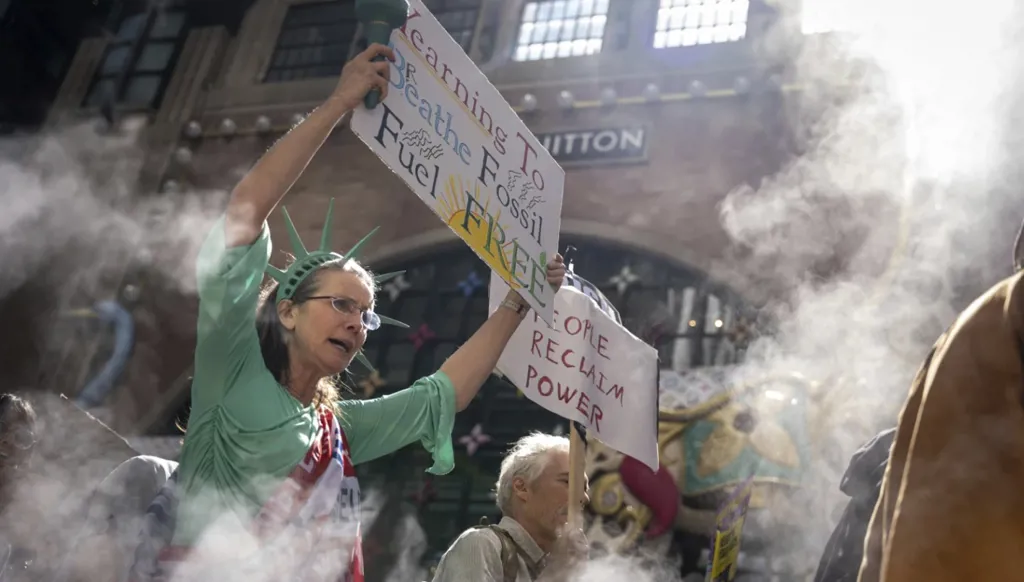


In recent years, climate anxiety has shaped the priorities of many Western governments and most international organizations. The result has been policies that achieve little and undermine the economic foundation needed to respond to other pressing problems. Fortunately, Lebanon can avoid repeating these mistakes.
While climate change is a man-made problem, some campaigners and politicians have overstated this, presenting it as an existential threat that could eradicate humanity. This exaggeration grossly misrepresents the science in the UN Climate Panel reports. Moreover, it is repudiated by the world’s leading climate economists, including the only one to win the Nobel Prize. The global cost of no further action on climate is equivalent to lowering GDP by 2-3% by the century’s end — a problem, but one far from apocalyptic.
Yet the constant alarmist stories have driven some Western governments to enact immensely costly policies. The UK has gone further in climate policies over the past two decades than nearly any other country. As a result, the inflation-adjusted electricity price, weighted across households and industry, has tripled from 2003 to 2023. By comparison, the US electricity price has remained almost unchanged over the same period.
At the same time, the rich world is increasingly realizing that it faces many other expensive challenges, including an aging population bringing higher pension and healthcare costs, crumbling infrastructure, poor educational outcomes and a need for larger defense spending. Yet the EU has committed itself to Net Zero carbon emissions by 2050, which will cost over 10% of its GDP, or €3.3 trillion annually. This is more than today’s entire core spending across all 27 countries on health, education, police, courts, prisons, defense, and the environment.
Arab countries should not repeat the mistakes made by Western countries by diving headlong into ineffective climate policies. It has a record of huge achievements, vast potential, and, like every other country, a myriad of complex challenges. It’s important that Lebanon finds the right balance between the challenges and opportunities it faces. A considered, balanced response to climate change means rolling out solar and wind in the areas where that is sensible, while realizing that the longer-term solution to climate change must be innovation.
In 1970, when 35% of the developing world struggled with hunger, the solution was not to compel the rest world to eat less to redistribute food. It was innovation through the Green Revolution which dramatically increased yields and brought better varieties and more fertilizer. Likewise, we will not solve climate change by joining the British in becoming poorer, colder and with less power. Instead, the leading industrial nations that are responsible for the majority of carbon emissions need to ramp up innovation in future generations of low-carbon energy. Once they innovate clean energy to be cheaper than fossil fuels, everyone will be able to switch.
Adaptation is another vital climate change response. Farmers across Lebanon already know this: they adapt to suit changes in the climate. In cities, we know that adaptive infrastructure like green areas, more reflective surfaces, and water features help keep temperatures cooler. Adaptation can avoid a large part of the climate problem.
Finally, poverty alleviation is a crucial part of the response to climate change. Lifting people out of poverty reduces their vulnerability to climate shocks like heat waves or hurricanes. Moreover, wealthier, more prosperous societies can afford better protection from the elements, along with improved nutrition, healthcare and social protection. Wealthy countries can spend more on environmental protection and other investments that strengthen wellbeing.
Being smart about climate change also means that governments will have more resources to invest in solving other, important challenges.
One such investment: We should boost maternal and newborn health through a simple package of basic emergency obstetric care and more family planning. Globally, this could save the lives of 166,000 mothers and 1.2 million newborns every year, delivering an astounding 87 pounds in social benefits for each pound spent.
Another critical investment: agricultural R&D to help Lebanon’s farmers become more efficient. Globally, a modest investment of $5.5 billion annually could go a long way and free 133 million people from hunger. By 2050, this additional funding will boost agricultural output by 10%, reduce food prices by 16%, and increase per capita incomes by 4%. And more efficient agriculture will reduce global climate emissions by more than 1%. Each pound spent delivers 33 pounds of social benefits.
In total, prioritizing the 12 best policies for development around the world could save 4.2 million lives every year and generate $1.1 trillion in economic benefits at a cost of just $35 billion a year.
Arab countries have immense possibilities ahead, if they can seize the opportunity to invest wisely and judiciously. It should avoid the singular climate-focus of some Western countries, and invest based on rigorous economic science in areas where it can make the most impact and the greatest progress.