


 Messenger
 Whatsapp
 Threads
 Email
Email
 Print
Print
 X
X
 Facebook
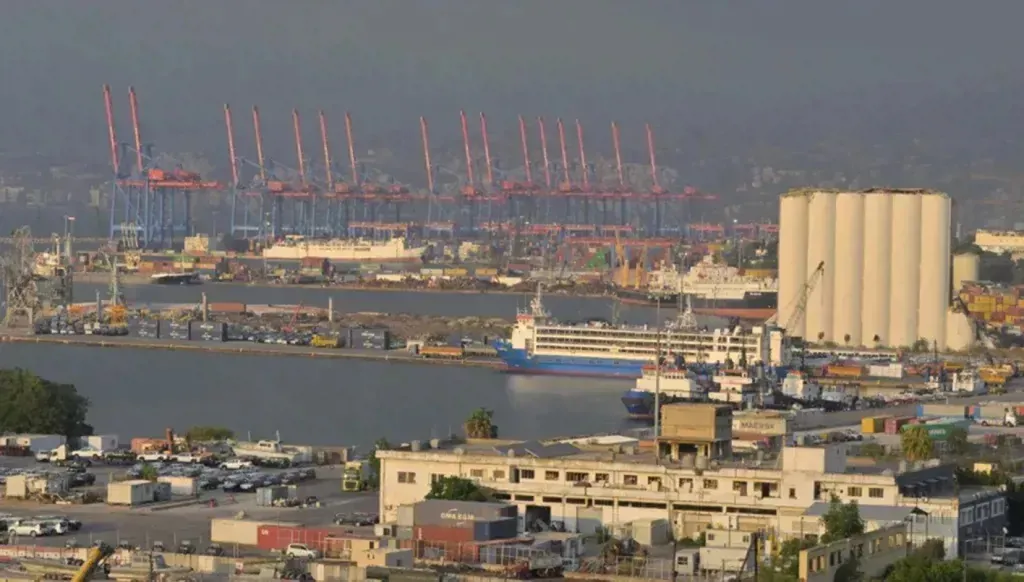
Beirut Port (Nabil Ismail)


Mohamad Ghassani
Lebanon is experiencing a difficult economic phase in which political, financial, and social factors are deeply intertwined, making the road to recovery tough.Despite the signs of relative stability, Lebanon’s overall economic picture remains uncertain, and is subject to internal market fluctuations and external factors. Amid these fluctuations, food security stands out as one of the most critical aspects of the economic crisis, as it intersects with issues of income, purchasing power, and exchange rates, reflecting citizens’ living conditions. Questions arise about the extent to which local policies can alleviate these pressures and stabilize prices.
Recent international reports highlight this reality from various perspectives, pointing to indicators that require further monitoring and analysis. Yet between statistical data and the every-day realities of citizens, the central question persists: is Lebanon on the path toward genuine stability, or merely entering another phase of recurring economic turbulence?
According to recent World Bank numbers on food security, food prices in Lebanon have risen significantly in the last 11 months, with monthly inflation not dropping below 20% during this period and the monthly rate of increase in food prices reaching around 21.4%.
In an exclusive interview with An-Nahar, Nabil Fahed, Vice President of the Beirut Chamber of Commerce and Industry and President of the Supermarket Owners Association, clarified that the recent price increases in Lebanon are cumulative over the span of an entire year. He noted as well that the 20% rate does not represent a monthly average, but rather a total accumulated over twelve months.
Fahed pointed out that the monthly inflation rate ranges between 1 and 2%, and that April and May have witnessed a decline in prices of about 1% each. This means that inflation was negative during that period, i.e., prices fell instead of rising.
He explains that this overall rise in prices is mostly due to external factors, most notably the rise in the euro exchange rate against the dollar, the increase in food and commodity prices in a number of countries, and the rise in shipping and insurance costs, which has been reflected in the prices of imported goods in the local market.
According to Fahed, “There are also internal factors that have contributed to the rise in prices, including a wage increase of approximately 50%, from around $200 to $312, which has prompted many institutions and factories to adjust the prices of their products in line with the rise in labor costs, especially those that rely on labor-intensive production.”
"Increases in fees and taxes, such as property taxes, municipal fees, and other charges on institutions, have raised operating costs and prompted many of them to raise their prices in order to continue operating” he adds.
He noted that over the past two months, there have been no significant price increases, with a relative degree of stability prevailing, except for certain European goods priced in euros, which have been adjusted in line with the rise of the European currency’s exchange rate.
Fahed explained that “companies and institutions do not increase their prices uniformly; some maintain stable prices for extended periods to remain competitive or capture a larger market share, before making gradual adjustments in line with exchange rate changes. Therefore, the market continues to experience price disparities as a result of different pricing strategies among importers and institutions.”
Lebanese people live in constant fear of shortages in stores, as any political or economic tension is enough to spark a wave of anxiety that drives people to rush to buy and stockpile basic goods, fearing a repeat of previous crises that saw empty shelves and sudden price hikes.
In this context, Fahed explains that the markets have not experienced any shortages of goods in the recent period. On the contrary, all goods are available in large quantities, pointing out that the supply of various types of goods, whether food or consumer goods, from various exporting countries, remains available at normal levels.
Amid regional tensions and economic volatility, questions are emerging in Lebanon regarding the potential impact of these developments on the domestic market, particularly with respect to food availability and the stability of supply chains.
Hani Bohsali, President of the Lebanese Food Importers' Union, told An-Nahar that discussions about a potential full-scale war in Lebanon have intensified recently amid rapid regional developments. He preferred not to comment on the matter politically, but it is an issue that cannot be entirely disregarded.
He explained that such circumstances may lead some parties to stockpile essential goods in anticipation of potential emergencies, yet he ruled out this scenario from an economic standpoint.
“ Lebanon is entering preparations for two major economic seasons, Christmas and New Year’s, which mark peak demand for food and consumer goods.“In addition to that, the upcoming month of Ramadan is set to begin on February 15, just three months away. This means that preparations must already be underway.”
He indicated that traders have already begun submitting their orders and importing the necessary quantities in preparation for these seasons, so there will be sufficient stock of various items to meet demand during these major economic periods.
Regarding supplies, Bohsali affirmed: “At the general level, there is currently no crisis. Some challenges have persisted from previous periods, including the Red Sea crisis, delays in shipping routes around Africa, and the high cost of shipping and insurance. Plus, administrative hurdles at the Port of Beirut, the ongoing repercussions of the war between Ukraine and Russia, and the appreciation of the euro. However, these challenges are not new. Global markets have learned to cope with and adapt to such conditions.”
“There is currently no genuine food crisis,” he emphasized. “I can say with certainty that food security in Lebanon is not under threat at this stage, despite the multitude of ongoing crises and challenges.”
Bohsali continued: “Of course, we do not wish for the situation to deteriorate or for a new war to break out with the Israeli enemy, as any such confrontation could differ significantly from previous ones. The rules of engagement that governed the last conflict may no longer be upheld, which could make Lebanon as a whole a direct target, particularly since the truce agreement was signed with the Lebanese state itself, and not with any other party.”
As fears mount over a possible escalation of regional tensions, Lebanese citizens are increasingly questioning the resilience of the local market and whether food security could be at risk in the near term. This has raised calls for stockpiling.
In this regard, Bohsali affirmed that at the moment, there is no cause for concern or for exceptional stockpiling of goods. Markets are operating at a normal pace in line with the supply season, which encompasses preparations for the Christmas and New Year holidays, Ramadan, and even Easter, for which some institutions have already begun making arrangements.
Despite the current availability of goods, Lebanese citizens continue to express concern over potential shortages or sudden price hikes stemming from regional and economic developments. Given these ongoing concerns, caution remains essential, as any escalation or sudden shift in conditions could swiftly affect food security and disrupt market stability.