

Nighttime economy: A chance for gulf cities to boost their growth


 Messenger
 Whatsapp
 Threads
 Email
Email
 Print
Print
 X
X
 Facebook
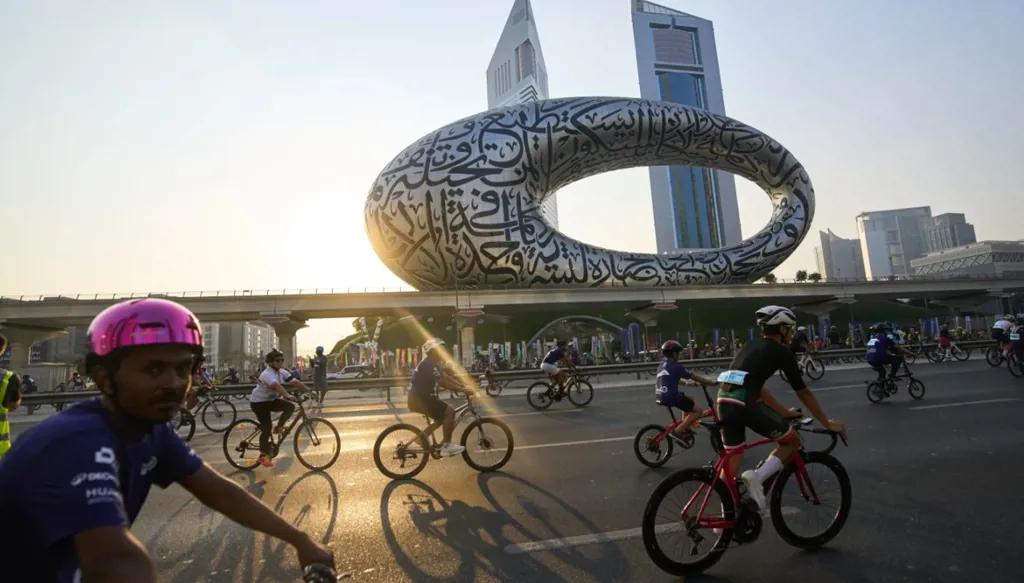


Modern cities are undergoing a profound shift in their economic activity, as urban life is no longer confined to daytime hours. The 24-hour economy has become a strategic framework that unlocks a city’s full capacity and drives new avenues for sustainable, broad-based growth. In this landscape, Gulf powerhouses like Dubai, Riyadh, Abu Dhabi, and Jeddah are positioning themselves as leading testing grounds for this forward-looking model.
The nighttime economy—defined as the wide range of productive, social, and cultural activities that occur between 6 p.m. and 6 a.m.—has proven its economic value worldwide. In New York, it pumps $35.1 billion into the economy each year and sustains 300,000 jobs. In London, it contributes £26 billion and supports more than one million jobs, comprising around 8% of the city’s GDP.
Dubai: Leader of the Gulf night economy
Dubai stands at the forefront of the Gulf in this domain, with its nighttime economy generating AED 7.2 billion annually. The sector’s momentum is unmistakable: hotel revenues surged by 10.5% in the first five months of 2024, reaching AED 8.766 billion, while the city welcomed 9.31 million international visitors over the same period. Spending patterns reveal a striking contrast—tourists typically spend around AED 1,200 per night, whereas ultra–high-net-worth travelers can reach AED 5,000.
Abu Dhabi is pursuing a more diversified approach, weaving together culture, entertainment, and sports to fuel its growth. The Emirati capital recorded a 26% rise in international visitors, hosting 4.8 million hotel guests between January and October 2024. Yas Island maintained an impressive 83% occupancy rate during the summer and saw a 29% jump in international arrivals. Major events continue to deliver hefty economic returns, such as the Abu Dhabi Formula 1 Grand Prix which generated more than AED 1.16 billion in visitor spending in 2023.
Riyadh: A radical shift towards the future
Riyadh is in the midst of a sweeping transformation driven by Saudi Vision 2030. The entertainment sector alone is projected to inject more than $23 billion into the economy by 2030. Estimates suggest the kingdom’s nighttime economy could generate between SR 90–100 billion annually, adding roughly 0.4–0.5% to non-oil GDP. Riyadh Season continues to be a major economic engine, driving a 47.6% surge in international visitors. More than 500,000 Visa cardholders from around the world attended in the last quarter of 2024, with foot traffic peaking between 8 p.m. and 2 a.m.
Jeddah, meanwhile, is witnessing impressive momentum in tourism. International visitor spending jumped 29.5% in the first quarter of 2025, reaching SAR 2.4 billion. Together with Mecca and Medina, the city forms a powerhouse that attracts around 60 million visitors each year.
Job opportunities and recruitment
The nighttime economy has become a key engine for job creation, particularly for youth and women. In Saudi Arabia, new regulations permitting the private sector to extend operating hours into the night are expected to generate 45,000 direct jobs in restaurants and retail, along with 20,000 indirect jobs.
This sector also strengthens economic diversification by expanding cities’ revenue streams and reducing reliance on traditional industries. Data shows that restaurants alone could experience a 7–9% rise in annual turnover—equivalent to roughly $18 billion.
Gulf cities also operate within a unique climate reality, with soaring daytime temperatures that naturally push social and commercial life into the evening. In Saudi Arabia, for example, it’s common to see families visiting parks and public spaces after dark. This ingrained behavioral pattern creates a ready-made foundation for building a dynamic, flourishing nighttime economy.
Ramadan data in the Gulf countries shows a particular dynamism in the nighttime economy. In Saudi Arabia, the percentage of transactions between 10 p.m. and 4 a.m. doubled from 17.6% in normal months to 35.0% during Ramadan. In the UAE, it rose from 15.9% to 26.9%, while in Kuwait it jumped from 17.1% to 38.2%.
Vision for the future: strategies and trends
Building a vibrant nighttime economy starts with guaranteeing public safety. Gulf cities are pouring investments into smart surveillance, advanced lighting, and integrated security systems to create a safe, accessible environment after dark. Efficient nighttime transport is equally crucial. London’s experience is telling: the city hired around 500 additional staff to operate its Night Tube, ensuring mobility doesn’t shut down when the sun sets.
Real success, however, hinges on holistic urban planning that recognizes nighttime activity as a core part of city life as opposed to an afterthought. Around the world, more than 80 cities have appointed “night mayors” or established dedicated offices to manage and develop the nighttime ecosystem, signaling a global shift toward embracing the 24-hour urban model.
Gulf cities are harnessing technological innovation to elevate the nighttime economy. Digital ordering platforms, smart payment systems, and data-driven services are streamlining operations and sharpening the overall customer experience. At the same time, these cities are pushing to build sustainable nighttime models that respect environmental limits and balance the needs of diverse social groups.
They are also strengthening strategic partnerships with the private sector and global organizations to share insights and adopt best practices. Mastercard’s 24-Hour City Network stands as a prime example of this new wave of cross-border collaboration.
The 24/7 economy offers Gulf cities a powerful pathway to accelerate growth and elevate residents’ quality of life. With massive investments in infrastructure and technology, strategic geographic positioning, and bold long-term visions, these cities are well-placed to emerge as global leaders in the nighttime economy.
But real success demands an integrated strategy—one that fuses smart urban planning with technological innovation, robust safety and security measures, and strong public–private partnerships. If Gulf cities stay the course, they can deliver a transformative shift in how urban life is experienced and position themselves as global benchmarks in the evolution of the 24-hour city.