

The Kaaba’s Kiswah: The sacred black cloth behind one of Islam’s most iconic rituals
Discover the centuries-old tradition, craftsmanship, and symbolism behind the annual replacement of the Kaaba’s black silk cloth in Mecca, from ancient origins to modern Saudi artistry.


 Messenger
 Whatsapp
 Threads
 Email
Email
 Print
Print
 X
X
 Facebook
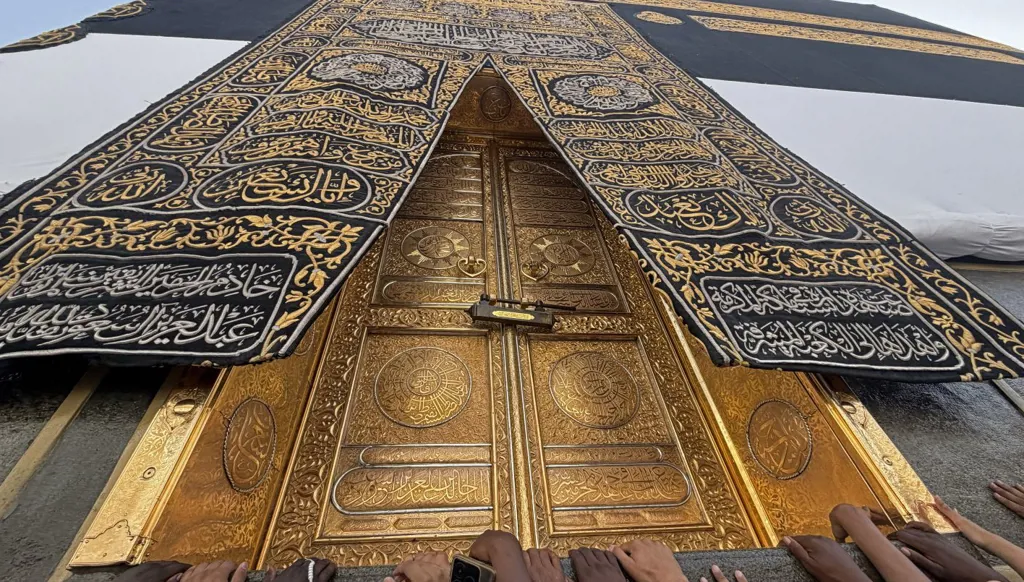


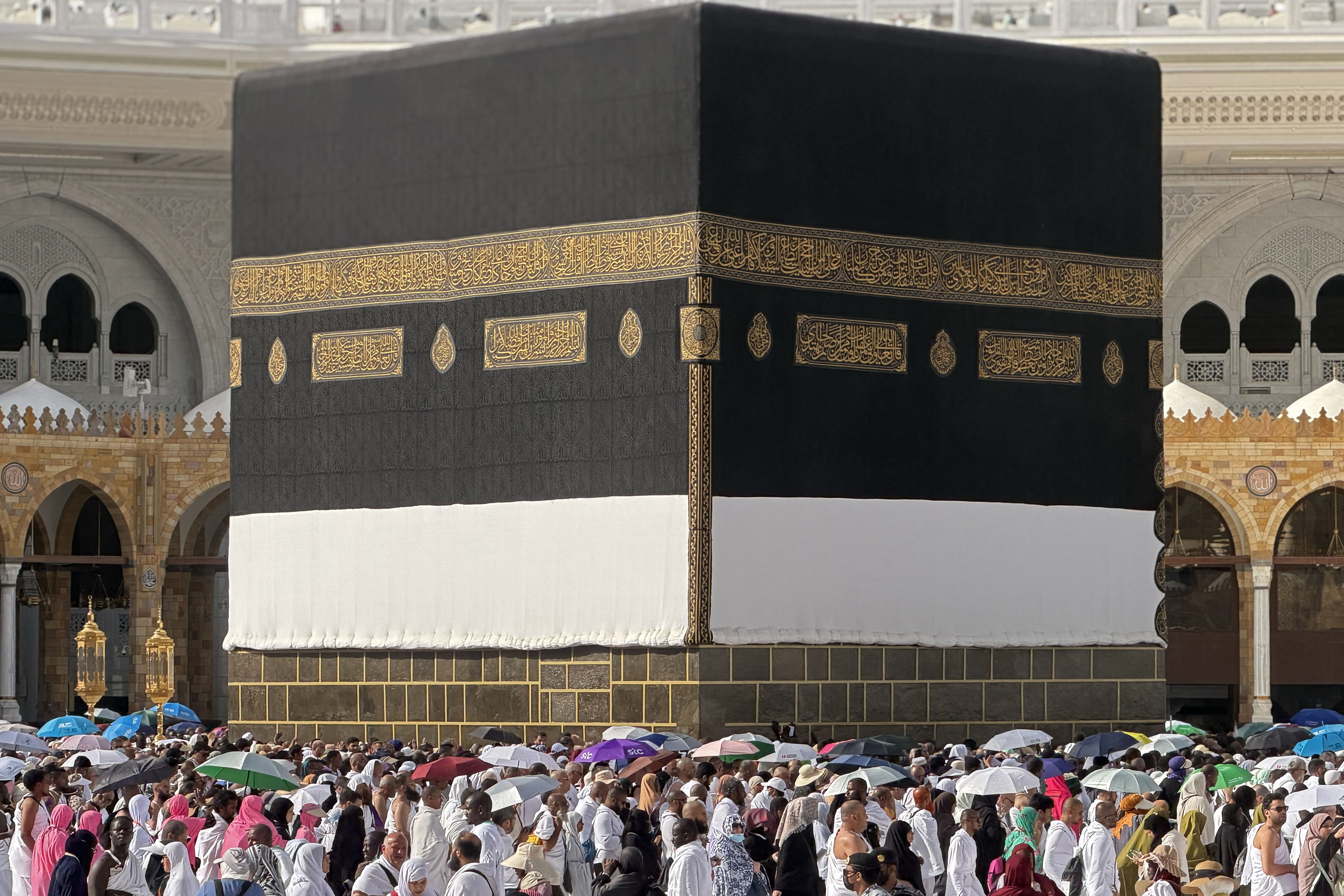
Although it appears constant to the eye, each garment is specially crafted for that year with new threads and meticulous embroidery, making this tradition one of the notable scenes associated with the care of the Kaaba.
A Story that Began Before Islam
The history of the Kaaba’s cloth predates Islam by centuries. Stories mention that Adnan bin Id, the great ancestor of the Prophet Muhammad, was among the first to clothe it. Other accounts suggest that Tubba, the Himyarite king of Yemen, was the first to clothe the Kaaba in pre-Islamic times, and that he also made a door and key for it after visiting Mecca.
Over time, Arab tribes continued this tradition until Qusayy bin Kilab, the fourth ancestor of the Prophet, organized the matter of the cloth among the Quraysh tribes. Later, the Qurashi merchant Abu Rabia al-Makhzumi volunteered to fund the cloth for an entire year from his private wealth, after which the Quraysh alternated in this honor.
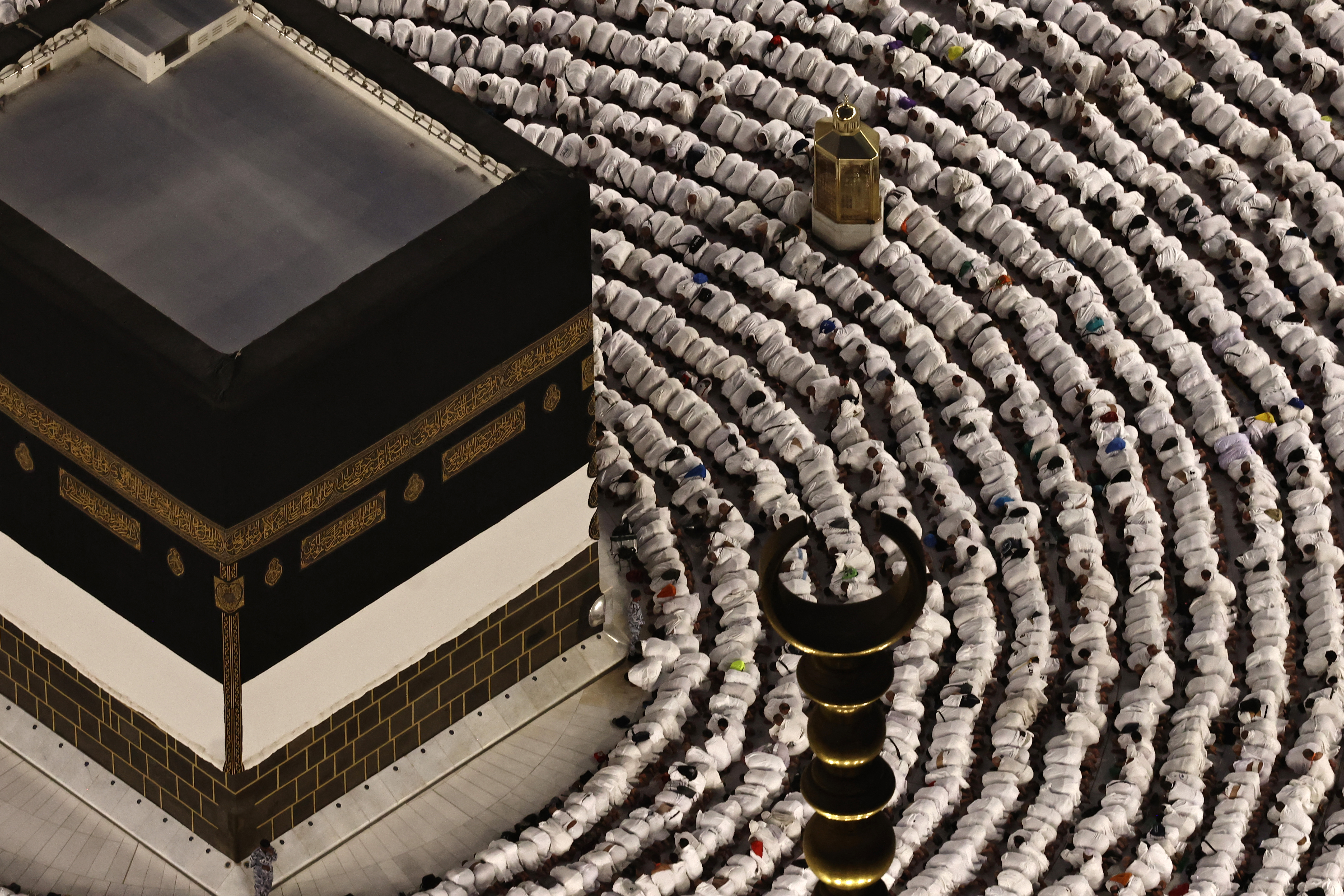
With the rise of Islamic states, the cloth evolved significantly in terms of materials and decoration. In the Umayyad period, the Kaaba was clothed twice a year, while in the Abbasid era, embroidery appeared on the cloth, and the caliphs used to inscribe their names and the date of its manufacture on it.
For centuries, Egypt was responsible for manufacturing the cloth, renowned for weaving the black garment embroidered with gold and silver threads, before this task was entirely shifted to the Kingdom of Saudi Arabia.
The first cloth in the first Saudi era was during the time of Imam Saud bin Abdulaziz in 1221 AH/1806 AD, when he covered the Kaaba with red khazz before black became the adopted color. In 1927, King Abdulaziz Al Saud ordered the first fully Saudi-made cloth in Mecca, marking a new phase in the history of this magnificent garment.
Inside the King Abdul Aziz Complex for the Kaaba Cloth
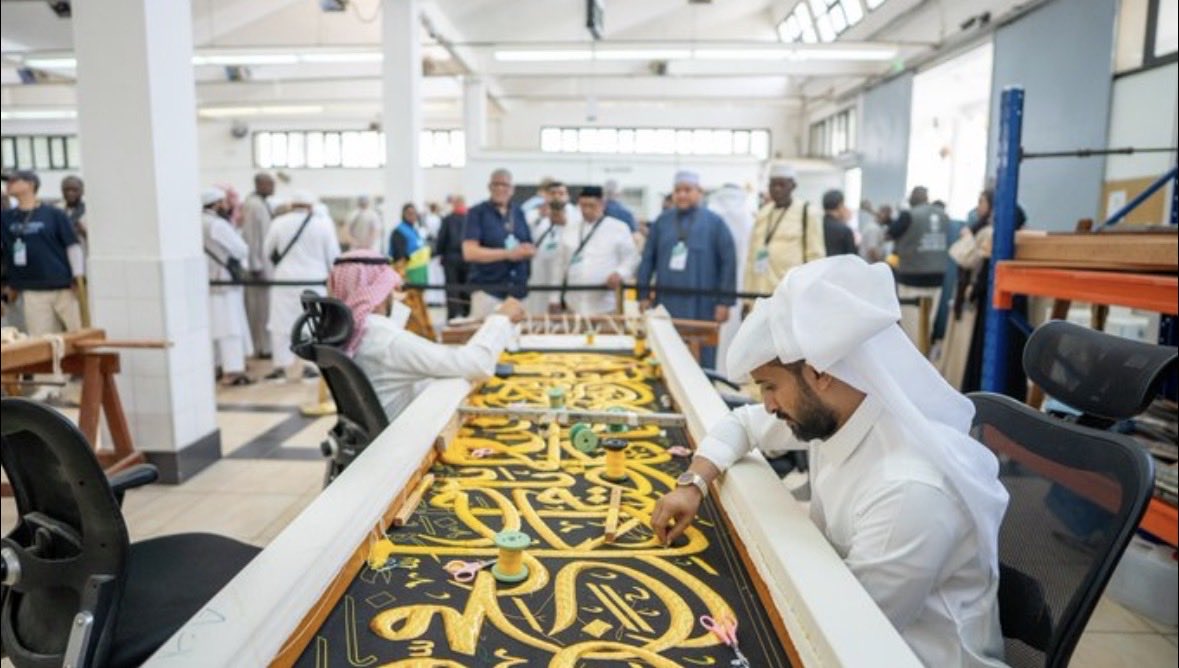
In Mecca, the King Abdulaziz Complex for Kaaba Kiswah stands as one of the largest specialized facilities for weaving and embroidery in the Islamic world. From within this complex, the cloth is produced annually through precise stages supervised by around 200 specialists, including technicians, administrators, and craftsmen.
Saudi Arabia’s journey with the cloth’s manufacture began during King Abdulaziz’s reign through a special house established in Mecca, before the work was later relocated to the Kaaba Cloth Factory in the Umm al-Joud neighborhood in 1977. With the advancement of technology, the complex underwent extensive updates in electronic systems and mechanical equipment, becoming a center that combines traditional craftsmanship with modern techniques.
The complex comprises multiple sections, including dyeing, automated weaving, manual weaving, printing, belt making, gilding, sewing, and assembly, all working together to complete this exceptional garment each year.
From Italian Silk to the Most Expensive Garment in the World
The making of the cloth begins with selecting the finest natural silk types specially imported from Italy, which are precisely inspected before being dyed black, the color historically associated with the Kaaba’s cloth and part of its visual identity.
After that, the silk goes through the stages of automated and manual weaving, where large fabric pieces are meticulously woven on programmed looms, before moving to the printing phase using the “silk screen” technique to transfer Islamic verses and decorations onto the fabric.
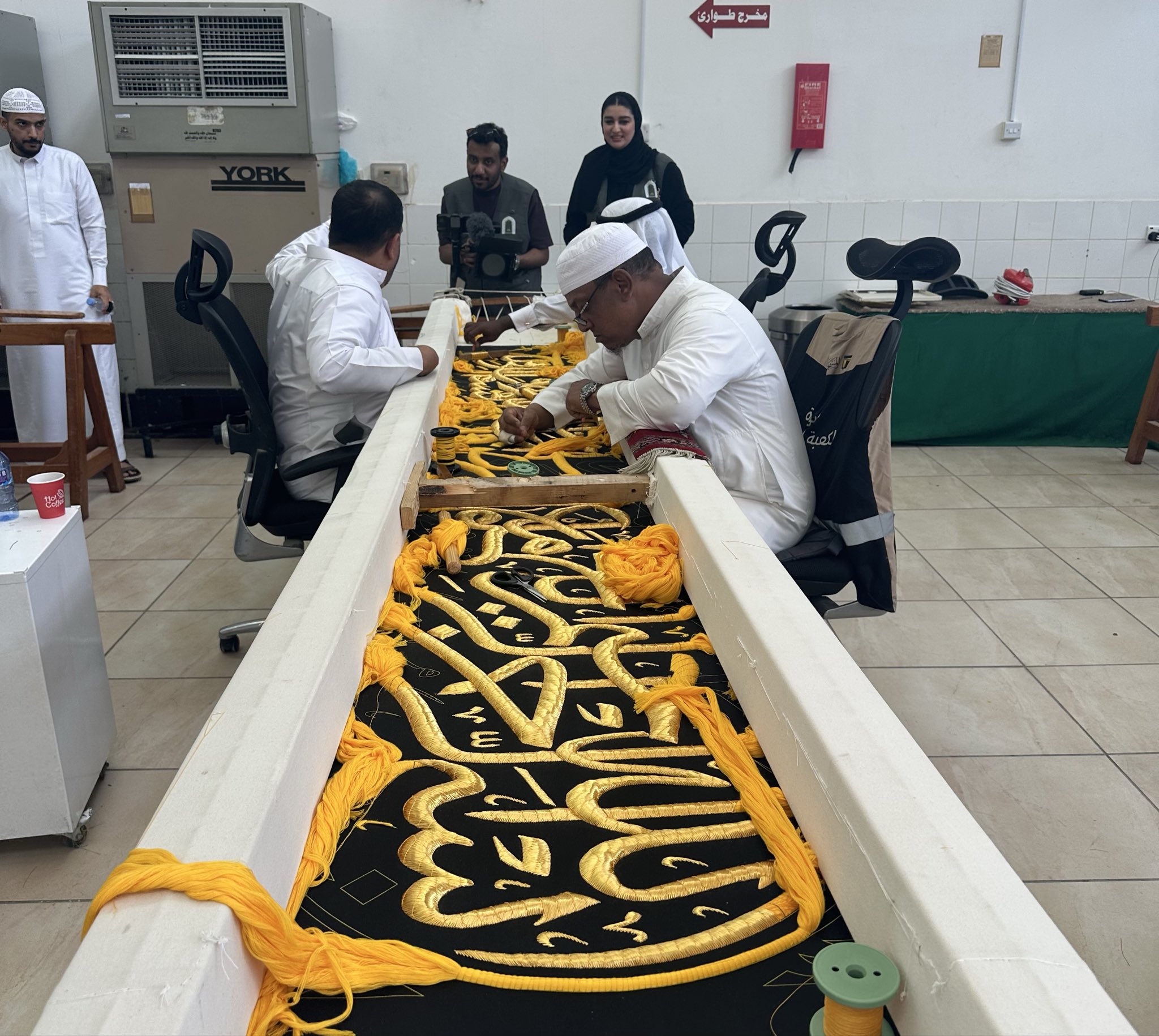
Then comes the most precise stage, which is hand embroidery, where Quranic verses are embroidered with threads of gold and silver in a process requiring great time and effort from specialized Saudi craftsmen.
Annually, the production of the cloth consumes approximately 670 kilograms of natural silk, 120 kilograms of gold and silver, and costs more than 25 million Saudi riyals. This makes it the most expensive garment in the world, not only for the value of its materials but also for its religious and symbolic significance.
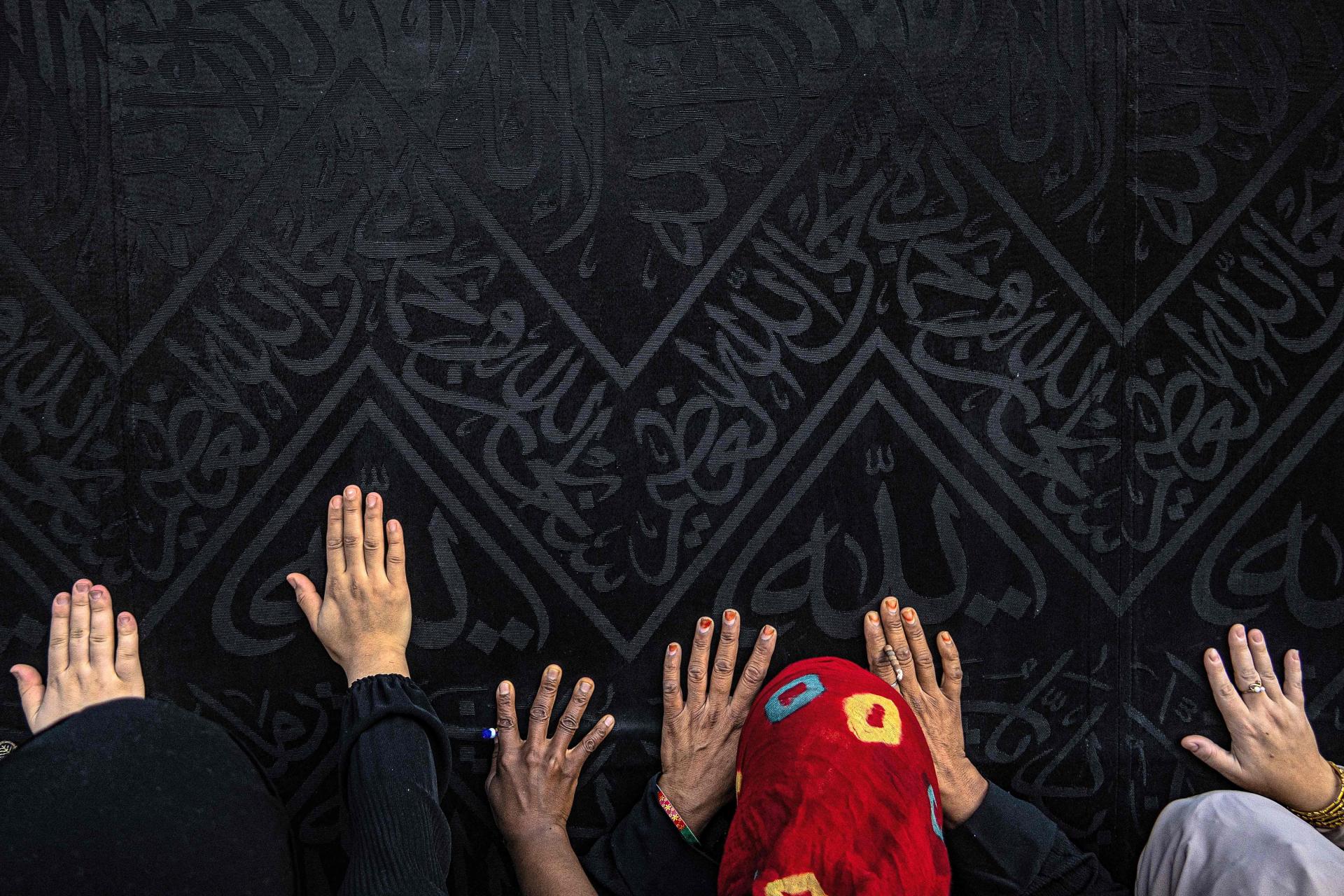
Arabic Calligraphy... When Verses Turn into Art
The Kaaba’s cloth is not just a garment; it is an Islamic art piece showcasing the magnificence of Arabic calligraphy and fine decorations. The Quranic verses embroidered with gold and silver threads stand as the most important element in the cloth’s design, harmoniously distributed on the belt, the curtain of the Kaaba door, and various parts of the garment.
The “Thuluth” script is primarily used in the cloth’s embroidery, known for its majesty and fluidity, and its ability to highlight the beauty of Arabic letters. The inscriptions go through specialized design, printing, and embroidery stages to preserve the cloth’s distinctive artistic identity.
Where Does the Old Cloth Go?
After the cloth is replaced, another journey begins for the old garment. It is carefully dismantled and preserved according to specific procedures that take into account its historical and religious value, preventing damage or chemical reactions.
Sometimes, parts of the old cloth are gifted to museums, individuals, or official entities according to approved procedures and special permissions, preserving these pieces as witnesses to one of the most sacred symbols in the Islamic world.