

Tunisia’s constitutional shift: From post-revolution consensus to a centralized presidential system
Tunisia’s shift from the 2014 consensus constitution to the 2022 presidential system has sparked debate over power concentration, institutional balance, and democratic oversight after the 2021 turning point.


 Messenger
 Whatsapp
 Threads
 Email
Email
 Print
Print
 X
X
 Facebook
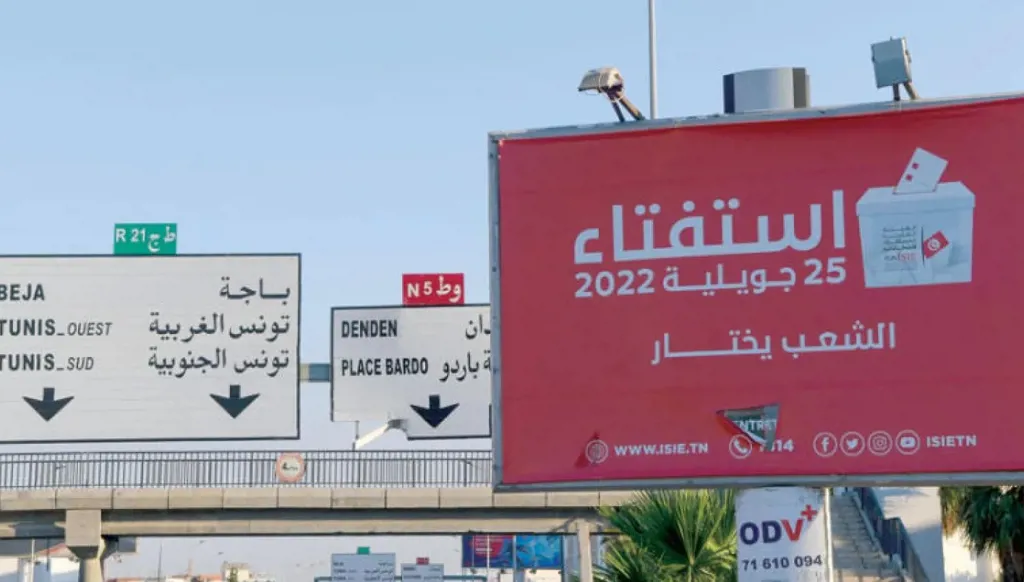


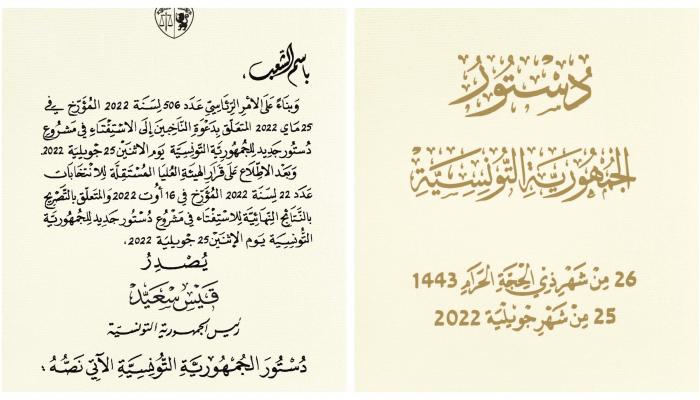
In less than a decade, Tunisia has undergone a profound constitutional transformation, shifting from a constitution drafted in 2014 after a challenging political process to a constitution drafted in 2022 following exceptional events that marked a new phase of governance.
Between the two constitutions, the most prominent question was whether the country shifted from a consensual constitution to a constitution establishing a presidential system that concentrates power.
A rare moment of consensus
According to researchers and political actors, the 2014 constitution represented a rare moment of consensus in Tunisia’s political history. It was born after long discussions between Islamists, secularists, and civil society organizations. Its primary goal was to break away from a system of one-man rule and to establish a system based on balance between the legislative and executive branches.
Houssam Hammi, coordinator of the Soumoud Coalition, told Annahar newspaper that the 2014 constitution was indeed a consensual constitution, drafted through agreement among all political tendencies in the country. This helped expand freedoms and open up public space, and also strengthened pluralism, freedom of organization, and peaceful transfer of power. However, in his view, it also led to significant paralysis in decision making and did not succeed in addressing economic and social conditions.
Does not fit reality
Mohsen Nabti, spokesperson for the Democratic Current Party, told Annahar newspaper that the 2014 constitution, which some tried to promote as a consensual constitution, was drafted by forces that sought to change the face of the region. He stressed that it was a modified version of constitutions imposed on the region and based on the principle of power sharing.
He argued that such constitutions were justified in some cases, such as Lebanon, where sectarianism imposes itself as a determining factor in political life, or Iraq under the Bremer constitution.
He explains that the 2014 constitution established a distribution of power, but in his view it was not suitable for the Tunisian reality, because it led to a conflict of powers between the three presidencies, which are the presidency, the parliament, and the head of government. This made the country live in a state of political conflict and become ungovernable.
Structural imbalance and fragmentation of power
For his part, Hammi points out that the balance established by the 2014 constitution between the branches of power did not prevent a structural flaw in the system of governance. The party that won the elections was unable to implement its program due to the fragmentation of power and the multiplicity of decision making centers. This produced a state of political paralysis and weakened citizens’ trust in the political class, especially with a tense parliamentary scene that did not provide economic and social solutions, according to him.
He adds that the absence of a constitutional court and the failure to complete the establishment of some independent bodies increased the fragility of the political system and contributed to deepening the conflict between institutions, until the 2021 turning point, which he sees as a natural result of that paralysis and tension.
Popular demand
In contrast, analysts consider that the 2022 constitution came as a direct response to the state of paralysis the country experienced. Nabti says that the system of governance established by the 2014 constitution lacked the components needed for continuity, which turned it into a burden on the state.
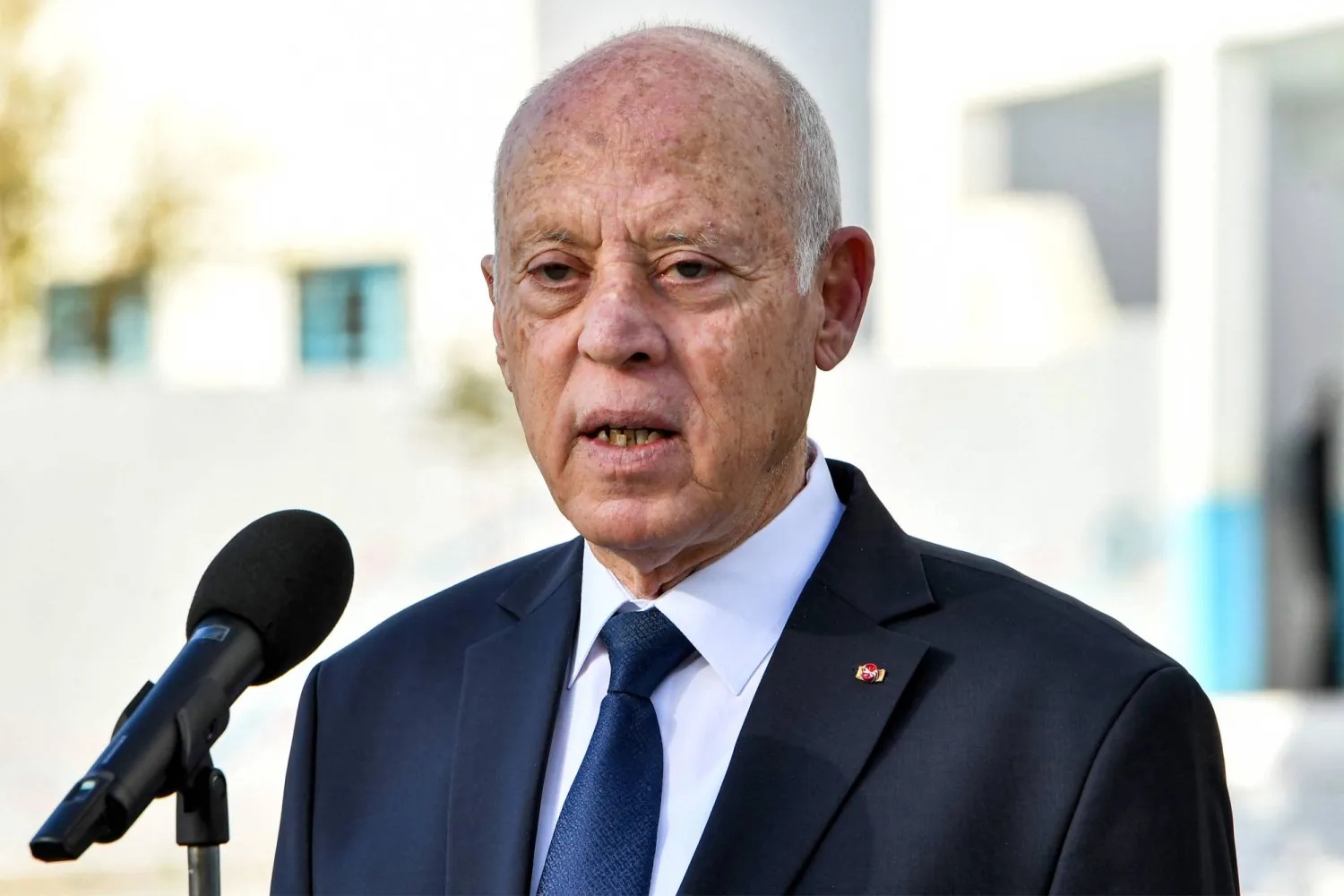
Nabti adds, “The political moment Tunisia experienced on July 25, 2021, which enjoyed broad popular consensus, primarily sought to end power division and unify institutions, and was later translated into the 2022 constitution enshrining a more centralized presidential system.”
He argues that a presidential system is not inherently opposed to democracy, noting that several major democratic countries operate under presidential systems. He adds that promoting the idea that a presidential system is undemocratic is a narrative advanced by parties that sought to fragment Arab states.
Centralized power
However, this amendment has faced broad criticism from opponents of the new constitution, who believe it did not fix the shortcomings of the 2014 constitution but instead produced a new imbalance.
Hammi argues that President Kais Saied concentrated power in his hands under the 2022 constitution, which in his view represents a return to the pre-1956 era. He says it does not ensure a real separation or balance of powers and establishes a centralized authoritarian system that weakens pluralism and sidelines intermediary bodies.
He says the new text does not only strengthen the position of the president but also restructures the state in a way that makes decision making more concentrated in the presidency, with weaker roles for other institutions.
Absence of oversight mechanisms
A wide range of political actors in Tunisia agree that the 2022 constitution lacks an important element, which is oversight mechanisms over the work of President Kais Saied, especially given the absence of a fully established constitutional court, according to Hammi, who believes it grants the president supremacy over other institutions.
Nabti agrees with this view, stressing that these shortcomings can be addressed through parliament and without the need for a new referendum.