Lebanon’s controversial Amnesty Law sparks nationwide protests and political deadlock

Lebanon 20-05-2026 | 13:10

Lebanon’s controversial Amnesty Law sparks nationwide protests and political deadlock

From blocked highways and prison unrest to deep political divisions in Parliament, Lebanon’s revised amnesty draft ignites widespread anger and debate over justice, security, and reconciliation.

Lebanon’s controversial Amnesty Law sparks nationwide protests and political deadlock
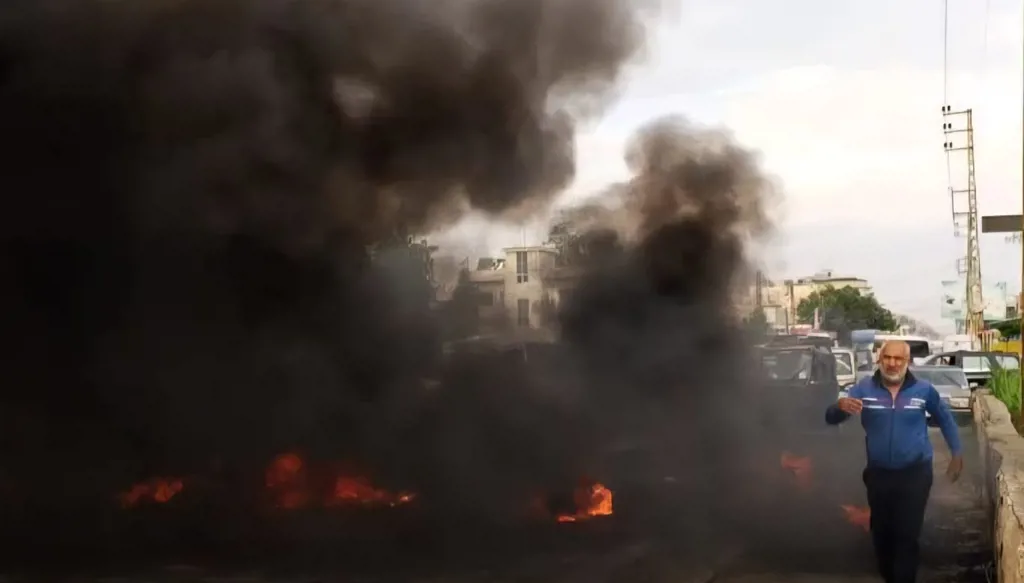
Blocking of Abdeh-Halba road at the intersection of Dedlum-Majdala in Akkar Governorate.
Smaller Bigger


As reports speak of the possibility of further protest movements in the coming hours across various Lebanese regions, particularly in northern Lebanon and the south, where most of the detained Islamists are from, rejecting the formula of the general amnesty law, Speaker of Parliament Nabih Berri announced the postponement of the legislative session to a later date, with the principle of consensus, following unfortunate sectarian incitement.


In a statement, Berri said: “When the proposed Amnesty Law and the reduction of some penalties on an exceptional basis were intended to restore the principle of legal justice and guarantee individual freedoms, especially as the situation in prisons has been characterized by a chronic delay in issuing criminal sentences, and despite the efforts made by the parliamentary committees and joint committees to reach a national consensus that would be a unifying mark in a country that most needs solidarity and consensus, what happened and was witnessed in more than one area, accompanied by, unfortunately, sectarian and doctrinal incitement, it was decided to postpone tomorrow’s session to another time under the principle of consensus.”


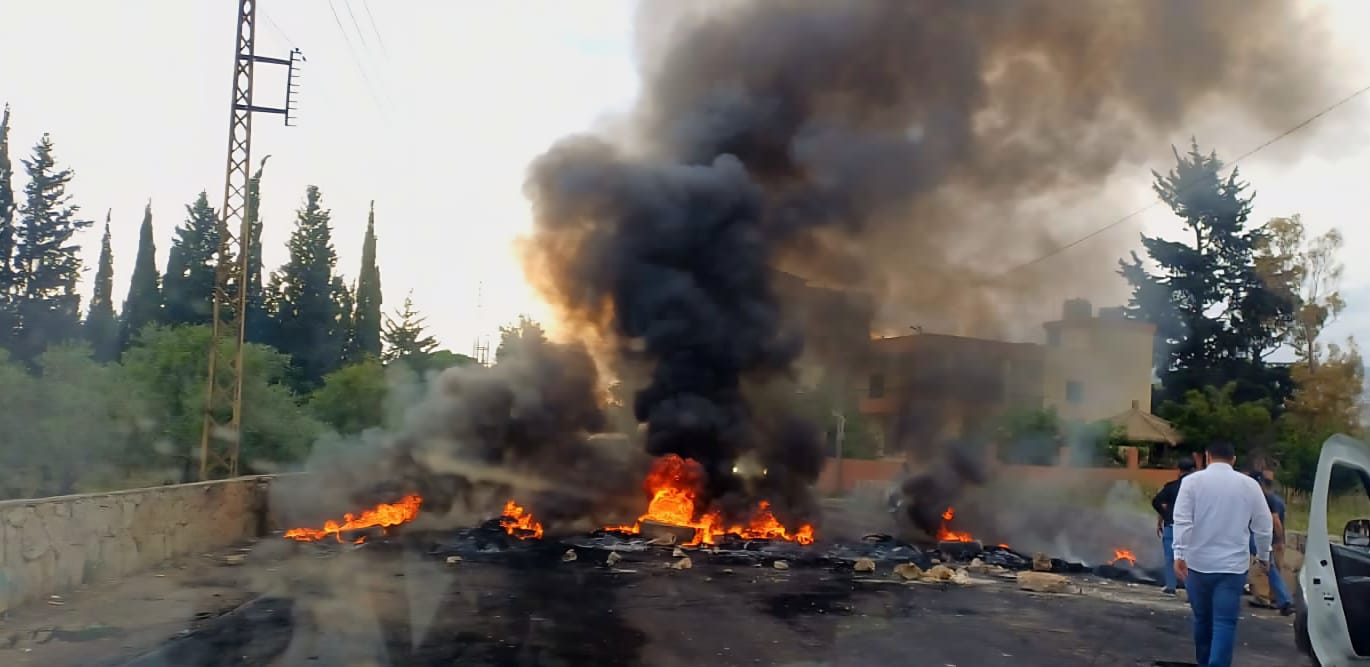
This morning, protesters again blocked the Abdeh–Halba road (Akkar Governorate), after it had been blocked last night with burning tires, in protest against the rulings issued in the amnesty case.


Last night, several areas, including Tripoli, Akkar, Sidon, and Khaldeh, witnessed protest movements involving roadblocks with burning tires, cars, and barriers, most notably at the Mohammara Bridge in Akkar, Palma Highway in Tripoli, and the international road between Minyeh and Abdeh, in addition to a sit-in by supporters of Sheikh Ahmad al-Asir at the Awali Bridge in Sidon.


In Roumieh Prison, there was a state of anger among detained Islamists, amid calls to MPs to reject what they described as a “distorted amnesty” and to demand amendments that would be fair to them.


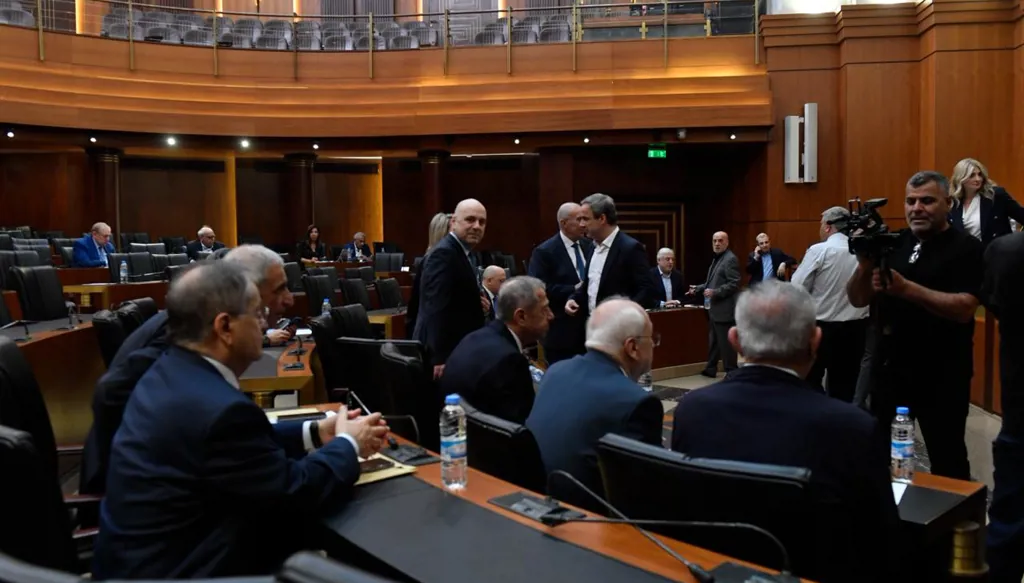
From the joint committees' session.


In one of the most sensitive sessions, the committees made extensive amendments to the draft, including reductions in major penalties and linking the benefit of the amnesty to the waiver of personal rights, while maintaining exceptions related to crimes of corruption, public funds, money laundering, and terrorism, in an attempt to contain the political and popular objections that accompanied the discussions in recent weeks.


According to the formula reached by the committees, a 28-year prison sentence was adopted in place of the death penalty, equivalent to about 21 actual years, while the life hard labor sentence was reduced to approximately 18 years, with 14 years adopted for detainees who have not received final judgments, so that those who have exceeded this period will be released after the law is passed, with their trials continuing while they are free.


Regarding the more sensitive cases, circulating data within the committees indicates that the majority of those convicted in terrorist bombing cases, who have been proven to be directly involved and sentenced to death, will not be close to being released from prison, contrary to what had been rumored.


This also applies to the case of Ahmad al-Asir, as the legal interpretation circulating suggests that if the death penalty against him is upheld, he would need more than ten additional years before benefiting from the proposed reductions and potentially being released from prison. However, if the Court of Cassation decides to reduce the sentence to life hard labor, the remaining period could be reduced to about six years, according to the new calculation mechanism included in the draft law.


As for the file of Lebanese who fled to Israel after 2000, it was agreed to adopt the law issued in 2011 as a reference for addressing their situation, while the amnesty also included cases of unorganized drug use and promotion, with organized trafficking and distribution networks excluded from its provisions.