

Dario Escobar, the Colombian Hermit Inspired by Saint Charbel, Dies at 91



 Messenger
 Whatsapp
 Threads
 Email
Email
 Print
Print
 X
X
 Facebook
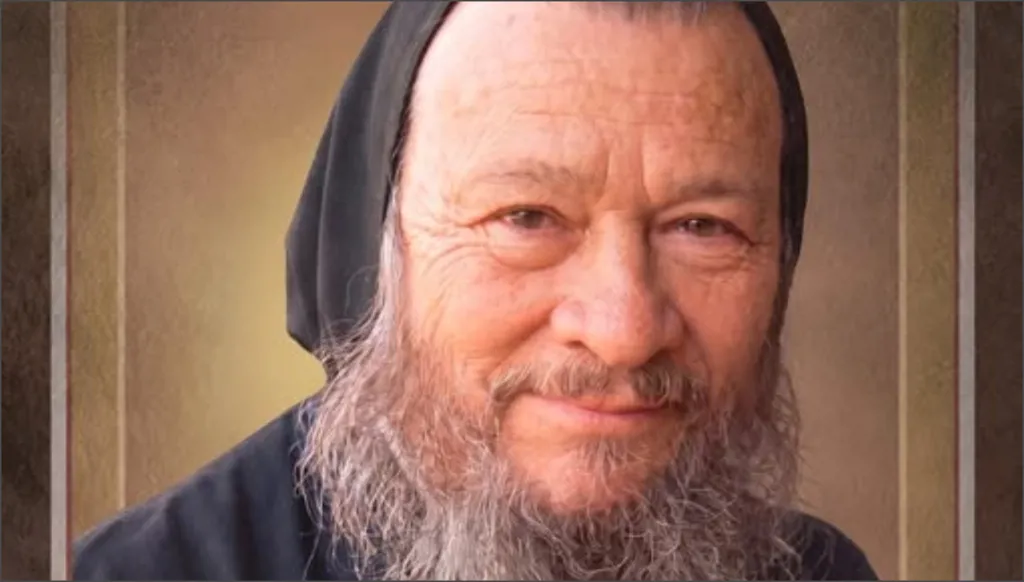


“Whoever wants to be my disciple must deny themselves and take up their cross daily and follow me.” (Luke 9:23).
With this verse, the cloistered monk Dario Escobar dedicated his life to Christ after a profound spiritual experience in which he felt, as he often repeated, the grace of God in his life.
Dario left a life of wealth and comfort in Colombia and came to Lebanon, the land of holiness, seeking a path similar to the life of Saint Charbel, whose story deeply influenced him.
There, he chose a life of austerity, silence, and poverty, becoming a monk who devoted his existence to prayer, solitude, and contemplation.
Coincidence played a decisive role in his life. The Lebanese Maronite monk Father Asia Safi, who lived alongside Escobar, recounts that the cloistered monk was the secretary of the final session of the Second Vatican Council, at which the beatification of Saint Charbel was announced.
From that moment, the great transformation in his life began. He asked permission from Rome to move to the Maronite monastic order in Lebanon, marking the beginning of the story of a Colombian monk who chose to leave the world behind and live a life of humility and asceticism with deep faith. He was the seventh of his siblings before he gradually became an example of piety, asceticism, and sanctity.
The Commandment of Christ in the Life of Dario Escobar
From Colombia to the United States, and finally to his last stop in Lebanon, the cloistered monk Dario Escobar (born July 7, 1934) did not wish to live his spiritual experience in a conventional way.
From his earliest days, he followed the commandment of Jesus Christ as stated in the Gospel of Matthew (Matthew 10:37–38): “Anyone who loves their father or mother more than me is not worthy of me; anyone who loves their son or daughter more than me is not worthy of me. Whoever does not take up their cross and follow me is not worthy of me.”
Escobar carried his cross and walked a path he chose with full freedom, searching for eternal light and a life of humility and inner peace. His journey initially took him from Latin America to the United States, before ending in Lebanon, where he found in the slopes of the Qannoubine Valley what he had not found anywhere else in the world.
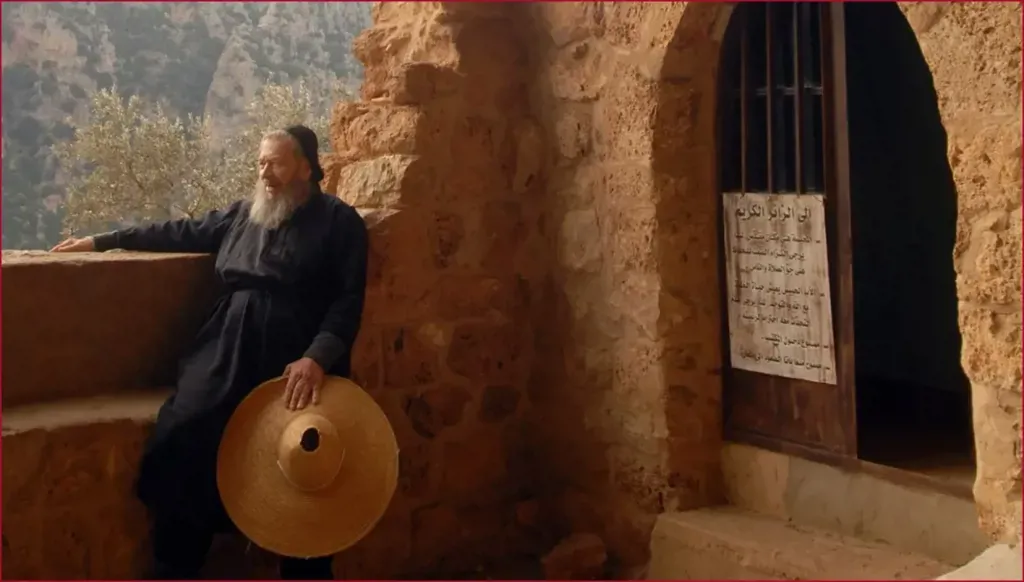
In the hermitage of Hawqa, Escobar lived a harsh ascetic life closely resembling that of Saint Charbel, whom he deeply admired. He slept on stone, as Saint Charbel did, and worked daily in the land, living off its modest produce and relying only on what nature provided. Father Asia Safi recounts that the monk would jokingly say, “The jackal and I share food.”
In his handwritten memoirs, the monk documented key moments of his spiritual journey, especially those related to his monastic vows.
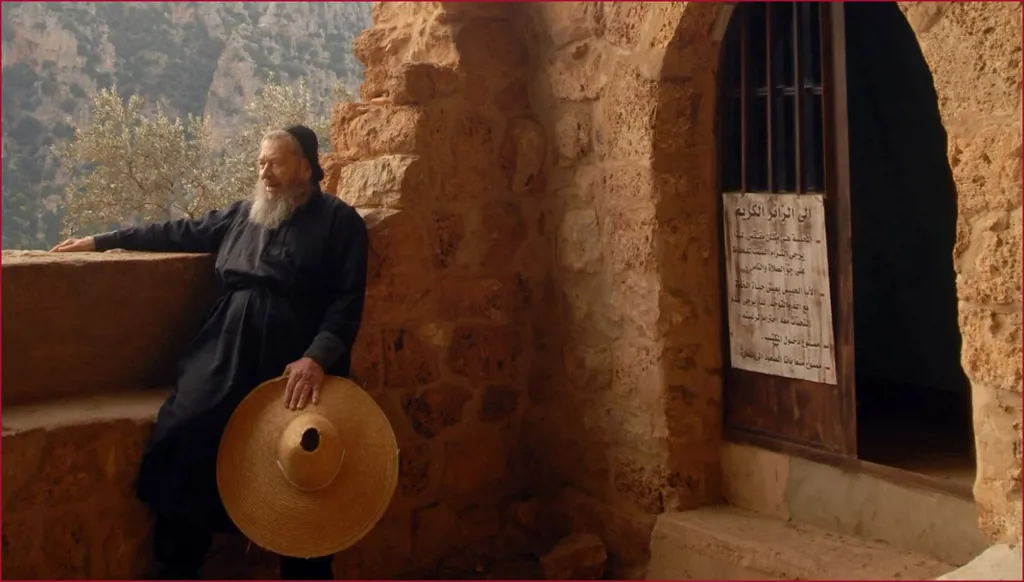
He wanted to live the experience of contemplation as Saint Charbel had lived it
Escobar was not far from monastic life, as Father Asia Safi explains. He had been a priest in the Congregation of Jesus and Mary and studied clinical psychology in Colombia, before moving to the United States, where he worked in this field between 1974 and 1990.
Yet he continued to feel an inner calling pushing him toward a different life. On November 22, 1992, his new monastic path began when he entered the novitiate of the Maronite Order. One year later, on December 14, 1993, he made his first vows, before professing his perpetual vows on January 17, 1997 at the Monastery of Our Lady of Tamech, while he was experiencing his spiritual mission at the Monastery of Kfifan.
Within him, there was a life he wanted to imitate in every detail. The life of Saint Charbel became a spiritual flame that nourished him from within and pushed him further toward asceticism, prayer, and solitude. For this reason, he decided to join the Monastery of Saint Maron in Annaya to live the experience of contemplation as Saint Charbel had lived it.
Only six months, from January 4 to July 22, 1999, were enough to deepen his spiritual experience and strengthen his conviction and faith in the path he had chosen for himself: total dedication to God.
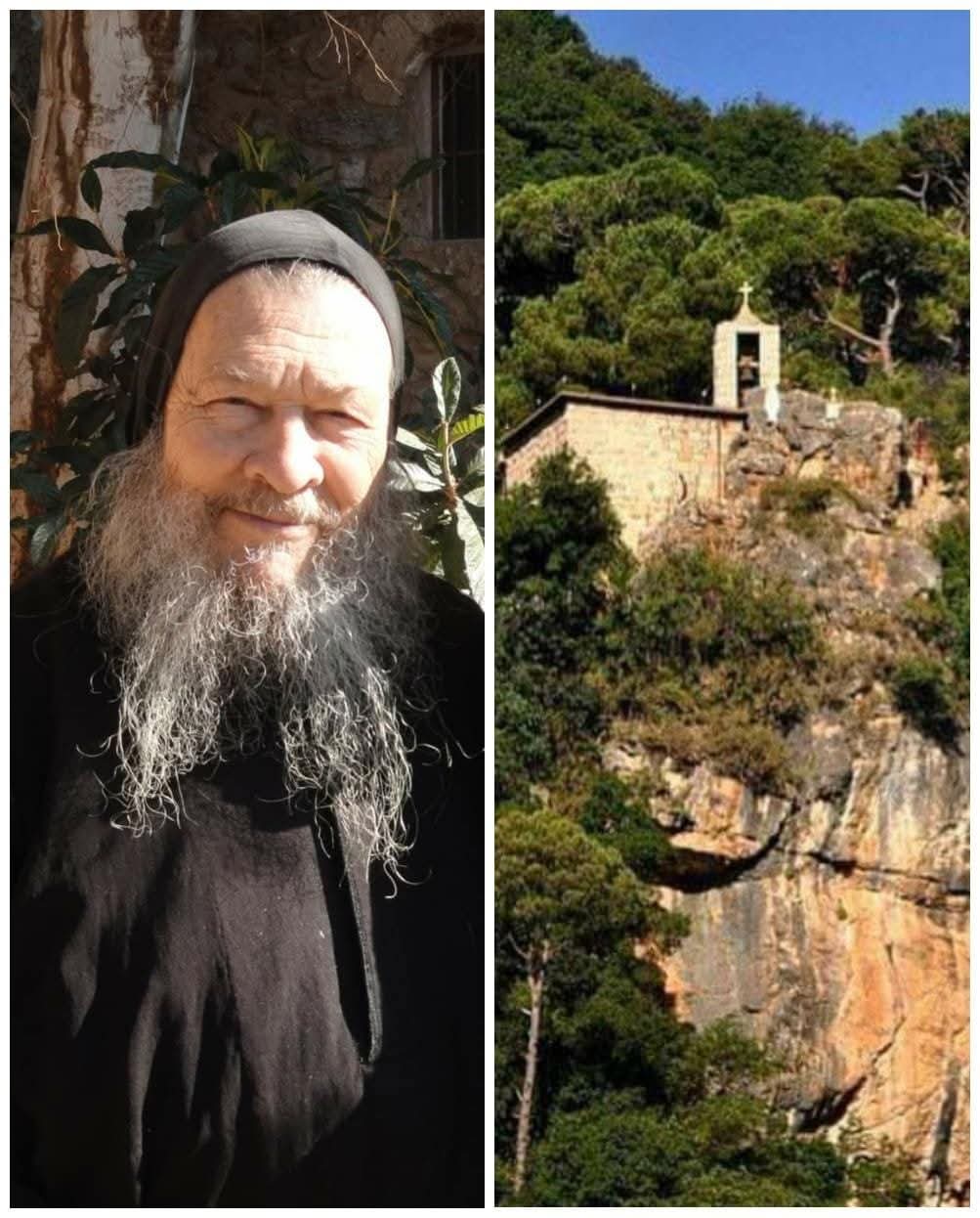
From the Monastery of Saint Maron in Annaya, the cloistered monk moved to the Monastery of Jannine, where he spent a full year, before later transferring to the Monastery of Saint Anthony Qozhaya. On August 15, 2000, his deepest phase of ascetic life began when he went to the Hermitage of Our Lady of Hawqa in the Holy Valley, where he lived in solitude and prayer until September 19, 2021.
In that hermitage, he devoted his years to silence and contemplation, far from the world, living only on prayer, faith, and the ascetic life he had chosen for himself many years earlier.
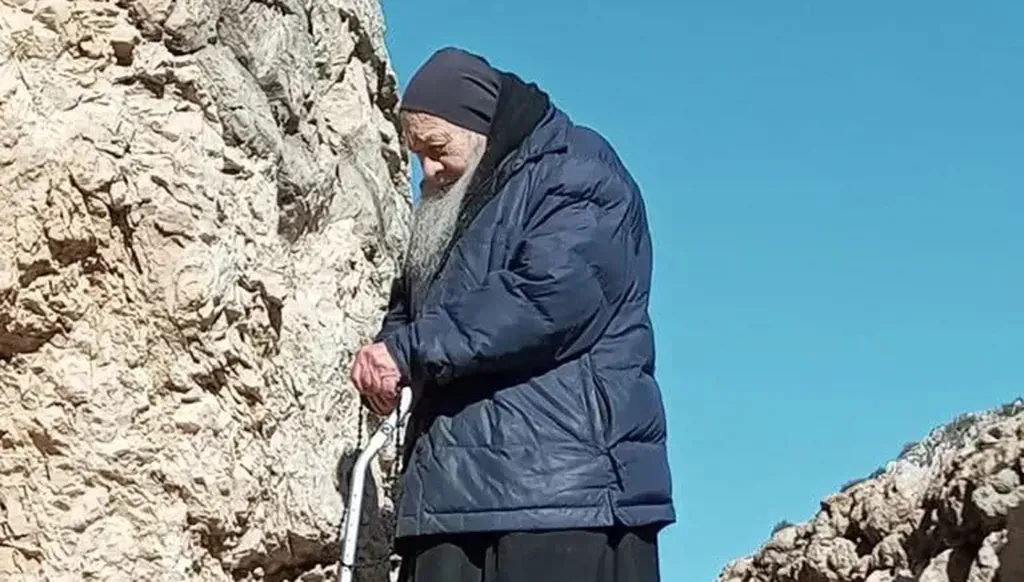
However, his final years were not without a severe trial. He suffered a stroke that forced him to leave the Hermitage of Hawqa and move to the Hermitage of Saint Paul, where he spent the remainder of his life until the morning of May 19, 2026, the day of his death.
Father Asia Safi recounts that “when we arrived at the hermitage, he had already finished the Divine Liturgy,” noting that this scene recalled the way Saint Charbel lived and died.
The first encounter with the monk
Escobar kept his spiritual experiences to himself and did not disclose them even in his handwritten memoirs. Father Asia recalls his first meeting with him, saying: “On January 17, 2006, I met him for the first time, and two years later I was at the beginning of my monastic journey in the minor seminary. That day, among a group of young men and women, he asked me: Will you become a monk or a priest? I answered: I will become a monk. I only reveal today this dialogue that took place between us.”
Father Asia never forgot that first meeting, nor the words the monk told him when he was only fifteen years old: “Commitment to time is a form of holiness.” A phrase that stayed with him throughout his life, as the monk himself lived it in every detail; he used to wake up for prayer at 4 a.m. and remained committed to the Divine Liturgy until his last breath.
In the last four months of his life, the monk decided not to see anyone at all and to cut all ties with the outside world and people, not out of hatred, but, as he used to say, “out of faith in Christ and His commandment.”
Today, attention turns to what the coming days may bring, and to the wish held in the hearts of all who knew the monk: that one day his sanctity may be proclaimed to the world.
On the heights of the Kadisha Valley, among the rocks and hermitages that witnessed the lives of monks persecuted for Christianity, there remains hope that this mountain will continue to radiate the fragrance of incense and prayer.