From proxy wars to power tech: How the Iran conflict is reshaping the Middle East

Opinion 20-05-2026 | 11:21

From proxy wars to power tech: How the Iran conflict is reshaping the Middle East

A new Israeli security study argues that future wars will be defined less by armies and more by AI, intelligence, and economic power.
From proxy wars to power tech: How the Iran conflict is reshaping the Middle East
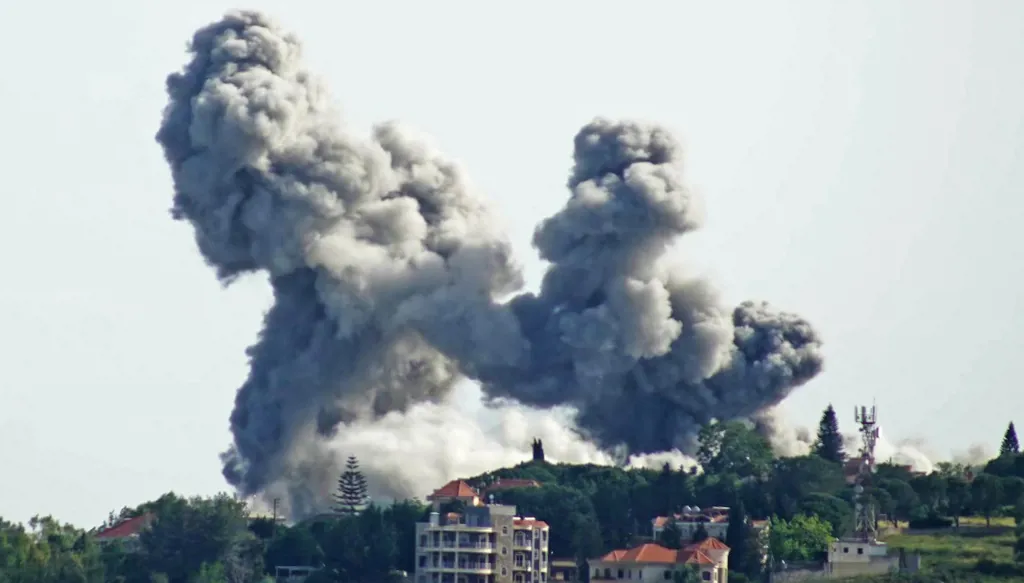
Smoke rises as a result of an Israeli raid targeted the town of Shoukin in southern Lebanon (AFP)
Smaller Bigger

The recent report from the Institute for National Security Studies is not merely a military analysis of the outcome of the war with Iran; it also conveys deeper messages about the future shape of the Middle East and the nature of the conflicts likely to define the region in the years ahead.


The report, prepared by Tamir Hayman, the former director of Israeli military intelligence, clearly indicates that the recent confrontation has changed the traditional rules of engagement, shifting the region from a phase of “proxy wars” to a more dangerous stage based on direct deterrence and technological and intelligence superiority.


A more complex phase

The report highlighted military and intelligence successes, yet at the same time acknowledged that the war did not end the conflict but rather opened the door to a new, more complex stage marked by instability. Most importantly, it revealed that modern wars are no longer dependent solely on army size or the number of missiles, but on artificial intelligence, the speed of data analysis, the ability to manage information and public opinion, as well as economic flexibility and international alliances.


This war should prompt the Arabs to confront a set of important facts. The first is that the region has paid for decades for conflicts, expansionist projects, and proxy wars, while the world has been moving toward the economy, technology, and artificial intelligence. Many Arab countries have drained their resources in unresolved crises, while others have succeeded in focusing on building human capital, the economy, and stability.


The crisis also proved that countries with strong institutions, diversified economies, and technological capacities are the most capable of resilience and recovery. Stability is no longer merely a security issue but is now linked to the economy, media, technology, and international credibility. For this reason, some Gulf states have been able to maintain the continuity of life and economic activity despite threats, because they have built a model based on diversity, openness, and high readiness.


Among the most important lessons is that Gulf security is no longer merely a local issue but has become part of global economic security. Any disruption in the region immediately affects trade, energy, supply chains, and international investment, which has led major powers to view Gulf stability as a global strategic necessity.


What are the biggest weaknesses?

The war has also shown that Arab divisions remain one of the region's greatest weaknesses. While regional powers move with clear, long-term projects, some Arab countries are still mired in side conflicts and disagreements, whereas the current phase requires deeper coordination and a more realistic vision to protect common security and interests.


Perhaps the most important conclusion of this phase is that the future will not belong to countries that survive on crises and slogans but to those that invest in human capital, knowledge, the economy, and technology. The region today faces two clear choices: either to continue in cycles of attrition and conflict or to move toward a new phase characterized by development, stability, and building a better future for future generations.