

Lebanon’s amnesty deal exposes deep divides as border escalation and political tensions intensify
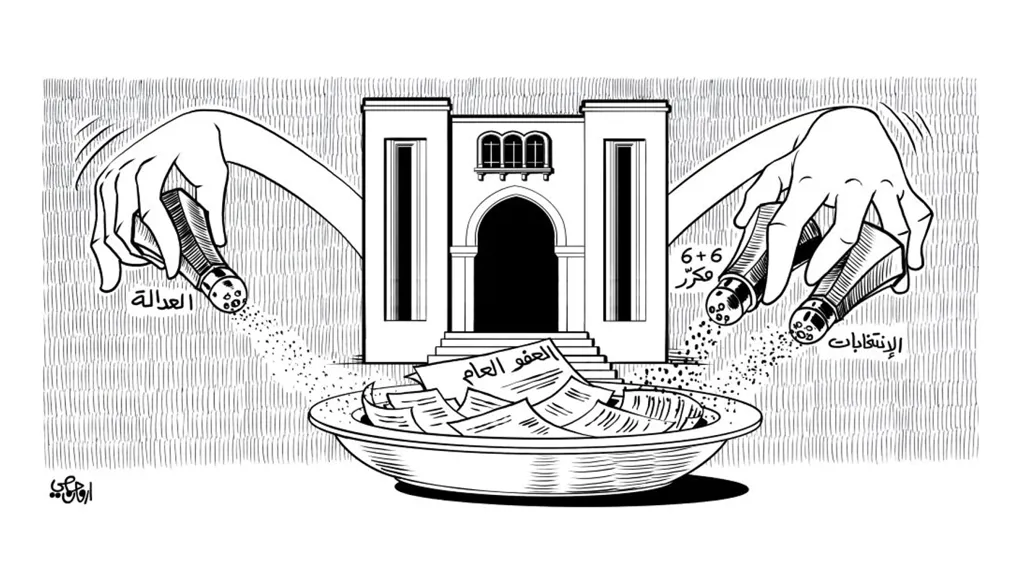
While Lebanon’s political factions moved toward a rare consensus over a sweeping general amnesty law affecting thousands of prisoners and exiles, renewed Israeli strikes, Hezbollah warnings, and mounting security tensions underscored the fragile reality of a country balancing internal compromise against the backdrop of a widening regional conflict.


 Messenger
 Whatsapp
 Threads
 Email
Email
 Print
Print
 X
X
 Facebook


In this context, it is noted that the total number of prisoners and detainees in Lebanon stands at 8,590. The number of convicted individuals is 1,023, while 1,797 detainees and convicts are held on other charges. The number of detainees awaiting trial stands at 5,996. Meanwhile, the number of prisoners held under the 1958 Law on Terrorism is 228.
According to the latest amendments to the Amnesty Law, the estimated number of prisoners covered by the amnesty — excluding those in temporary custody — is 2,816, in addition to 310 individuals expected to benefit from the sentence reductions stipulated under the law. The total estimated number of beneficiaries from the Amnesty Law therefore reaches around 3,300, although this figure remains non-final. The number of wanted individuals subject to arrest warrants is estimated at 12,000.
However, Hezbollah has resorted to escalating its “lowering the walls” rhetoric in campaigns targeting the Lebanese state’s negotiation options, as well as the issue of the return of exiles. MP Hassan Fadlallah considered that “there are collaborators among the exiles fighting alongside the Israeli army, and we will not accept their return or any amnesty for them,” stressing that “we will fight any collaborator with Israel just as we fight the Israelis.”
Noting that Hezbollah tasked him with consultations in Baabda Palace, where “there is no rupture with the President, nor any barrier to communication with him,” Fadlallah called on the state to “avoid direct humiliating negotiations and refrain from unilateral decision-making outside national consensus,” emphasizing that “any agreements or security arrangements concluded by the authorities with the enemy at the expense of the nation’s sovereignty will have no effect on the ground.”
In addition, MP Ihab Hamadeh warned “against what is being plotted to target the Lebanese army before targeting the resistance environment,” referring to discussions about forming a military brigade “to carry out a mission similar to the dirty role previously undertaken by Saad Haddad and Antoine Lahad.”
The Israeli army yesterday issued an urgent warning to residents of Toura, Nabatiyeh Tahta, Haboush, Bazourieh, Tayr Debba, Kfar Houneh, Ain Qana, Labaya, Jebchit, Shahabieh, Burj al-Shamali in Tyre, and Houmin al-Fawqa, as airstrikes, shelling, and targeted attacks continued.
In the afternoon, the Israeli army established a checkpoint at the Mari–Halta intersection, near shops that had previously been bombarded, where several citizens and passersby were detained. Meanwhile, the Israeli Broadcasting Authority reported that two Israelis were injured after a drone launched from Lebanon struck a vehicle in Misgav Am.
In the evening, more than ten injuries, including children and women, were recorded in an airstrike on Deir Qanun al-Nahr, and rescue teams managed to retrieve ten victims, continuing the search for missing persons and removal of rubble.