

Saudi envoy Prince bin Farhan’s return to Beirut signals renewed focus on Lebanon’s political balance
Amid high-level consultations, Riyadh’s envoy re-emerges as a key quiet actor pushing internal reconciliation, Arab consensus, and long-standing regional frameworks tied to Lebanon’s stability and the Taif-era order.


 Messenger
 Whatsapp
 Threads
 Email
Email
 Print
Print
 X
X
 Facebook
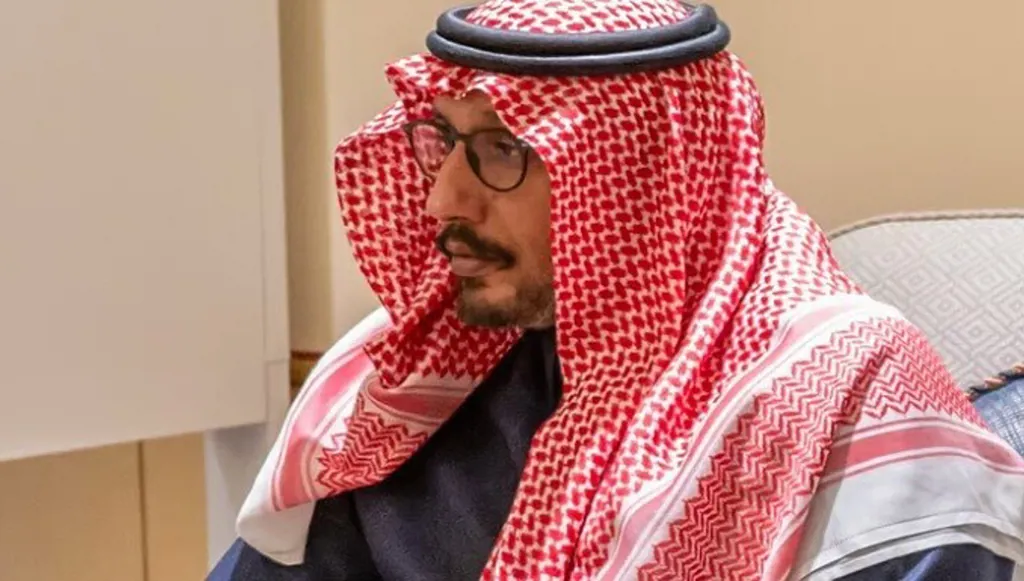


The return of Saudi envoy Prince Yazid bin Farhan to Lebanon is noteworthy at this time, as he may be the only envoy primarily handling the Lebanese file, and his presence recalls the activities of Western, Arab, and Gulf envoys leading up to the Arab envoy Lakhdar Brahimi, who, alongside the Arab tripartite committee, was considered one of the key architects of the Taif Agreement.
So what about the return of Prince Yazid bin Farhan, who stands out from others due to his lack of media appearances, as he does not favor any political or media display after his meetings? Saudi Ambassador Walid Bukhari said of him that he does not rest, meeting political figures late into the night and beyond, and that he knows the Lebanese file by heart.
Domestic peace and the Taif Agreement
Information obtained by Annahar from Saudi diplomatic sources in Beirut indicates that the Saudi envoy focused during his recent tours, notably his visit to Beirut a few weeks ago, on domestic peace and internal balances in the country to prevent discord. This was emphasized during his extended meeting with Speaker of the House Nabih Berri and, more importantly, the Taif Agreement, which he insists has no alternative but itself. This well-known statement was made in front of everyone he met, referring to arranging presidential relations and avoiding specific boycotts on the Baabda–Ain El Tineh line. In clearer terms, Prince bin Farhan is working hard to strengthen relationships between the three leaders, fully aware of the crucial role of the Speaker of the House in the Shiite and national arenas.
MP Bilal Al-Hashimi tells Annahar about the Saudi prince’s tour: “There is no escaping the Arab consensus, especially the Gulf’s stance regarding Lebanon, meaning there should be agreement on the negotiations carried out by the Lebanese state. Without Arab care and political and economic support at all levels, we cannot take any steps. Therefore, Prince bin Farhan’s visit, whose date has not yet been set, aims to strengthen internal unity and prevent any sectarian and communal discord.”
He adds: “Before Hezbollah hands over its weapons to the Lebanese state, there are absolutely no solutions—a point Saudi Arabia follows through its communication with Iran, as mentioned by Speaker Berri. This reflects reliance on a Saudi–Iranian agreement under an American umbrella, reminiscent of when the Palestinian Authority handed over its weapons and left Lebanon. We need a similar resolution regarding Hezbollah’s weapons, which can only be achieved through Iran; otherwise, efforts are in vain. For this reason, the Saudi envoy’s visit focuses on these issues.”
Al-Hashimi concludes: “The Lebanese state and government cannot deviate from the Arab consensus regarding negotiations or otherwise, as this strengthens our internal situation. I believe that there is complete coordination between Saudi Arabia and the three leaders, and Riyadh has historically been keen on Lebanon’s stability and prosperity, which extends to all GCC countries, and bin Farhan’s visit falls within these themes.”