

Beyond oil: How the UAE is redefining power in the post-OPEC era
As oil becomes just one pillar of its strength, the UAE is reshaping its global role through economic diversification, strategic independence, and a long-term vision that expands its influence across technology, energy, trade, and investment.


 Messenger
 Whatsapp
 Threads
 Email
Email
 Print
Print
 X
X
 Facebook
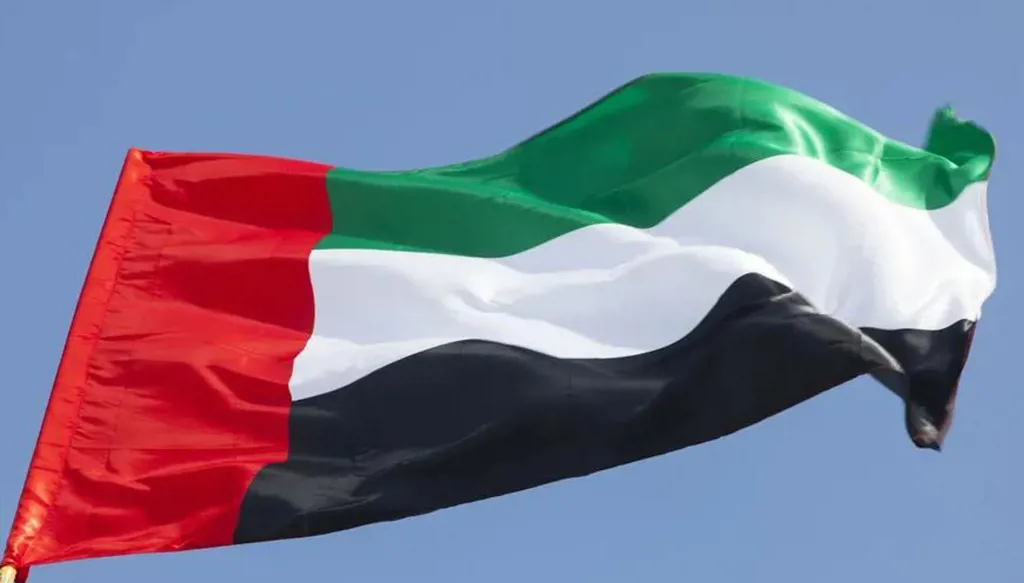


The post-OPEC era in the UAE cannot be seen simply as an issue of oil; it extends beyond decisions on production, quotas, or market rules.
What is happening reflects a deeper shift in how the state defines its power and position. Oil is no longer the only framework through which the UAE is viewed, nor are the old frameworks capable of accommodating a state that operates across economics, energy, technology, investment, and trade supply chains with a logic that is more expansive than before.
A well-established and successful model
This transformation coincided with the fourth year of His Highness Mohammed bin Zayed Al Nahyan’s leadership. During this period, the UAE appeared to enter a more transparent phase in its national decision-making, with greater confidence in managing its regional and global position. The state did not begin from scratch; it already possessed a solid and successful model, but in this phase, it expanded that model, linking it to greater mobility, independence, and influence.
The post-OPEC phase does not imply abandoning the logic of cooperation, nor does it mean moving away from the Gulf, Arab, or international frameworks. The UAE has not built its influence through separation, but through strategic openness and broad partnerships. In a post-oil model, partnerships cannot substitute for national decision-making. States that seek to operate in a volatile world need a wider margin of maneuver, faster adaptability, and decision-making institutions that know when coordination is beneficial and when flexibility becomes more important than waiting for consensus.
Strategic autonomy
Strategic autonomy lies at the core of the UAE model. It is neither isolation, nor unilateral action, nor a desire to bypass others. Rather, it reflects the state’s ability to engage with the world from its own position, in line with its interests, while safeguarding its national direction. His Excellency Anwar Gargash, diplomatic advisor to His Highness the President, underscored this on the X platform, noting that the UAE’s resilience and strategic independence enable it to overcome regional challenges while continuing to promote stability and progress.
Under the leadership of His Highness Mohammed bin Zayed Al Nahyan, stability in the UAE is no longer confined to safeguarding the state’s gains. It has become a platform for openness, expanding economic power, and building influence. This is reflected in the UAE’s growth across the new economy, artificial intelligence, renewable energy, global investments, ports, logistics services, and trade. Oil alone no longer defines the UAE’s position or its economic presence; it has become one tool among many that the state uses to shape its role in a rapidly evolving global economy.
The distinction lies in the fact that the UAE is no longer interpreted solely through oil. Energy remains an important component of its power, but it no longer defines the limits of national ambition. Oil continues to be part of the UAE’s equation, yet it no longer singularly determines the state’s position or direction.
In this phase, the framework established under the leadership of His Highness Mohammed bin Zayed Al Nahyan has become firmly rooted. The UAE’s policy is not driven by short-term reactions, but by long-term assessments of the state’s interests and position. As such, the post-OPEC phase appears as an extension of a broader trajectory in national decision-making, rather than a shift confined to the energy file. It reflects a state that knows how to preserve its relationships, expand its options, and build its future with confidence.
Here lies the significance of the Emirati moment. The state, which built a significant part of its presence through energy, did not stop there, nor did it tie its future to formulas that no longer suit the current era. Power today lies in the ability to choose timing, expand alternatives, and manage relationships without losing freedom of movement. Therefore, the UAE appears to be entering a phase that opens a wider space for an economic and political role consistent with its influence and ambitions.
Disclaimer: The opinions expressed by the writers are their own and do not necessarily represent the views of Annahar.