Israeli intelligence reports raise alarms over Hezbollah’s next moves in Lebanon

Opinion 19-05-2026 | 11:13

Israeli intelligence reports raise alarms over Hezbollah’s next moves in Lebanon

Two new Israeli security studies outline potential scenarios ranging from political destabilization in Beirut to possible assassinations, fueling concern as Lebanon enters a critical political phase.

Israeli intelligence reports raise alarms over Hezbollah’s next moves in Lebanon
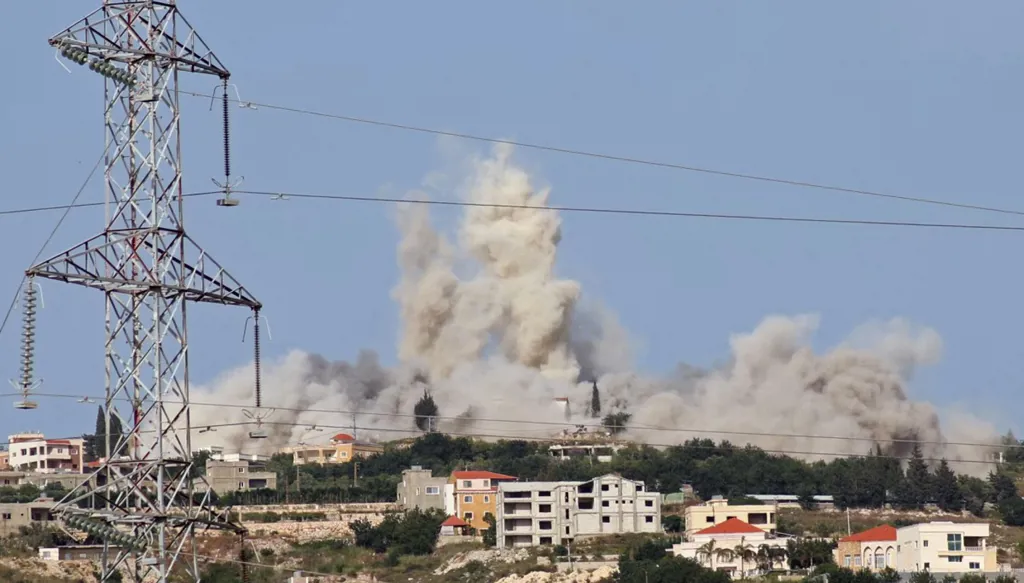
Smoke rises from the site of an Israeli airstrike targeting the village of Irsay in southern Lebanon on May 17, 2026. (AFP)
Smaller Bigger


Undoubtedly, Israel is home to a significant number of research centers relied upon both domestically and internationally.


Israeli advisers on security and terrorism are considered among the most relied-upon references worldwide. Consequently, what they publish becomes a subject of close interest, monitoring, and scrutiny—not as inevitable certainties, but as serious scenarios that should be taken seriously and addressed, even as a preventive measure.


In this context, the attention Israeli security and intelligence research centers devote to monitoring Lebanon’s internal developments is particularly noteworthy, given the implications not only for the future of Lebanese-Israeli relations, but also for the ongoing direct negotiations between Lebanon and Israel, which are set to enter their fourth round on June 3 and 4 of next month.


To date, these centers have presented two studies: the first examines the possibility of Hezbollah gaining control of the Lebanese capital, while the second focuses on the group potentially resorting to assassinations in an effort to prevent Lebanese authorities from continuing their political, security, and military coordination with the United States.


The first study, which addresses Hezbollah’s alleged plan to take control of Beirut and was revealed a week ago, indicates that the group seeks to sideline what it describes as “pragmatic forces that support rapprochement with the West” from decision-making centers, after other options have been exhausted in light of the setbacks it has suffered and the strategic weakening it has endured. This has been compounded by the loss of financial flows and assets, placing the group in one of its most financially challenging periods, at a time when it is also facing heightened spending demands.


The second study, published earlier this week and prepared by the “Meir Amit Intelligence and Terrorism Information Center,” examines the possibility of the group resorting to assassinations, citing reasons similar to those outlined in the previous study, with the central premise being what it describes as the erosion of the group’s hold over the country.


The study points to statements by senior Hezbollah officials, as well as accusations of treason directed at President Joseph Aoun, Prime Minister Nawaf Salam, and Foreign Minister Youssef Rajji.


"Hezbollah" and the rules of engagement


Doron Dror, the study’s author and former analysis officer at the Israeli Prime Minister’s Office, stated that the first assassination could be “symbolic,” carried out by “Unit 121” with the aim of intimidating Beirut and forcing it into submission. He predicted that this unit — which Hezbollah has never acknowledged and which the report claims is responsible for several assassinations in Lebanon, most notably those of former Prime Minister Rafic Hariri and Major Wissam Eid — could target a mid- or high-level Christian opposition figure, or possibly Foreign Minister Youssef Rajji.

The published study concluded by noting that Hezbollah is currently more concerned about any political or diplomatic path toward peace with Israel than by moves against its weapons, as such a development would pose a threat to the very essence of its resistance ideology and its foundational premise of confronting Israel.


What does Lebanon say about these dangerous reports?

Upon reviewing Lebanese official political and security sources, we received neither confirmation nor denial. The only comment provided was: “Everything in Lebanon is under close surveillance, and while we currently lack preliminary data that would warrant preventive action, the security agencies remain vigilant to prevent any of these negative scenarios from materializing.”


Hezbollah, naturally, categorically denies these scenarios, viewing anything originating from Israel as an attempt to “stir internal strife.” However, the group maintains that “those concerned should cease all direct contact with Israel, as it could resort to dangerous actions aimed at fueling internal discord against the party.”


A seasoned observer with extensive experience in Lebanon’s security and intelligence circles pointed out that these Israeli studies are not intended to provoke internal strife, as they are primarily prepared for decision-making centers, with only excerpts later published in the Israeli press. He noted, however, that this type of study does not necessarily rely on exclusive or confidential information, but is often built on publicly available and officially disclosed data.


The observer said that suspicions regarding what Hezbollah might undertake are rooted in numerous precedents. He noted that the group launched a military operation on May 7, 2008, to overturn a political reality it deemed unfavorable in the country, and later deployed its supporters — known as the “Black Shirts” — to impose the prime minister of its choosing. He also pointed to the ruling of the Special Tribunal for Lebanon, which convicted Hezbollah members in connection with the assassination of former Prime Minister Rafic Hariri in February 2005.


The observer concluded that, given these and other precedents, and in light of Hezbollah’s increasingly sharp rhetoric and aggressive media campaigns, it is only natural for research centers to examine the potential steps the party might take to overturn a reality that many recognize is placing it under significant strain.


Disclaimer: The opinions expressed by the writers are their own and do not necessarily represent the views of Annahar.