The Israeli Knesset passed a law late Monday night to establish a military court to prosecute hundreds of Palestinian militants involved in the attack on Israel on October 7, 2023, a step that Israeli lawmakers said would "help heal the national wounds".
The surprise attack, led by the “elite” forces of the Palestinian Islamic Resistance Movement (Hamas), was Israel’s bloodiest day since its founding and the worst attack on Israelis since the Holocaust. Israel claims the attack resulted in the death of at least 1,200 people, most of whom were civilians.
Gaza. (AFP)
Israel responded with an attack on Gaza, which health authorities in the sector say resulted in the death of more than 72,000 Palestinians, most of whom were civilians, leaving most of Gaza in ruins.
Israel holds an estimated 200 to 300 militants, although it has not disclosed the exact number, who were captured in Israel during the attack, without charges being brought against them yet.
The special military court being formed under the law, which will be headed by a panel of three judges in Jerusalem, can also try others who were later captured in Gaza and are suspected of participating in the attack, or in hostage-taking, or in the mistreatment of Israeli hostages.
The new law was supported by an overwhelming majority of 93 out of 120 Knesset members, in a rare display of Israeli political unity.
The bill was drafted by lawmakers from both the governing coalition and the opposition, aiming to ensure that all those involved in the attack are brought to justice under existing Israeli criminal laws for what the law describes as crimes against the Jewish people, crimes against humanity, and war crimes.
The proceedings will be public, with key hearings broadcast live. According to the new law, the accused will personally attend only the primary hearings, while they will attend all other hearings via video, and survivors of the attack will be allowed to attend in person.
Ya'ara Mordecai, an international law expert at Yale Law School, said the new law raises some concerns about due process, given the military judicial framework, as well as the risk of turning trials related to atrocities into politically motivated “show trials” or symbolic gestures.
Yulia Malinovsky, a Knesset member and one of the bill’s authors, said the legislation ensures a fair and legal trial.
Before the vote on the law, Malinovsky said, “Israeli judges will judge them, not the street or what we all feel… Ultimately, what makes us great is our spirit, our strength, and our ability to deal with and endure this immense pain.”
The Israeli criminal law includes the death penalty for some charges that militants are likely to face.
Under the new law, a death sentence will lead to an automatic appeal on behalf of the defendant.
The last person executed in Israel was Adolf Eichmann, a key architect of the Nazi Holocaust, who was hanged in 1962 after Israel captured him in Argentina. Military courts in the occupied West Bank can impose the death penalty on convicted Palestinians, but they have never done so.
A separate law passed by Israel in March, making hanging the default penalty for Palestinians convicted in military courts of committing deadly attacks, drew criticism domestically and internationally and is expected to be overturned by the Supreme Court.
Hamas condemns the new law
Commenting on the law, Hamas spokesman in Gaza, Hazem Qasim, said the new law provides a cover for war crimes committed by Israel in Gaza.
The International Criminal Court is investigating Israel’s conduct during the Gaza war and has issued arrest warrants for Prime Minister Benjamin Netanyahu and former Defense Minister Yoav Gallant, along with three Hamas leaders who were all killed by Israel since then.
Israel is also facing a genocide case in the International Court of Justice. Israel dismisses these charges as politically motivated, arguing its war targets Hamas, not Palestinians.



 Messenger
 Whatsapp
 Threads
 Email
Email
 Print
Print
 X
X
 Facebook
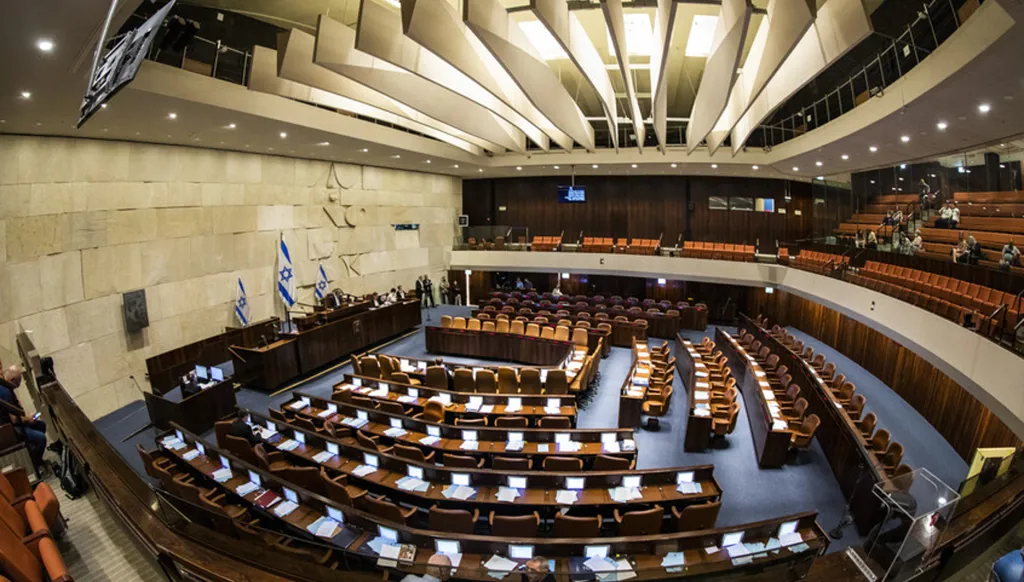


 Gaza. (AFP)