Secret foreign military presence in Najaf Desert sparks sovereignty alarm in Iraq
A reported clandestine military installation in southern Iraq has ignited tensions over national sovereignty after claims it was used in coordinated American-Israeli operations against Iran, raising urgent questions about foreign military activity inside Iraqi territory.
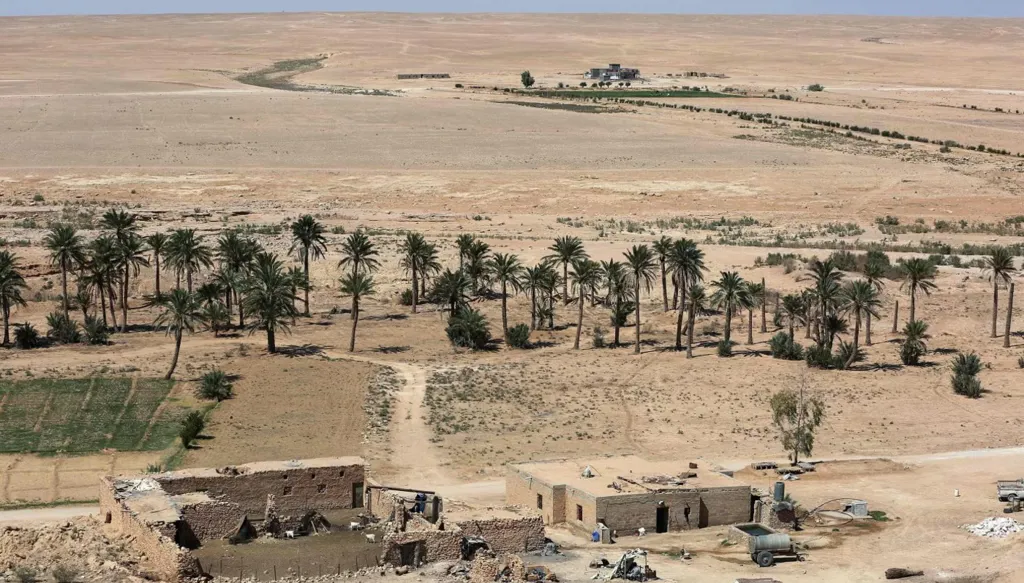
The western Iraqi desert, sprawling over vast areas and relatively uninhabited. (AFP)
In a highly sensitive development highlighting the extent of regional entanglement in Iraq, the American newspaper The Wall Street Journal revealed the establishment of a secret Israeli military base in the Najaf desert, used to support American-Israeli air operations targeting Iran during the recent war, raising serious questions about the violation of Iraqi sovereignty and the transformation of the country into an undeclared arena of confrontation.
According to Iraqi military sources speaking to Annahar, the base was secretly established deep in the desert of Najaf province, away from population centers and traditional monitoring lines, under complex security arrangements aimed at providing a field support point for Israeli air and defensive operations in the region.
The sources add that the base was indeed used to counter missile attacks and drones launched by Iranian-backed Iraqi armed factions, in addition to addressing threats that accompanied the regional escalation during the war.
Accidental Discovery
According to the sources, the Israeli base was not uncovered through intelligence operations, but rather “accidentally,” after citizens noticed suspicious movements and unusual activity in the desert area, prompting them to inform Iraqi security authorities.
Subsequently, Iraqi forces moved toward the site, where limited skirmishes occurred with the personnel inside, before evacuating the base and partially destroying it, and transferring those who were there to an unknown location, after it had operated for about a week within Iraqi territory.
Annahar contacted the relevant Iraqi security authorities, but they declined to comment on the report published by The Wall Street Journal.
The issue quickly escalated into a highly complex sovereign and security file, especially amid continued official reticence regarding the details of the incident, despite security authorities announcing the opening of an investigation into what happened.
So far, Baghdad has not officially disclosed the nature of the base or the party managing it, nor has it clarified how a foreign entity was able to establish a military site within Iraqi territory without early detection or an official announcement.
A shot from a video published by Israeli media showing the location of the military base in Najaf desert. (Israeli Media)
A serious security breach
On his part, military advisor Maen al-Jubouri told Annahar that “the presence of a secret military base within Iraqi territory represents a serious violation of national sovereignty and a direct threat to Iraqi national security,” considering what happened “reveals the extent of the security complexity Iraq faces, and points to the possibility of its territories being exploited as a regional and international conflict arena away from the will of the Iraqi state.”
Al-Jubouri explains that “the seriousness of the issue does not only concern the existence of the base itself, but also what it represents as a security and intelligence breach that might allow Iraq to be transformed into a platform for military operations, something that threatens to bring the country into direct targeting and regional escalation, especially amid ongoing tension between Iran, the United States, and Israel.”
He adds that “the official reticence and failure to disclose the results of the investigation to the public opens the door to rumors and interpretations, putting security institutions before a major challenge related to the need to clarify facts and strengthen citizens’ trust in the state’s ability to protect national sovereignty.”
Iraq between axes
He emphasizes that “the Iraqi government is required to conduct a comprehensive and transparent investigation involving the relevant security and intelligence agencies, with clear disclosure of its results, and not merely rely on general statements.” He also points to the need to “review monitoring and control systems over desert and border areas, and enhance intelligence capabilities to prevent any illegal military activity within Iraqi territory.”
The Iraqi security expert stresses that “Iraq must be distanced from the politics of axes and regional conflicts, and not allow any party to use its territories for military operations or score-settling among conflicting powers, because the continuation of such incidents might subject the country to serious security and international pressures and threaten its internal stability.”
Lieutenant General Qais al-Muhammadawi, the deputy commander of Joint Operations, announced last March that a protest memorandum had been submitted to the international coalition regarding the landing operation in Najaf, emphasizing that no force would be allowed to “tamper with Iraq’s security.”
This development comes at a time when Iraq faces increasing pressures due to its transformation into an arena of overlap between Iranian-Israeli conflict and American-Iranian rivalry, with its territories being used as a platform for operations during the recent regional war, raising growing questions about the ability of Iraqi security institutions to protect national sovereignty and prevent the country from becoming a covert war zone.



 Messenger
 Whatsapp
 Threads
 Email
Email
 Print
Print
 X
X
 Facebook


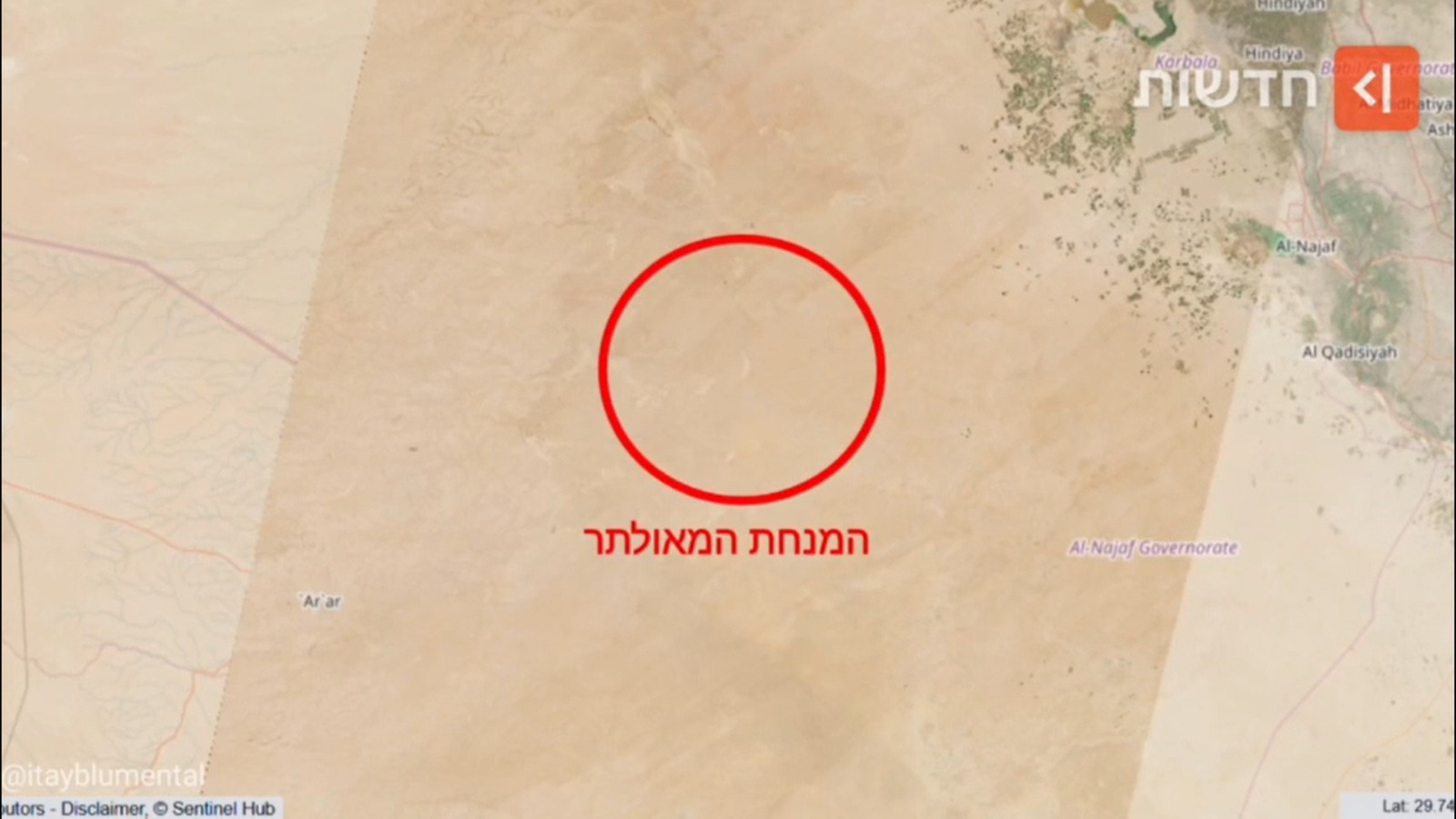 A shot from a video published by Israeli media showing the location of the military base in Najaf desert. (Israeli Media)